GB
GB Germany
 France
 Spain
Spain Italy
Italy Netherlands
 Norway
 Sweden
 Denmark
 Finland
 Portugal
Perimenopause: first signs, age and how long it lasts
What perimenopause is, when it usually starts, how long it lasts, the first signs to look out for, why it can leave you so tired and when to talk to your GP.


Perimenopause is the run-up to menopause, when your hormone levels start to fluctuate and your periods change. It usually begins in your early to mid-40s, though it can start in your late 30s, and typically lasts several years. It ends once you have gone 12 months without a period, which marks menopause.
What is perimenopause?
Perimenopause means "around menopause". It is the transition phase in which the ovaries gradually wind down. Ovulation becomes less regular, progesterone falls, and oestrogen swings up and down – sometimes higher than before, sometimes much lower – rather than declining smoothly.
Those swings explain why perimenopause can feel so unpredictable. It ends at menopause: the point at which you have had no period for 12 months. For the bigger picture of the whole transition, see what is menopause?
What age does perimenopause start?
Most women notice perimenopause starting in their early to mid-40s, although it can begin in the late 30s. Since the average age of menopause in the UK is 51, perimenopause typically runs through the second half of your 40s.
If your periods become irregular or stop before the age of 45, see your GP. This could be early menopause – or premature ovarian insufficiency if you are under 40 – which needs medical assessment and usually hormone treatment to protect your bones and heart.
How long does perimenopause last?
Perimenopause usually lasts several years, and how long varies a great deal from one woman to another: for some it is a matter of months, for others it goes on for many years. Symptoms can continue for several years after menopause too: the NHS says menopausal symptoms as a whole usually last for 7 to 9 years.
What are the first signs of perimenopause?
The first sign is usually a change in your periods. Other early signs often appear at the same time:
- Changes to your cycle – shorter or longer cycles, skipped periods, heavier or lighter bleeding.
- Stronger premenstrual symptoms – breast tenderness, irritability or low mood before a period may become more pronounced (see PMS).
- Sleep problems – waking in the night or early in the morning.
- Mood changes – anxiety, irritability, tearfulness or low mood that feels out of character.
- Hot flushes and night sweats – often mild and occasional at first (see hot flushes).
- Brain fog – trouble concentrating or finding the right word.
For the complete list, see menopause symptoms.
How do you know if you are in perimenopause?
There is no single reliable test. Hormone levels change from day to day in perimenopause, so a blood test can look normal one week and different the next. For women aged 45 and over, GPs are advised to identify perimenopause from symptoms and changes to the menstrual cycle, without blood tests.
If you are under 45, your GP may arrange blood tests to check follicle-stimulating hormone (FSH) and rule out other causes, such as thyroid problems. Hormonal contraception can mask the signs, which is another reason to talk it through with a professional rather than rely on home test kits.
What are the causes of fatigue during perimenopause?
Tiredness is one of the most common complaints in perimenopause, and it usually has more than one cause:
- Broken sleep – night sweats and early waking add up night after night.
- Heavy periods – heavier bleeding is common in perimenopause and can lead to iron deficiency anaemia, which causes tiredness, breathlessness and pale skin.
- Mood – anxiety and low mood are both draining in their own right.
- Other conditions – an underactive thyroid, diabetes and some medicines can all cause fatigue and become more common in midlife.
- Life load – work, children and ageing parents often peak at the same time.
If tiredness is persistent, see your GP. A simple blood test can check for anaemia and thyroid problems, which need proper treatment.
What is the difference between perimenopause and menopause?
In perimenopause you still have periods, even if they are irregular, and your hormone levels fluctuate. Menopause is the point you reach once you have gone 12 months without a period; after that you are postmenopausal. You can still become pregnant during perimenopause, so keep using contraception until your GP says it is safe to stop.
How can you prepare for menopause?
- Build strength now – weight-bearing and resistance exercise helps protect bone and muscle, which decline faster after menopause.
- Eat well – a balanced diet with calcium-rich foods, plenty of fibre and regular meals.
- Take vitamin D in autumn and winter, as the NHS advises for everyone in the UK.
- Look after your sleep – a cool bedroom and regular routines help.
- Cut back on alcohol and stop smoking.
- Learn about the treatments – read up on HRT, vaginal oestrogen and CBT so you can have an informed conversation with your GP when the time comes.
- Talk – to your partner, friends and, if it helps, your employer.
What treatment is available for perimenopause?
If symptoms are affecting your life, talk to your GP. HRT can be started during perimenopause, and in this phase it is usually given in a way that produces a regular monthly bleed. Vaginal oestrogen can treat dryness and urinary symptoms, and CBT can help with sleep, mood and hot flushes. Your GP can also advise on contraception that suits this stage, which may help with heavy or irregular bleeding.
Which vitamins have a role in hormones and energy?
No vitamin treats perimenopause or its symptoms, and a supplement is not a substitute for medical advice or a varied diet. What is established is that some vitamins and minerals have recognised roles in the body:
- Vitamin B6 contributes to the regulation of hormonal activity.
- Vitamin B6, vitamin B12, niacin and iron contribute to the reduction of tiredness and fatigue.
These nutrients are found in everyday foods – B6 in pork, poultry, some fish, peanuts, oats and milk; B12 in meat, fish, eggs and dairy; iron in red meat, pulses and fortified cereals. Women need about 1.2 mg of vitamin B6 a day. The NHS advises not taking more than 10 mg a day of vitamin B6 from supplements unless your doctor recommends it, and the European safe upper level for adults is 12 mg a day.
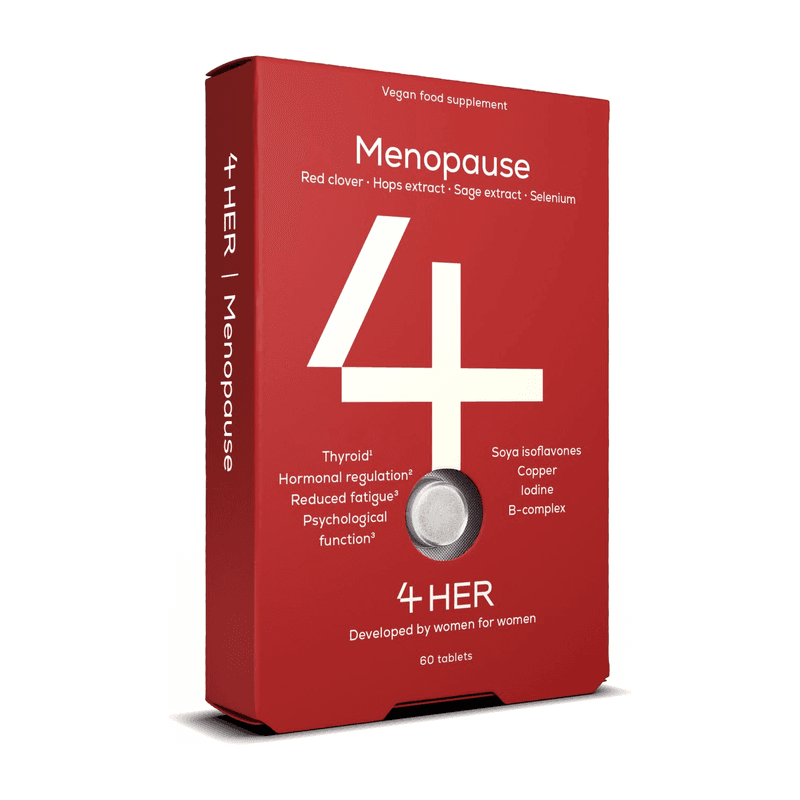
4 HER Menopause is a daily supplement for women in midlife. Two tablets provide 2.1 mg of vitamin B6 (150% NRV), 5 µg of vitamin B12 (200% NRV) and 16 mg of niacin (100% NRV), with eight further vitamins and minerals and three traditional plant extracts – hops, sage and red clover – which have no authorised health claims.
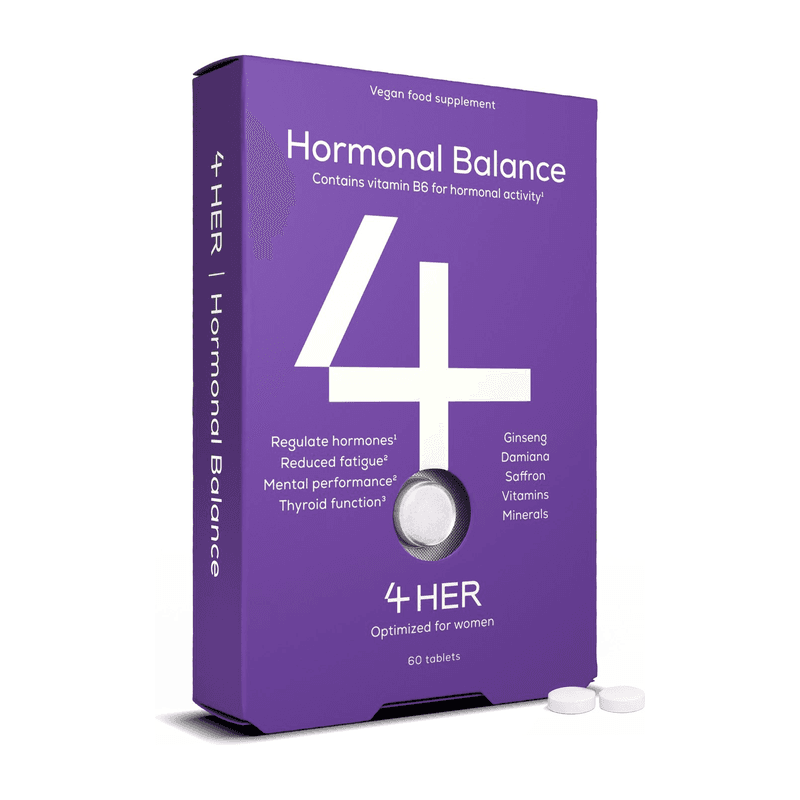
4 HER Hormonal Balance is a daily multivitamin for women. Two tablets provide 0.9 mg of vitamin B6 (64% NRV), 5 mg of iron (36% NRV), 4 µg of vitamin B12 (160% NRV) and 16 mg of niacin (100% NRV) among 15 vitamins and minerals, plus ginseng, damiana and saffron, which have no authorised health claims. It contains iron, so keep it out of reach of children.
Frequently asked questions
What are the first signs of perimenopause?
Usually a change in your periods – cycles getting shorter or longer, or bleeding becoming heavier or lighter. Many women also notice poorer sleep, stronger premenstrual symptoms, mood changes and their first hot flushes around the same time.
What age does perimenopause start?
Most commonly in the early to mid-40s, although it can start in the late 30s. If your periods change or stop before 45, see your GP to rule out early menopause or another cause.
How long does perimenopause last?
Usually several years, although it varies widely from woman to woman. It ends when you have had no period for 12 months. Some symptoms can continue for a few years after that.
Can a blood test tell if I am perimenopausal?
Not reliably. Hormone levels fluctuate from day to day in perimenopause, so one result can be misleading. Over 45, GPs usually diagnose it from your symptoms and periods. Under 45, blood tests may be used to check for early menopause and other causes.
Can perimenopause cause anxiety?
Yes, anxiety is a common perimenopausal symptom, sometimes appearing for the first time. Poor sleep can make it worse. Talk to your GP – HRT, CBT and other treatments can help – and get urgent help if you feel unable to cope.
Sources
- NHS – What are menopause and perimenopause?
- NHS – Symptoms of menopause and perimenopause
- NHS – Treatment for menopause and perimenopause
- NHS – Early or premature menopause
- NHS – Types of hormone replacement therapy
- NHS – Iron deficiency anaemia
- NHS – Heavy periods
- NICE NG23 – Menopause: identification and management
- NHS – Vitamin D
- NHS – Vitamin B
- British Dietetic Association – Menopause and diet
- Women’s Health Concern – Menopause factsheet
- GOV.UK – Great Britain nutrition and health claims (NHC) register