GB
GB Germany
 France
 Spain
Spain Italy
Italy Netherlands
 Norway
 Sweden
 Denmark
 Finland
 Portugal
Signs of hormonal imbalance in women: causes and tests
What "hormonal imbalance" really means, the signs women associate with it, the medical causes a GP will check, how hormones are tested and what lifestyle can influence.

"Hormonal imbalance" is a popular phrase rather than a diagnosis. Signs women often link to it – irregular periods, tiredness, weight change, acne, hair changes and mood swings – usually have a specific cause, such as a thyroid problem, polycystic ovary syndrome, perimenopause, contraception or iron deficiency. A GP can find out which, often with simple blood tests.
What does hormonal imbalance mean?
Hormones are chemical messengers made by glands such as the ovaries, thyroid, adrenal glands and pancreas. Their levels are meant to change – through the day, across the menstrual cycle and over a lifetime – so there is no single "balanced" state to aim for.
When people talk about hormonal imbalance, they usually mean a set of symptoms that feel hormonal. Doctors do not use it as a diagnosis. Instead they look for a specific condition where a hormone is genuinely too high or too low, such as an underactive thyroid. That distinction matters, because each condition has its own tests and its own treatment.
Which hormones are involved?
| Hormone | Made by | What it does |
|---|---|---|
| Oestrogen | Ovaries (and fat tissue) | Runs the menstrual cycle; supports bones, vaginal tissue, skin and brain |
| Progesterone | Ovaries after ovulation | Prepares the womb lining in the second half of the cycle |
| Testosterone and other androgens | Ovaries and adrenal glands | Present in smaller amounts in women; raised levels cause acne and excess hair |
| Thyroid hormones (T4 and T3) | Thyroid gland | Set the pace of metabolism, energy and body temperature |
| Cortisol | Adrenal glands | The main stress hormone; affects blood sugar, blood pressure and sleep–wake rhythm |
| Insulin | Pancreas | Moves sugar from the blood into cells |
| Prolactin | Pituitary gland | Stimulates milk production; raised levels can stop periods |
For a closer look at the main female hormone, see oestrogen.
What are the signs of hormonal imbalance in women?
These are the signs people most often associate with a hormonal problem. Each has many possible causes, hormonal and otherwise:
- irregular, heavy, painful or missed periods
- unexplained tiredness
- weight gain or weight loss without an obvious reason
- acne, particularly along the jaw, or oily skin
- thinning hair on the head, or extra hair on the face, chest or back
- mood swings, anxiety or low mood
- difficulty getting pregnant
- feeling unusually hot or cold, or sweating more than usual
- hot flushes, night sweats and vaginal dryness
- stronger premenstrual symptoms (see PMS)
What causes hormonal imbalance?
These are the common medical causes a GP will consider and rule out:
- Thyroid disease – an underactive thyroid causes tiredness, weight gain, feeling cold, dry skin, low mood and heavier periods; an overactive thyroid causes weight loss, anxiety, a racing heart and sweating.
- Polycystic ovary syndrome (PCOS) – now also called polyendocrine metabolic ovarian syndrome (PMOS) by the NHS: irregular periods, acne, excess hair and difficulty getting pregnant, often with insulin resistance.
- [Perimenopause](/en-gb/articles/perimenopause) – fluctuating oestrogen and falling progesterone, usually from the mid-40s.
- Pregnancy and breastfeeding – always worth ruling out if periods stop.
- Hormonal contraception – the pill, implant, injection and hormonal coil all change bleeding patterns and can affect mood and skin; symptoms may also appear when you stop.
- Iron deficiency – often caused by heavy periods, it leads to tiredness, breathlessness and hair shedding.
- Other conditions – such as diabetes, raised prolactin, and rarer adrenal and pituitary disorders.
- Lifestyle factors – very low body weight, intense exercise, significant stress and poor sleep can all disrupt periods.
How do you test for a hormonal imbalance?
Your GP will start by asking about your symptoms, periods, contraception and medical history, and may examine you. Blood tests are then chosen to answer a specific question – there is no single "hormone test". Common tests include thyroid function (TSH and T4), a full blood count and ferritin for iron, a pregnancy test, testosterone and other hormones if PCOS is suspected, prolactin, and blood sugar.
Some sex hormones need to be measured on particular days of the cycle to be meaningful. In perimenopause they fluctuate so much that tests are often unhelpful, and if you are 45 or over a GP will usually diagnose it from your symptoms. Home hormone test kits measure the same things but are hard to interpret without that context.
Can you balance your hormones naturally?
No diet or supplement can "rebalance" your hormones, and anything promising to do so should be treated with caution. But some everyday habits do influence how certain hormones behave:
- Keep to a healthy weight – excess body fat affects insulin and oestrogen, and losing weight can improve symptoms of PCOS; being underweight can stop periods.
- Move regularly – physical activity improves how the body responds to insulin and helps mood and sleep.
- Prioritise sleep – short or irregular sleep disrupts cortisol and appetite hormones.
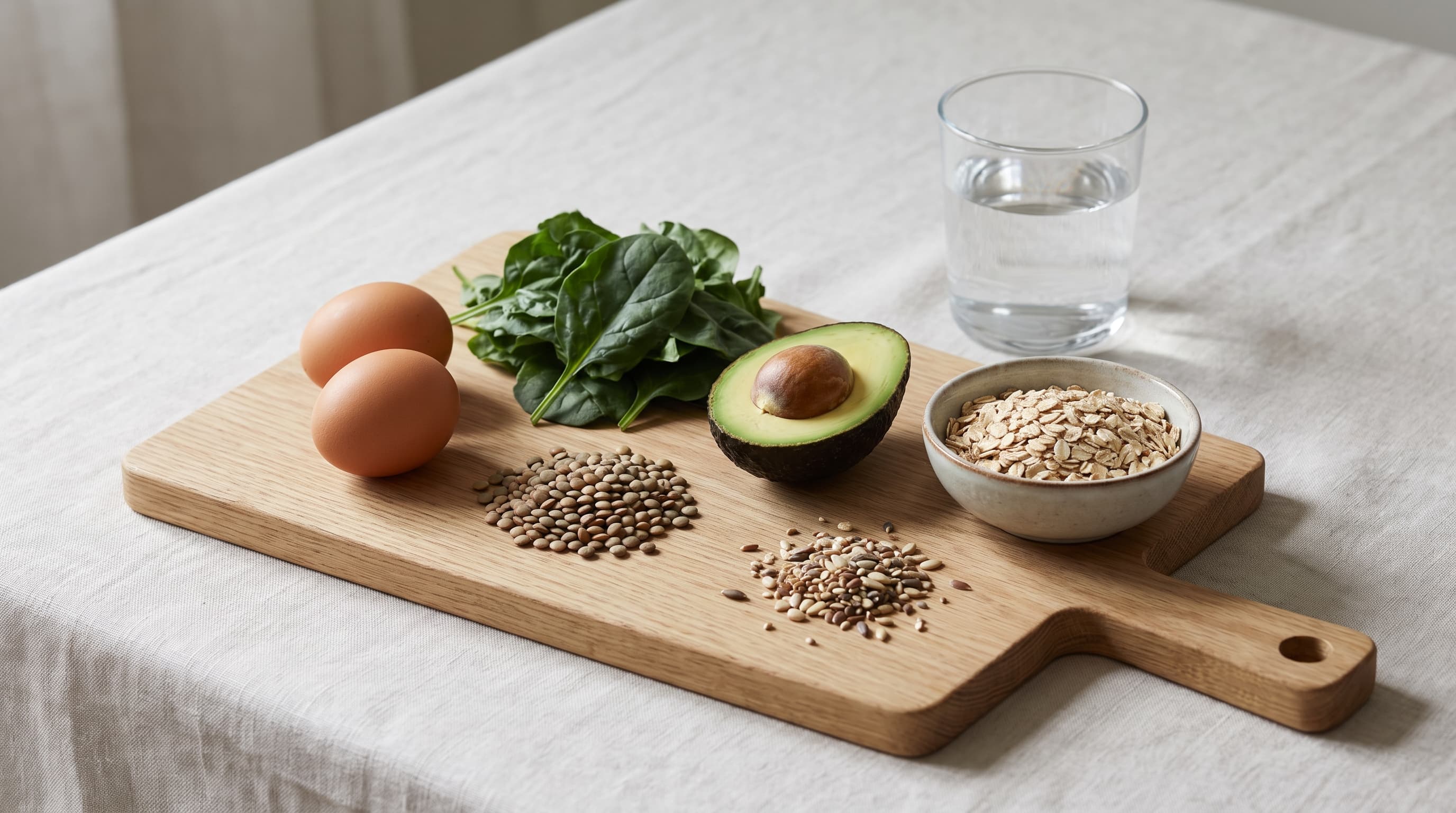
- Eat regular, balanced meals with plenty of fibre, vegetables, pulses and wholegrains, and fewer sugary foods and drinks.
- Manage stress where you can – through exercise, time outdoors, relaxation or talking therapy.
- Drink less alcohol and stop smoking.
If symptoms continue despite these changes, see your GP rather than trying one remedy after another. Many hormonal conditions are easy to diagnose and treat.
Which vitamins are involved in hormone function?
Vitamins and minerals do not treat hormonal conditions, but several have recognised roles in how the body makes and regulates hormones:
- Vitamin B6 contributes to the regulation of hormonal activity.
- Iodine contributes to the normal production of thyroid hormones and normal thyroid function.
- Selenium contributes to normal thyroid function.
- Pantothenic acid contributes to normal synthesis and metabolism of steroid hormones, vitamin D and some neurotransmitters.
Most people get enough of these from a varied diet: B6 from pork, poultry, some fish, peanuts, oats and milk; iodine from milk and dairy products, eggs and sea fish; selenium from Brazil nuts, fish, meat and eggs; and pantothenic acid from most foods. Women need about 1.2 mg of vitamin B6 and 140 µg of iodine a day. The NHS advises not taking more than 10 mg of vitamin B6 a day from supplements unless a doctor recommends it, and the European safe upper level for adults is 12 mg a day.
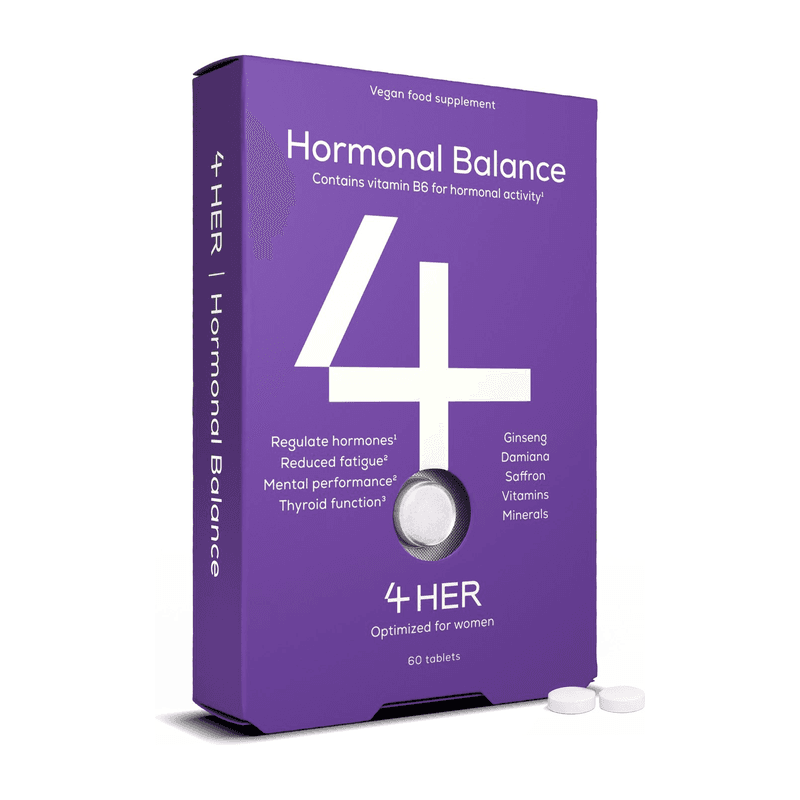
4 HER Hormonal Balance is a daily multivitamin for women with 15 vitamins and minerals. Two tablets provide 0.9 mg of vitamin B6 (64% NRV), 80 µg of iodine (53% NRV), 40 µg of selenium (73% NRV) and 5 mg of pantothenic acid (83% NRV), plus Panax ginseng, damiana and saffron, which have no authorised health claims. It is for adults and contains iron, so keep it out of reach of children; if you are pregnant, breastfeeding or taking medication – including thyroid medication – talk to your doctor before use.
When should I see a GP about my hormones?
See a GP if:
- your periods have stopped for more than three months and you are not pregnant, or they have become very irregular
- your periods are very heavy, or you bleed between periods, after sex or after menopause
- you have new acne, excess hair growth or hair loss
- you are gaining or losing weight without trying
- you feel constantly tired, or always cold or always hot
- you are under 45 and have menopausal symptoms
- you have been trying to get pregnant for a year without success, or sooner if you are 36 or over
- low mood or anxiety is affecting your daily life
Frequently asked questions
What are the signs of hormonal imbalance in women?
Common signs include irregular or missed periods, unexplained tiredness, weight change, acne, hair thinning or excess hair, mood swings and difficulty getting pregnant. They have many possible causes, so it is worth seeing a GP rather than guessing.
What is the most common hormonal imbalance in women?
Polycystic ovary syndrome and thyroid disorders, especially an underactive thyroid, are among the most common hormonal conditions in women. In midlife, many symptoms are due to perimenopause, which is a normal transition rather than a disorder.
Can a blood test show hormonal imbalance?
Blood tests can diagnose specific conditions, such as thyroid disease or raised testosterone in PCOS. There is no single test for a general "imbalance", and in perimenopause hormone levels fluctuate so much that tests are often unhelpful. A GP will choose tests based on your symptoms.
Can stress cause hormonal imbalance?
Significant stress raises cortisol and can disrupt the menstrual cycle, sometimes delaying or stopping periods. It can also worsen sleep, which affects other hormones. If stress is affecting your health, talk to your GP.
Can supplements fix a hormonal imbalance?
No. Supplements cannot fix a hormonal condition. Vitamin B6 contributes to the regulation of hormonal activity, and iodine to normal thyroid hormone production, but conditions such as thyroid disease or PCOS need a diagnosis and treatment from a doctor.
Sources
- NHS – Underactive thyroid (hypothyroidism)
- NHS – Overactive thyroid (hyperthyroidism)
- NHS – Polyendocrine metabolic ovarian syndrome (PMOS), previously called PCOS
- NHS – Missed or late periods
- NHS – Iron deficiency anaemia
- NHS – What are menopause and perimenopause?
- NHS – Vitamin B
- NHS – Iodine
- NHS – Selenium and other minerals
- NHS – Infertility
- GOV.UK – Great Britain nutrition and health claims (NHC) register