GB
GB Germany
 France
 Spain
Spain Italy
Italy Netherlands
 Norway
 Sweden
 Denmark
 Finland
 Portugal
Testosterone in men: what it does, normal levels and why it falls
What testosterone does in men, what a normal level is in nmol/L, why it falls with age, what lowers it and when to ask your GP for a blood test.


Testosterone is the main male sex hormone. It drives sex drive, sperm production, muscle and bone strength and red blood cell production. A normal morning level in adult men is roughly 9–30 nmol/L, depending on the lab. Levels fall by about 1% a year from your 30s or 40s, but excess weight, poor sleep, heavy drinking, illness and some medicines lower it far more.
What does testosterone do in men?
Testosterone is made mainly in the testes, under instruction from the brain. The pituitary gland releases luteinising hormone (LH), which tells the testes to produce testosterone; when levels are high enough, the brain eases off. That feedback loop is why problems in either the testes or the brain can lead to low testosterone.
In adult men, testosterone helps to maintain:
- Sex drive and erections – though erections also depend heavily on blood flow, nerves and mood
- Sperm production, together with another pituitary hormone, FSH
- Muscle mass and strength, and where the body stores fat
- Bone density
- Red blood cell production
- Body and facial hair
It also plays a part in mood, motivation and concentration, although these are influenced by so many other things that testosterone is rarely the whole story.
What is a normal testosterone level for a man?
Testosterone is measured with a blood test and reported in nanomoles per litre (nmol/L) in the UK. Each laboratory sets its own reference range, but for adult men it is typically somewhere around 9 to 30 nmol/L. A large study that harmonised results from four cohorts put the range for healthy, non-obese men aged 19 to 39 at roughly 9.2 to 31.8 nmol/L.
| Total testosterone | What it usually means |
|---|---|
| Above about 12 nmol/L | Unlikely to be the cause of symptoms |
| About 8–12 nmol/L | Grey zone – a repeat test and free testosterone help decide |
| Below about 8 nmol/L | Low – likely to be relevant if you also have symptoms |
Timing matters. Testosterone is highest in the morning and is noticeably lower later in the day, especially in younger men, so the test should be taken in the morning – ideally before 11am – and repeated on a different day before anything is concluded. A single low result, especially one taken in the afternoon or while you were ill, does not mean you have a problem.
Why does testosterone fall with age?
From around the age of 30 to 40, testosterone falls gradually – the NHS puts it at about 1% a year. That slow decline is unlikely to cause problems on its own, and many men in their 70s still have levels within the normal range.
What changes more with age is everything around it: weight tends to creep up, sleep gets lighter, long-term conditions and medicines become more common. In the European Male Ageing Study of men aged 40 to 79, obesity was linked with a much bigger drop in testosterone than age itself, and poor general health also played a part. This is also why the idea of a “male menopause” is misleading – read more in Male menopause: is it real?
What lowers testosterone?
- Excess weight, especially around the waist. Fat tissue converts testosterone to oestrogen and disrupts the signal from the brain. It is one of the most common reasons for low testosterone in middle-aged men, and losing weight is one of the few things that reliably helps.
- Short or poor sleep. Most testosterone is released during sleep. In one small study, healthy young men restricted to five hours a night for a week had 10–15% lower daytime testosterone.
- Heavy drinking. Regularly drinking a lot of alcohol can damage the testes and the liver and lower testosterone.
- Illness and stress. Any acute illness, a serious infection, surgery or prolonged stress can temporarily lower levels.
- Long-term conditions such as type 2 diabetes, kidney or liver disease and sleep apnoea.
- Medicines – particularly long-term opioid painkillers, steroid tablets and anabolic steroids (which shut down the body’s own production, sometimes for months after stopping).
- Problems with the testes or pituitary gland, such as Klinefelter syndrome, injury, previous chemotherapy or a pituitary tumour.
Several of these can be changed. For an honest look at what makes a difference, read How to increase testosterone naturally.
What are the signs of low testosterone?
The most specific signs are sexual: a lower sex drive, fewer morning erections and erection problems. Others include tiredness, loss of muscle strength, more body fat, low mood, irritability and poorer concentration. In time, low testosterone can also lead to reduced bone density and fewer red blood cells.
Many of these signs are just as likely to come from stress, poor sleep, depression or weight gain, so symptoms alone cannot tell you your testosterone is low. For the full picture of how it is diagnosed and treated, see Low testosterone: symptoms, tests and treatment.
When should you see a GP about testosterone?
See your GP if you have a persistently low sex drive, erection problems, or a mix of the symptoms above that is affecting your daily life. They will ask about your health, mood, sleep, alcohol and medicines, and may arrange a morning blood test. Erection problems in particular are worth getting checked, because they can be an early sign of heart disease or diabetes.
Where does nutrition fit in?
A balanced diet supports overall health, and keeping to a healthy weight is the dietary change most clearly linked with testosterone. Among the vitamins and minerals, one has an officially recognised role: zinc contributes to the maintenance of normal testosterone levels in the blood, and to normal fertility and reproduction.
That role matters most when intake is low. A shortage of zinc is linked with low testosterone, but extra zinc on top of an adequate intake has not been shown to increase levels. Men need about 9.5 mg a day, which most people get from meat, shellfish, dairy, bread and cereals. Read more in Zinc and testosterone and Foods high in zinc.
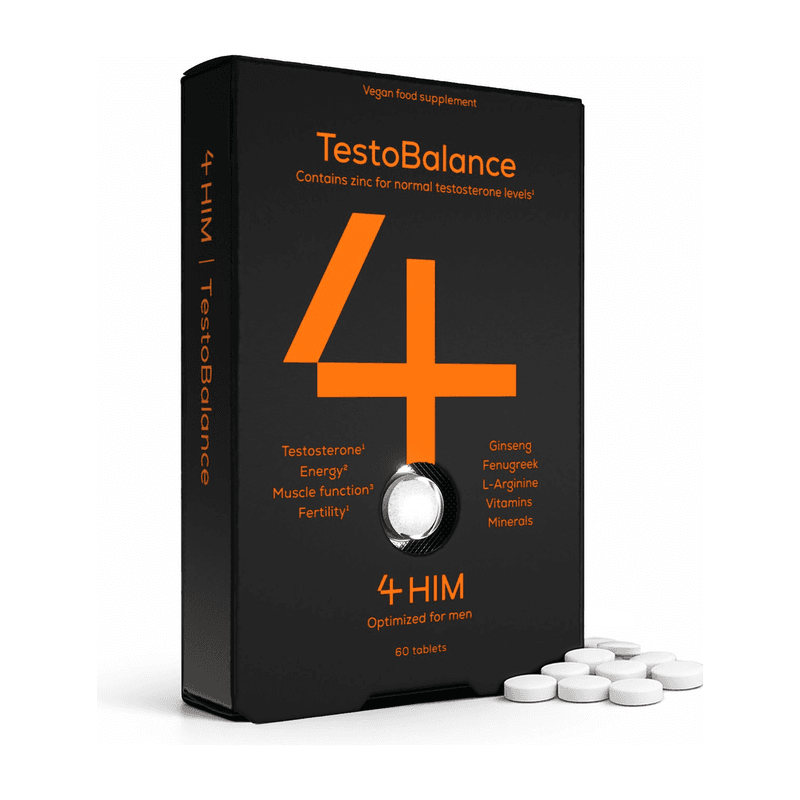
If you want to top up your intake, TestoBalance provides 6 mg of zinc (60% of the NRV) in a daily dose of two tablets, together with magnesium, vitamin B6, vitamin D, selenium and pantothenic acid. Vitamin B6 contributes to the regulation of hormonal activity, and pantothenic acid contributes to normal synthesis and metabolism of steroid hormones and vitamin D. Food supplements should not replace a varied, balanced diet and a healthy lifestyle.
Frequently asked questions
Can low testosterone go back to normal?
Often, yes – if the cause can be dealt with. Losing excess weight, treating sleep apnoea, cutting back on alcohol, recovering from an illness or changing a medicine can all bring levels back up. Low testosterone caused by damage to the testes or pituitary gland usually needs medical treatment.
What vitamins help testosterone?
Zinc is the nutrient with an authorised role: it contributes to the maintenance of normal testosterone levels in the blood. Vitamin B6 contributes to the regulation of hormonal activity. Neither has been shown to increase testosterone in men who already get enough from their diet.
How does alcohol affect testosterone?
Occasional moderate drinking has little effect, but regular heavy drinking can lower testosterone by affecting the testes, the liver and the hormone signals from the brain. The UK guideline is no more than 14 units a week, spread over three or more days.
What time of day is testosterone highest?
In the morning, shortly after waking. Levels fall through the day, which is why blood tests for testosterone should be taken in the morning, ideally before 11am.
Can I get my testosterone tested on the NHS?
Yes, if your GP thinks it is relevant to your symptoms. They will usually arrange two morning blood tests on different days and may check other hormones, such as LH, FSH and prolactin, at the same time.
Sources
- NHS – The “male menopause”
- Hackett G et al. The British Society for Sexual Medicine guidelines on male adult testosterone deficiency. World J Mens Health, 2023
- Travison TG et al. Harmonized reference ranges for circulating testosterone levels in men. J Clin Endocrinol Metab, 2017
- Wu FCW et al. Identification of late-onset hypogonadism in middle-aged and elderly men (European Male Ageing Study). N Engl J Med, 2010
- Wu FCW et al. Hypothalamic-pituitary-testicular axis disruptions in older men are differentially linked to age and modifiable risk factors: the European Male Ageing Study. J Clin Endocrinol Metab, 2008
- Leproult R, Van Cauter E. Effect of 1 week of sleep restriction on testosterone levels in young healthy men. JAMA, 2011
- NHS – Erection problems (erectile dysfunction)
- NHS – The risks of drinking too much
- NHS – Vitamins and minerals: Others (zinc)
- GOV.UK – Great Britain nutrition and health claims (NHC) register