GB
GB Germany
 France
 Spain
Spain Italy
Italy Netherlands
 Norway
 Sweden
 Denmark
 Finland
 Portugal
Foods high in zinc: the richest sources per portion
Shellfish, red meat, cheese, seeds, nuts and wholegrains are the richest sources of zinc. How much is in everyday foods, and can vegans get enough?

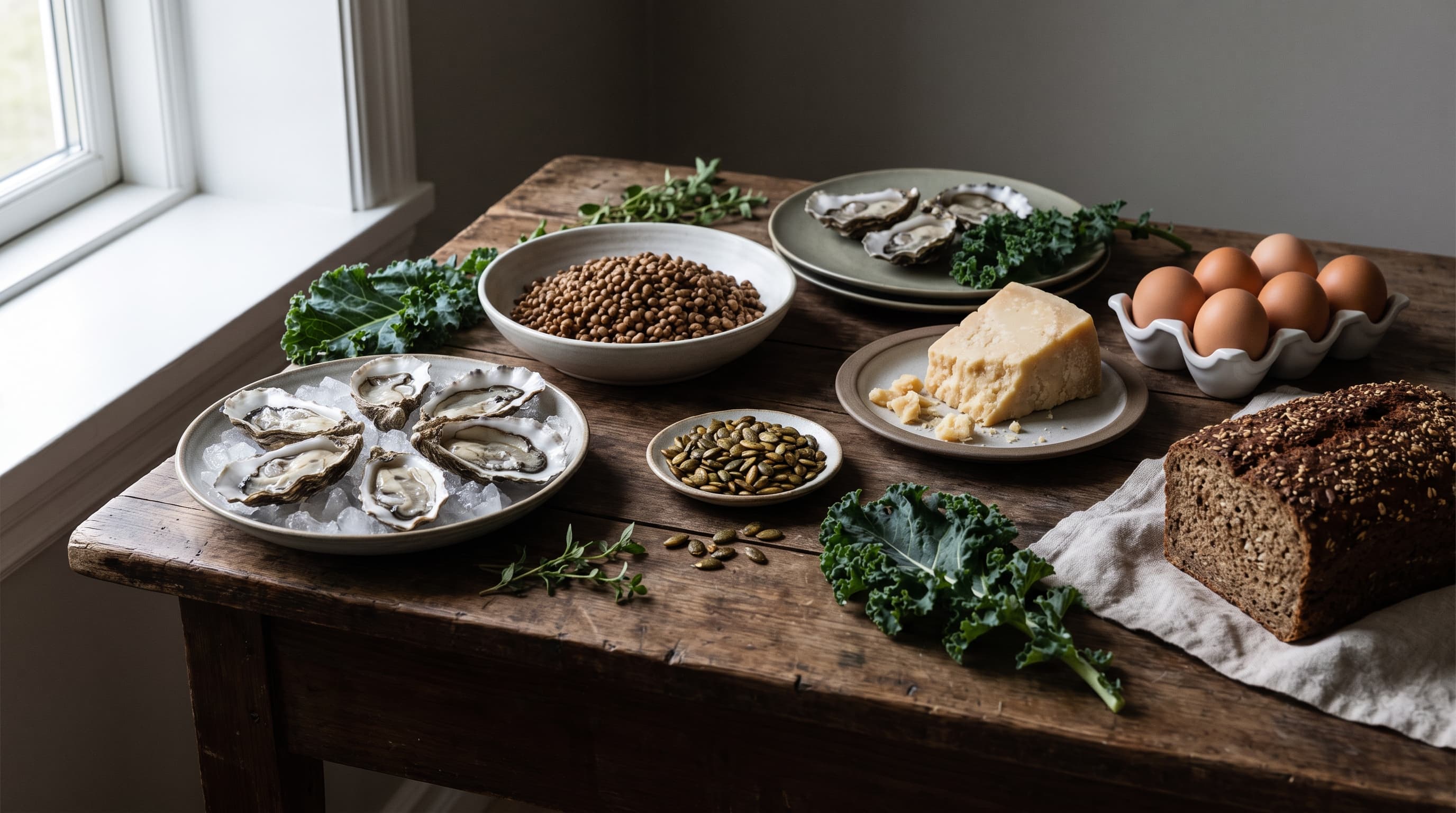
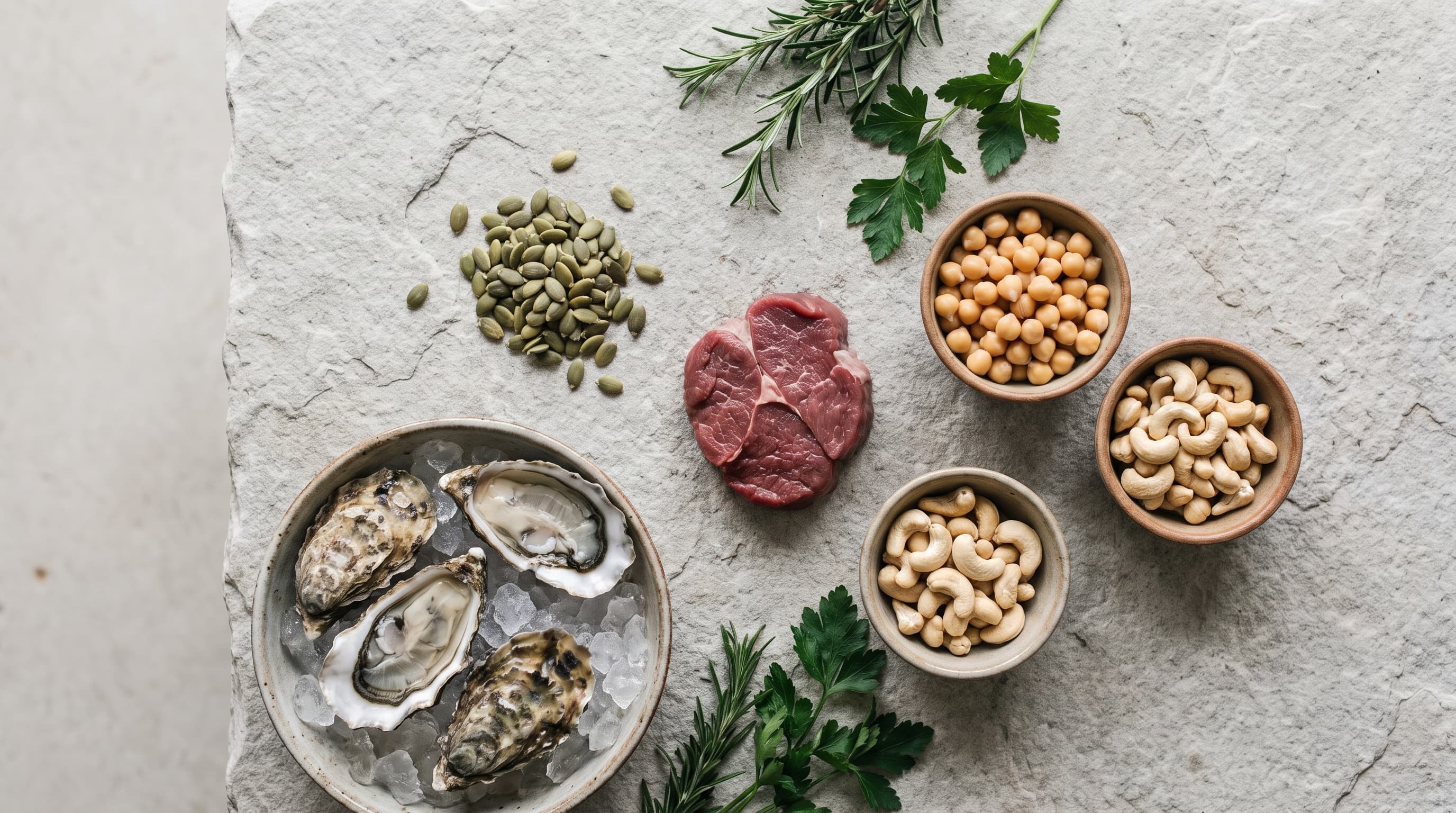
Oysters contain more zinc than any other food, followed by red meat such as beef and lamb, crab and other shellfish, cheese, pumpkin seeds, cashews and wholegrain cereals. A 100 g portion of beef provides around half of a man’s daily 9.5 mg. Zinc from plant foods is less easily used because of phytate, so vegans may need a little more.
Which foods are highest in zinc?
| Food | Portion | Zinc (approx.) |
|---|---|---|
| Oysters | 6 oysters | 10 mg or more |
| Beef rump steak, grilled | 125 g | 6–7 mg |
| Crab, cooked | 85 g | 5–6 mg |
| Beef mince, cooked | 100 g | 5 mg |
| Lamb, roast leg | 100 g | 4.5–5 mg |
| Mussels, cooked | 100 g | 3.5 mg |
| Pork loin, roast | 100 g | 2.5 mg |
| Chicken, dark meat, roasted | 100 g | 2 mg |
| Pumpkin seeds | 30 g (a small handful) | 2 mg |
| Cashew nuts | 30 g | 1.8 mg |
| Chickpeas, canned | 120 g | 1.4 mg |
| Wholemeal bread | 2 medium slices (about 75 g) | 1.2 mg |
| Cheddar cheese | 30 g | 1.2 mg |
| Lentils, boiled | 120 g | 1–1.2 mg |
| Brown rice, boiled | 150 g | 1 mg |
| Chicken breast, cooked | 100 g | 1 mg |
| Porridge oats | 40 g (dry) | 0.9 mg |
| Semi-skimmed milk | 200 ml | 0.8 mg |
| Tofu | 100 g | 0.7–2 mg |
| Egg | 1 medium | 0.6 mg |
The NHS lists meat, shellfish, dairy foods such as cheese, bread and cereal products such as wheatgerm as good sources of zinc. In practice, most of the zinc in UK diets comes from meat and meat products, followed by cereals and bread, and milk and dairy.
Is zinc from animal foods different from plant foods?
Yes. Meat, shellfish and dairy contain zinc in a form the body takes up easily, and protein from these foods helps too. Wholegrains, beans, lentils, nuts and seeds also contain zinc, but they come with phytate – a natural compound that binds zinc in the gut so that less of it is taken up.
This is why the European Food Safety Authority sets higher zinc reference intakes for people whose diets are rich in phytate: for men, from 9.4 mg a day on a low-phytate diet up to 16.3 mg on a very high-phytate one. Refined white bread and rice contain less phytate but also less zinc, so swapping to white is not the answer.
Can vegans get enough zinc?
Yes, with some planning. Studies show that vegetarians and vegans tend to have lower zinc intakes and lower zinc levels in the blood than meat-eaters, so it is worth eating zinc-containing plant foods every day: wholegrains, beans and lentils, tofu and tempeh, nuts and seeds.
Simple food habits reduce the effect of phytate:
- Soak, sprout or ferment. Soaking dried beans and lentils, sprouting seeds and grains, and fermenting (as in tempeh or miso) break down some of the phytate.
- Choose leavened bread. Yeast in bread dough breaks down phytate, so a wholemeal loaf is a better source than unleavened flatbreads or crackers.
- Add seeds and nuts. A handful of pumpkin seeds or cashews adds around 2 mg.
- Include fortified foods. Some breakfast cereals are fortified with zinc – check the label.
The NHS guide to the vegan diet is a good starting point for planning balanced vegan meals.
Does a normal diet give you enough zinc?
For most people, yes. The NHS says men need about 9.5 mg and women about 7 mg of zinc a day, and you should be able to get all you need from your daily diet. An ordinary day can easily reach a man’s needs:
- Breakfast: porridge made with semi-skimmed milk and a spoonful of pumpkin seeds – about 2.5 mg
- Lunch: a cheese sandwich on wholemeal bread – about 3 mg
- Dinner: spaghetti bolognese made with 100 g of beef mince – about 5–6 mg
People most at risk of falling short are those who eat few animal foods, drink heavily or have a gut condition. For the signs of low zinc and how much is too much, see Zinc deficiency symptoms. For zinc’s role in men’s hormones, read Zinc and testosterone.
Frequently asked questions
Which foods are highest in zinc?
Oysters are by far the richest source. Beef, lamb, crab and other shellfish come next, followed by pork, dark chicken meat, cheese, pumpkin seeds, cashews and wholegrain cereals.
Do eggs contain zinc?
Yes, but not much. A medium egg contains around 0.6 mg of zinc, mostly in the yolk – a useful contribution, but far less than a portion of meat, shellfish or seeds.
Which fruit and vegetables contain zinc?
Fruit and vegetables are generally low in zinc. Peas, sweetcorn, spinach, mushrooms and avocado contain small amounts, but beans, lentils, nuts, seeds and wholegrains are much better plant sources.
Does cooking destroy zinc?
No. Zinc is a mineral and is not destroyed by heat. Small amounts can leach into cooking water, and soaking or sprouting beans and grains before cooking can actually help your body use more of their zinc.
Which foods contain both zinc and magnesium?
Pumpkin seeds, cashews, beans and lentils, wholegrain bread and oats provide both. For more magnesium sources, see Magnesium-rich foods.
Sources
- Public Health England – McCance and Widdowson’s Composition of Foods Integrated Dataset (CoFID 2021)
- NHS – Vitamins and minerals: Others (zinc)
- British Nutrition Foundation – Vitamins and minerals
- EFSA – Dietary reference values for nutrients: summary report, 2017 (zinc)
- Foster M et al. Effect of vegetarian diets on zinc status: a systematic review and meta-analysis of studies in humans. J Sci Food Agric, 2013
- NHS – The vegan diet
- GOV.UK – National Diet and Nutrition Survey