GB
GB Germany
 France
 Spain
Spain Italy
Italy Netherlands
 Norway
 Sweden
 Denmark
 Finland
 Portugal
How to increase testosterone naturally: what the evidence says
Losing excess weight, sleeping 7–9 hours, strength training and drinking less have the strongest evidence. What works, what is hype, and where zinc fits in.


The changes with real evidence are losing excess weight, sleeping seven to nine hours a night, regular strength training, cutting back on alcohol, managing stress and not smoking. Weight loss has the biggest effect in men who are overweight. Over-the-counter “boosters” and herbs have mixed, limited evidence, and extra zinc only matters if your intake is low.
Can you really increase testosterone naturally?
Yes – but mostly by removing the things that are holding it down. If your testosterone is lower than it should be because of excess weight, short sleep, heavy drinking or long-term stress, changing those can bring it back towards your normal level. If your levels are already normal, no diet, exercise plan or supplement will push them meaningfully higher, and there is no health benefit in trying.
If you have symptoms such as a low sex drive or erection problems, it is worth seeing your GP first: low testosterone is only one possible cause, and it can only be confirmed with morning blood tests. Read more in Testosterone in men.
Does losing weight increase testosterone?
For men who are overweight, this has the strongest evidence of anything here. Fat tissue converts testosterone into oestrogen, and obesity dampens the brain’s signal to the testes. A review of 24 studies found that testosterone rose with weight loss, and the more weight men lost, the bigger the rise – with the largest changes after weight-loss surgery.
You do not need to reach a “perfect” weight. Losing even 5–10% of your body weight, and particularly reducing fat around your waist, makes a measurable difference to your blood sugar and blood pressure, and the more you lose, the more testosterone tends to recover. The NHS weight-loss plan and your GP are good places to start.
How much does sleep matter for testosterone?
A lot. Most of your daily testosterone is released while you sleep, in step with deep sleep cycles. In a small but well-known study, healthy young men who slept only five hours a night for a week had 10–15% lower testosterone during the day.
- Aim for seven to nine hours a night, at regular times.
- Loud snoring, gasping at night and daytime sleepiness can be signs of obstructive sleep apnoea, which is common in overweight men and linked with low testosterone. Ask your GP about it.
- Shift work makes this harder; protect your sleep blocks as much as you can.
Can exercise increase testosterone?
Exercise helps mostly indirectly – by reducing body fat, improving insulin sensitivity and helping you sleep. Strength training causes a short rise in testosterone after a session, but that spike lasts less than an hour and is not what builds muscle. The long-term benefit comes from training regularly.
The NHS advises adults to do at least 150 minutes of moderate activity a week, plus strength exercises on at least two days that work all the major muscle groups. Very heavy endurance training with too little food and rest can do the opposite and lower testosterone, so recovery matters as much as effort.
How does alcohol affect testosterone?
Regular heavy drinking lowers testosterone. Alcohol is directly toxic to the cells in the testes that make it, and long-term heavy drinking also affects the liver and the hormone signals from the brain. An occasional drink has little measurable effect.
The UK guideline is to drink no more than 14 units a week, spread over three or more days, with several drink-free days. That is roughly six pints of average-strength beer or six 175 ml glasses of 13% wine.
Do stress and smoking affect testosterone?
Long-term stress keeps the stress hormone cortisol high, which works against testosterone, and it tends to bring poor sleep and comfort eating with it. Regular exercise, time outdoors, talking to someone and, where needed, help from your GP all count.
The link between smoking and testosterone itself is less clear, but smoking damages blood vessels and is a major cause of erection problems and reduced fertility. Stopping is one of the most useful things you can do for your sexual health. NHS stop smoking services are free.
Do testosterone “boosters” and herbs work?
Products sold as testosterone boosters often contain herbs such as fenugreek, ashwagandha, tribulus or tongkat ali. Studies have looked at several of these, and the results are mixed: many trials are small, short and funded by manufacturers, and where an effect is reported it is usually small. None has an authorised health claim for testosterone.
Be particularly wary of products bought online that promise dramatic results. Testosterone and anabolic steroids are prescription-only medicines, and taking them without medical supervision can shut down your own production and damage fertility.
Which vitamins and minerals matter for testosterone?
Zinc contributes to the maintenance of normal testosterone levels in the blood. Getting enough matters: in studies where men were put on a low-zinc diet, their testosterone fell. But extra zinc on top of an adequate intake has not been shown to raise testosterone further – in one trial, healthy young men who already ate plenty of zinc took a high-dose zinc supplement and saw no change in their levels.
Men need about 9.5 mg of zinc a day. Meat, shellfish, cheese, bread and wholegrain cereals are good sources, and plant-based eaters may need a little more because grains and pulses contain phytate, which reduces how much zinc the body takes up. See Foods high in zinc and Zinc and testosterone.
Vitamin B6 contributes to the regulation of hormonal activity, and magnesium and vitamin B6 contribute to the reduction of tiredness and fatigue. Vitamin D is also worth thinking about: the NHS advises everyone in the UK to consider a 10 microgram supplement in autumn and winter.
What if you want to top up your zinc intake?
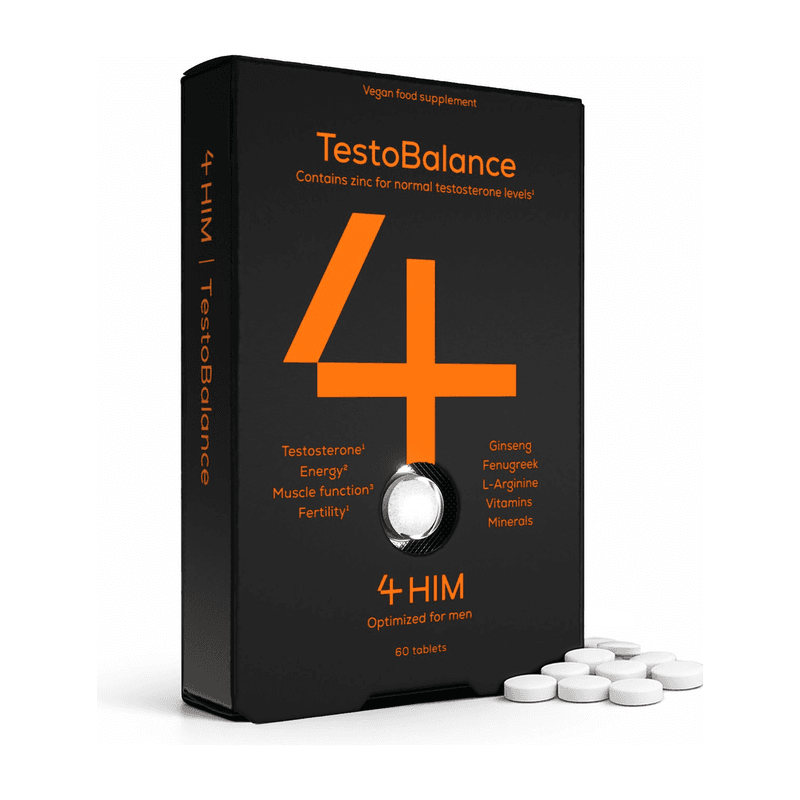
If your diet is low in zinc, TestoBalance provides 6 mg of zinc (60% of the NRV) in two tablets a day, alongside magnesium, vitamin B6, vitamin D, selenium and pantothenic acid. Zinc contributes to the maintenance of normal testosterone levels in the blood and to normal fertility and reproduction. It is a food supplement, not a treatment, and it does not replace a balanced diet, a healthy lifestyle or a check-up with your GP.
Frequently asked questions
What raises testosterone the fastest?
There is no quick, safe fix. In men with low levels caused by lifestyle, improving sleep and cutting back on alcohol can make a difference within weeks, while weight loss works over months. Only prescribed testosterone treatment changes levels quickly, and that is for men with a confirmed deficiency.
Can low testosterone go back to normal?
Often, if the cause is something that can change – such as excess weight, poor sleep, heavy drinking, an illness or a medicine. Low testosterone caused by a problem with the testes or pituitary gland usually needs treatment from a doctor.
Which vitamins help with testosterone?
No vitamin has been shown to raise normal testosterone levels. Zinc contributes to the maintenance of normal testosterone levels in the blood, and vitamin B6 contributes to the regulation of hormonal activity. They matter most if your intake is low.
Do any foods increase testosterone?
No single food does. A balanced diet that helps you keep to a healthy weight, with enough protein and zinc-containing foods such as meat, shellfish, dairy, beans and wholegrains, supports normal hormone levels. Very low-fat or very restrictive diets may work against you.
Does masturbation or sex lower testosterone?
No. Ejaculation causes only small, short-lived changes in testosterone and has no lasting effect on your levels.
Sources
- Corona G et al. Body weight loss reverts obesity-associated hypogonadotropic hypogonadism: a systematic review and meta-analysis. Eur J Endocrinol, 2013
- Leproult R, Van Cauter E. Effect of 1 week of sleep restriction on testosterone levels in young healthy men. JAMA, 2011
- Prasad AS et al. Zinc status and serum testosterone levels of healthy adults. Nutrition, 1996
- Koehler K et al. Serum testosterone and urinary excretion of steroid hormone metabolites after administration of a high-dose zinc supplement. Eur J Clin Nutr, 2009
- NHS – Physical activity guidelines for adults aged 19 to 64
- NHS – The risks of drinking too much
- NHS – Managing your weight
- NHS – Anabolic steroid misuse
- NHS – Vitamins and minerals: Others (zinc)
- GOV.UK – Great Britain nutrition and health claims (NHC) register