GB
GB Germany
 France
 Spain
Spain Italy
Italy Netherlands
 Norway
 Sweden
 Denmark
 Finland
 Portugal
Zinc and testosterone: does zinc increase testosterone?
Zinc contributes to normal testosterone levels, but extra zinc does not raise levels that are already normal. Who is at risk of low intake and how much is enough.

Zinc contributes to the maintenance of normal testosterone levels in the blood, and a lack of zinc is linked with low testosterone. But if you already get enough, taking more has not been shown to increase it. Men need about 9.5 mg a day, which most get from food. Getting enough matters most for vegans, heavy drinkers and people with gut conditions.
What does zinc have to do with testosterone?
Zinc is a mineral that hundreds of enzymes in the body depend on. In the testes, it is needed by the cells that make testosterone and for the production of healthy sperm. That is why one of zinc’s officially recognised functions is that zinc contributes to the maintenance of normal testosterone levels in the blood. Zinc also contributes to normal fertility and reproduction.
The key word is maintenance. Zinc is one of the things your body needs to keep testosterone at its normal level – not a lever that pushes the level higher.
Does zinc increase testosterone?
Only if you are short of it. The most-cited research is a small study from the 1990s: when four young men were put on a zinc-restricted diet for 20 weeks, their testosterone fell. When nine older men who were marginally zinc deficient were given zinc for several months, their testosterone rose.
In men who already get enough, the picture is different. In a trial where 14 healthy young men who already ate plenty of zinc took a high-dose zinc supplement (combined with magnesium and vitamin B6), their testosterone did not change. So the honest answer is:
- If your zinc intake is low, getting enough helps keep testosterone at its normal level.
- If your intake is already adequate, extra zinc has not been shown to raise testosterone – and too much brings its own problems.
Who is at risk of low zinc intake?
Severe zinc deficiency is rare in the UK, but intakes below the recommended level are not. The National Diet and Nutrition Survey shows that some adults and teenagers get less zinc than the lower reference nutrient intake – the level below which intake is likely to be too low for most people. Groups more likely to fall short include:
- Vegans and vegetarians – plant foods contain less zinc, and phytate in wholegrains and pulses reduces how much the body takes up.
- Heavy drinkers – alcohol reduces how much zinc is taken up from food and increases how much is lost in urine.
- People with gut conditions such as Crohn’s disease, ulcerative colitis or coeliac disease, or after weight-loss surgery.
- Older men with small appetites or a limited diet.
For the signs of low zinc and how it is diagnosed, see Zinc deficiency symptoms.
How much zinc do men need?
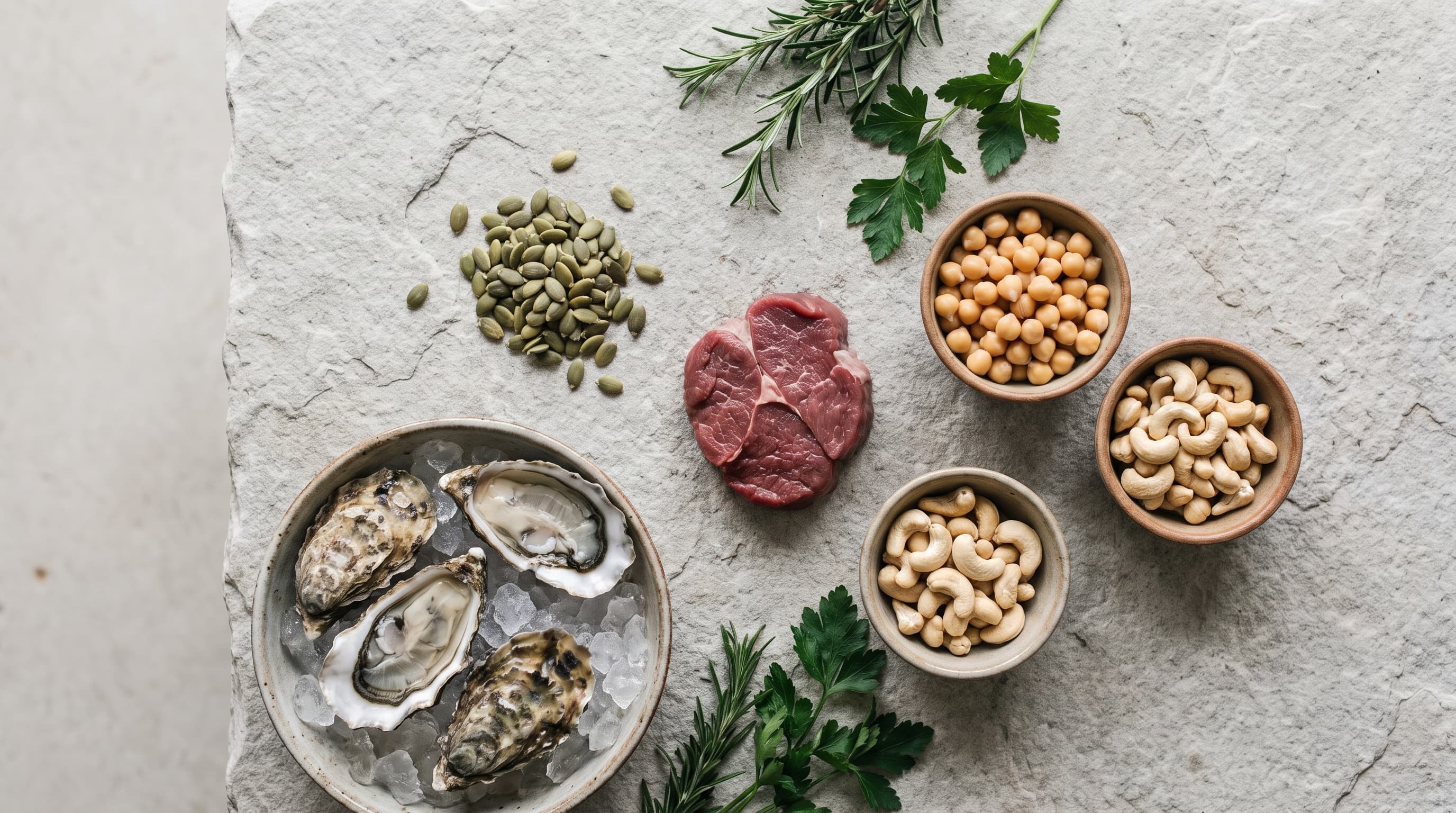
The NHS says men aged 19 to 64 need about 9.5 mg of zinc a day and women about 7 mg. Most people can get this from a varied diet: meat, shellfish, cheese and other dairy, bread and wholegrain cereals are the main sources in the UK.
For a breakdown of how much zinc is in everyday foods, see Foods high in zinc.
How much zinc is too much?
The NHS advises not taking more than 25 mg of zinc supplements a day unless a doctor recommends it. Over time, high doses reduce how much copper the body can take up, which can lead to anaemia and weakened bones. Very large doses can cause nausea, vomiting and stomach cramps.
This is worth checking if you take more than one supplement. A multivitamin, a separate zinc tablet and a sports supplement can easily add up to more than you think.
What if you want to top up your zinc?
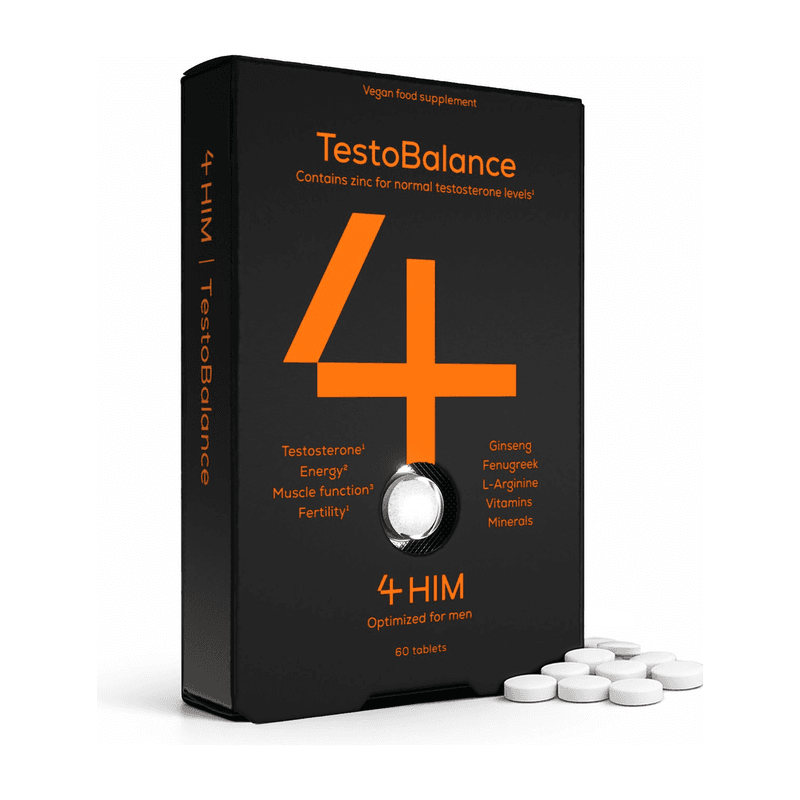
TestoBalance provides 6 mg of zinc (60% of the NRV) in a daily dose of two tablets – well within the NHS limit for supplements. Zinc contributes to the maintenance of normal testosterone levels in the blood and to normal fertility and reproduction.
Each daily dose also provides 40 µg of selenium (73% NRV) and 0.9 mg of vitamin B6 (64% NRV). Selenium contributes to normal spermatogenesis, and vitamin B6 contributes to the regulation of hormonal activity. Food supplements should not replace a varied, balanced diet and a healthy lifestyle.
Frequently asked questions
Do testosterone boosters work?
Most products sold as testosterone boosters rely on herbs such as fenugreek, tribulus or ashwagandha. Studies on these are small and the results are mixed, and none has an authorised health claim for testosterone. The only nutrient with an authorised claim is zinc, which contributes to the maintenance of normal testosterone levels – it does not raise levels that are already normal.
What are testosterone booster side effects?
It depends on what is in them. Too much zinc over time can lower copper levels; some herbs can cause stomach upset or interact with medicines. Products bought online that contain hidden steroids or hormones can cause serious harm, including shutting down your own testosterone production. Check the label and speak to a pharmacist if you take any medicines.
Can you take zinc and magnesium together?
Yes. At normal supplement doses, zinc and magnesium can be taken together, and many products combine them. If you take antibiotics such as doxycycline or any other regular medicine, check with a pharmacist first, as zinc and magnesium can stop some medicines working properly if taken at the same time.
How long does zinc take to work?
If your intake has been low, it takes weeks to months of regular intake to rebuild your zinc status. Zinc does not have a quick effect on testosterone, and if your status is already normal, you would not expect a change.
Is it better to take zinc in the morning or at night?
It does not matter much. Taking zinc with food can reduce the chance of an upset stomach. The main thing is to stay within 25 mg a day from supplements.
Sources
- Prasad AS et al. Zinc status and serum testosterone levels of healthy adults. Nutrition, 1996
- Koehler K et al. Serum testosterone and urinary excretion of steroid hormone metabolites after administration of a high-dose zinc supplement. Eur J Clin Nutr, 2009
- NHS – Vitamins and minerals: Others (zinc)
- British Nutrition Foundation – Vitamins and minerals
- Foster M et al. Effect of vegetarian diets on zinc status: a systematic review and meta-analysis of studies in humans. J Sci Food Agric, 2013
- NHS – Doxycycline
- GOV.UK – National Diet and Nutrition Survey
- GOV.UK – Great Britain nutrition and health claims (NHC) register