GB
GB Germany
 France
 Spain
Spain Italy
Italy Netherlands
 Norway
 Sweden
 Denmark
 Finland
 Portugal
Zinc deficiency symptoms and how much zinc you need a day
The signs of low zinc – skin, slow wound healing, infections, taste and smell – who is at risk, how much zinc you need a day and how much is too much.

Signs of low zinc include slow wound healing, skin rashes, frequent infections, hair loss, a reduced sense of taste or smell and loss of appetite. Severe deficiency is rare in the UK, but low intake is more common in vegans, heavy drinkers and people with gut conditions. The NHS says men need about 9.5 mg a day and women 7 mg, with no more than 25 mg from supplements.
What does zinc do in the body?
Zinc is a trace mineral found in every cell. The body cannot store much of it, so you need a regular supply from food. The NHS describes it as helping to make new cells and enzymes, to process the carbohydrate, fat and protein in food, and to heal wounds.
Among the officially recognised functions of zinc, zinc contributes to:
- the normal function of the immune system
- the maintenance of normal skin, hair and nails
- the maintenance of normal vision
- normal fertility and reproduction, and the maintenance of normal testosterone levels in the blood
- normal cognitive function
- normal protein synthesis and macronutrient metabolism
- the protection of cells from oxidative stress
What are the symptoms of zinc deficiency?
Because zinc is involved in so many processes, a shortage shows up in many different ways. The signs are not specific – most have other, more common causes – but they include:
- Skin problems – rashes, especially around the mouth, nose and hands, and dry, rough or scaly skin
- Slow wound healing
- More frequent infections, such as colds and chest infections
- Hair loss or thinning hair, and brittle nails
- A reduced sense of taste or smell
- Loss of appetite and weight loss
- Diarrhoea
- Low testosterone and reduced fertility in men
- Poor night vision
- In children, slower growth
Mild shortfalls often cause no obvious symptoms at all. If you are worried, see your GP rather than guessing from symptoms alone.
Who is at risk of zinc deficiency?
Severe zinc deficiency is uncommon in the UK, but the National Diet and Nutrition Survey shows that some adults and teenagers get less zinc than the lower reference nutrient intake – the level below which intake is likely to be too low for most people. The risk is higher for:
- Vegans and vegetarians. Plant foods contain less zinc, and phytate in wholegrains, beans and lentils reduces how much the body takes up.
- Heavy drinkers. Alcohol reduces how much zinc is taken up and increases losses in urine.
- People with gut conditions such as Crohn’s disease, ulcerative colitis or coeliac disease, long-term diarrhoea, or after weight-loss surgery.
- People with chronic kidney or liver disease, diabetes or sickle cell disease.
- Breastfeeding women, whose needs are higher.
- Older people who eat small amounts or a limited range of foods.
How much zinc per day do you need?
| Group | Zinc a day |
|---|---|
| Men aged 19 and over | 9.5 mg |
| Women aged 19 and over | 7 mg |
The European Food Safety Authority takes phytate into account: the more wholegrains and pulses you eat, the more zinc you need. Its reference intakes for men range from 9.4 mg a day on a low-phytate diet to 16.3 mg on a very high-phytate one, and for women from 7.5 mg to 12.7 mg. This is why people on a mainly plant-based diet should pay particular attention to zinc. See Foods high in zinc for how to reach your needs from food.
What happens if you have too much zinc?
Too much zinc is almost always the result of supplements, not food. The NHS advises not taking more than 25 mg of zinc supplements a day unless a doctor tells you to, and 25 mg a day is also the European tolerable upper intake level for total zinc.
- Over time, high doses reduce how much copper the body takes up, which can lead to anaemia and weakened bones, and in severe cases nerve damage.
- Large single doses can cause nausea, vomiting, stomach cramps and diarrhoea.
- Zinc can stop some antibiotics, such as doxycycline, working properly if taken at the same time. Check with a pharmacist how far apart to take them.
How is zinc deficiency diagnosed and treated?
Your GP can arrange a blood test for zinc, although it is not a perfect measure: levels change through the day and fall during any infection or inflammation, so results are interpreted together with your symptoms, diet and medical history. The GP will also look for an underlying cause, such as a gut condition.
A confirmed deficiency should be treated under medical supervision, usually by addressing the cause and sometimes with prescribed zinc for a limited period. Do not try to treat a suspected deficiency yourself with high-dose supplements.
Should you get zinc from food or a supplement?
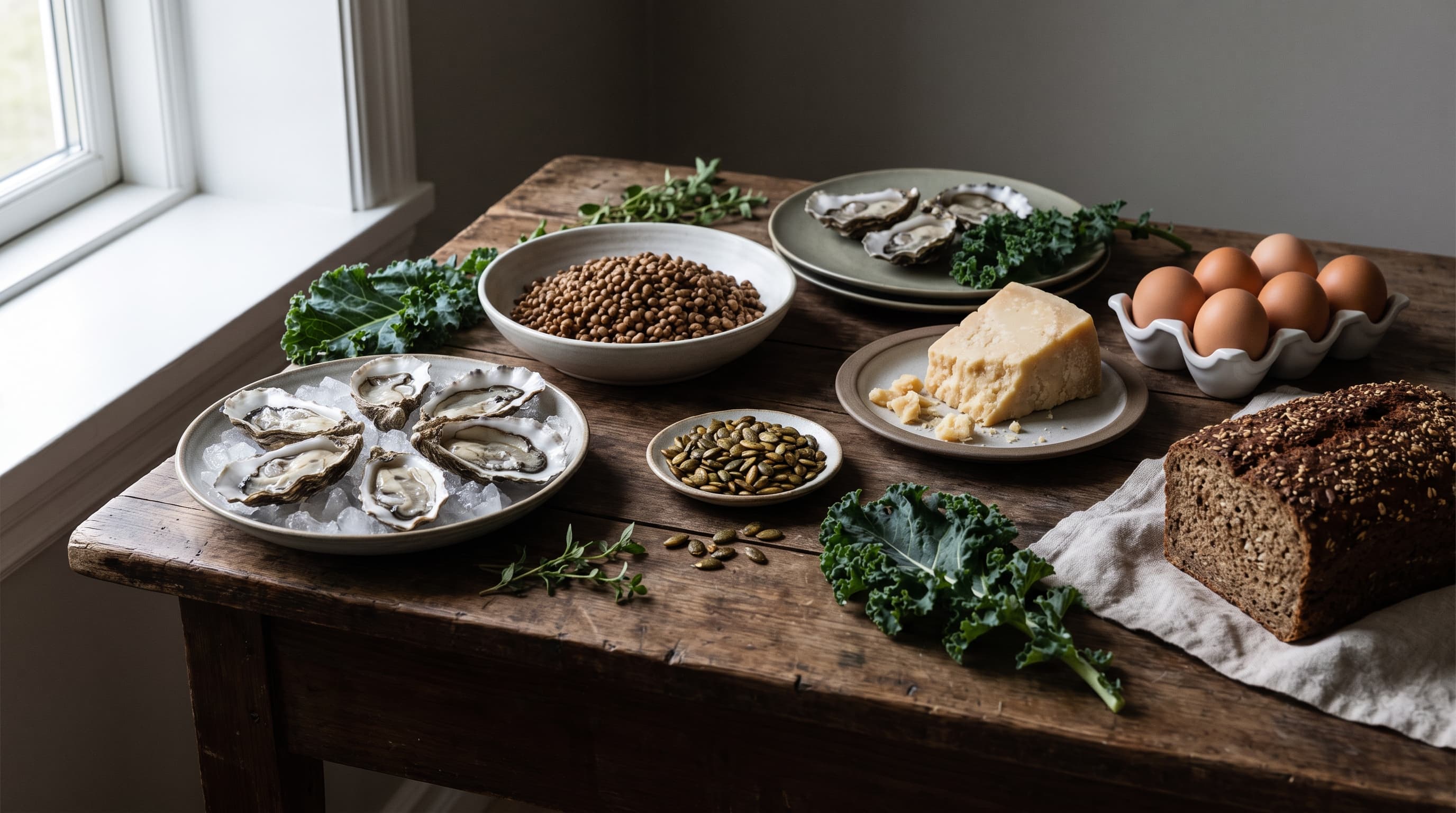
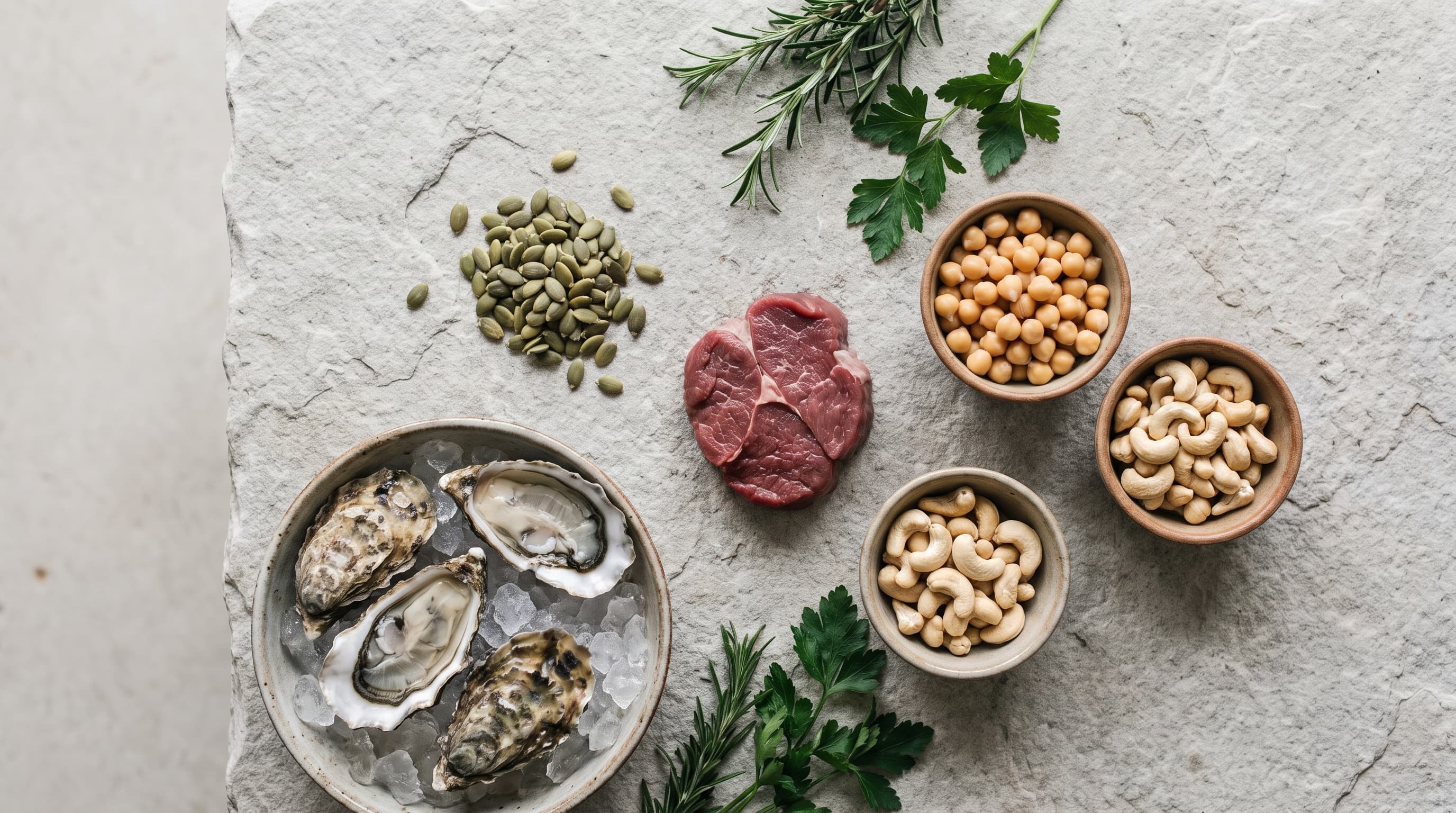
Food first. Meat, shellfish, cheese and other dairy, bread and wholegrain cereals provide most of the zinc in UK diets, and nuts, seeds, beans and lentils help plant-based eaters reach their needs. Most people who eat a varied diet get enough.
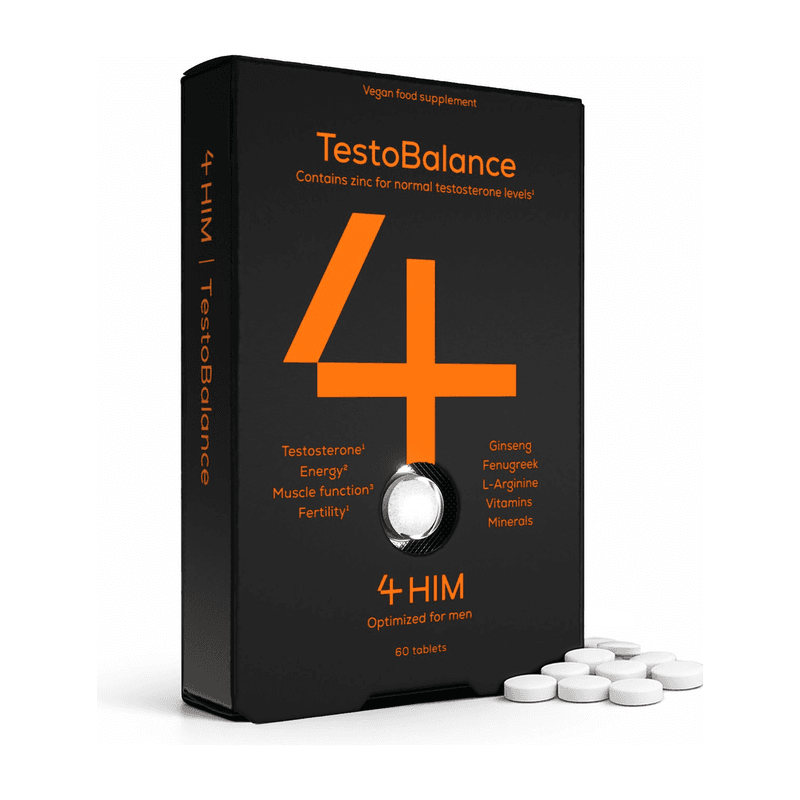
If your diet is limited, a supplement can top up your everyday intake. TestoBalance is a food supplement for adult men that provides 6 mg of zinc (60% of the NRV) in a daily dose of two tablets. Zinc contributes to the normal function of the immune system, to normal fertility and reproduction, and to the maintenance of normal testosterone levels in the blood. It is not a treatment for a diagnosed deficiency, and food supplements should not replace a varied, balanced diet and a healthy lifestyle.
Frequently asked questions
Can you take zinc every day?
Yes, as long as you stay within the NHS advice of no more than 25 mg a day from supplements. Most people who eat a varied diet do not need a supplement at all.
What is the most common sign of zinc deficiency?
There is no single tell-tale sign. Slow wound healing, skin rashes, frequent infections and a reduced sense of taste are among the most typical, but each of these has many other possible causes.
Can low zinc cause hair loss?
Yes, hair loss is one of the signs of zinc deficiency. But most hair loss is caused by genetics, hormones, stress or other medical conditions, and extra zinc will not help if your zinc status is already normal.
Does zinc help with colds?
Zinc contributes to the normal function of the immune system. Research on zinc lozenges and colds has given mixed results, and high doses can cause nausea and a bad taste. If you keep getting infections, see your GP.
How long does it take to correct low zinc?
It usually takes weeks to months, depending on how low your levels were and what caused them. A diagnosed deficiency should be treated and followed up by a doctor.
Sources
- NHS – Vitamins and minerals: Others (zinc)
- Public Health England – Government dietary recommendations
- British Nutrition Foundation – Vitamins and minerals
- EFSA – Dietary reference values for nutrients: summary report, 2017 (zinc)
- EFSA – Tolerable upper intake levels for vitamins and minerals
- Prasad AS. Impact of the discovery of human zinc deficiency on health. J Trace Elem Med Biol, 2014
- GOV.UK – National Diet and Nutrition Survey
- NHS – Doxycycline
- NHS – The vegan diet
- GOV.UK – Great Britain nutrition and health claims (NHC) register