GB
GB Germany
 France
 Spain
Spain Italy
Italy Netherlands
 Norway
 Sweden
 Denmark
 Finland
 Portugal
How much creatine per day? Grams, loading and how long it takes
How many grams of creatine to take a day, whether you need a loading phase, how long it takes to work, rest days, scoops vs teaspoons, and what happens when you stop.

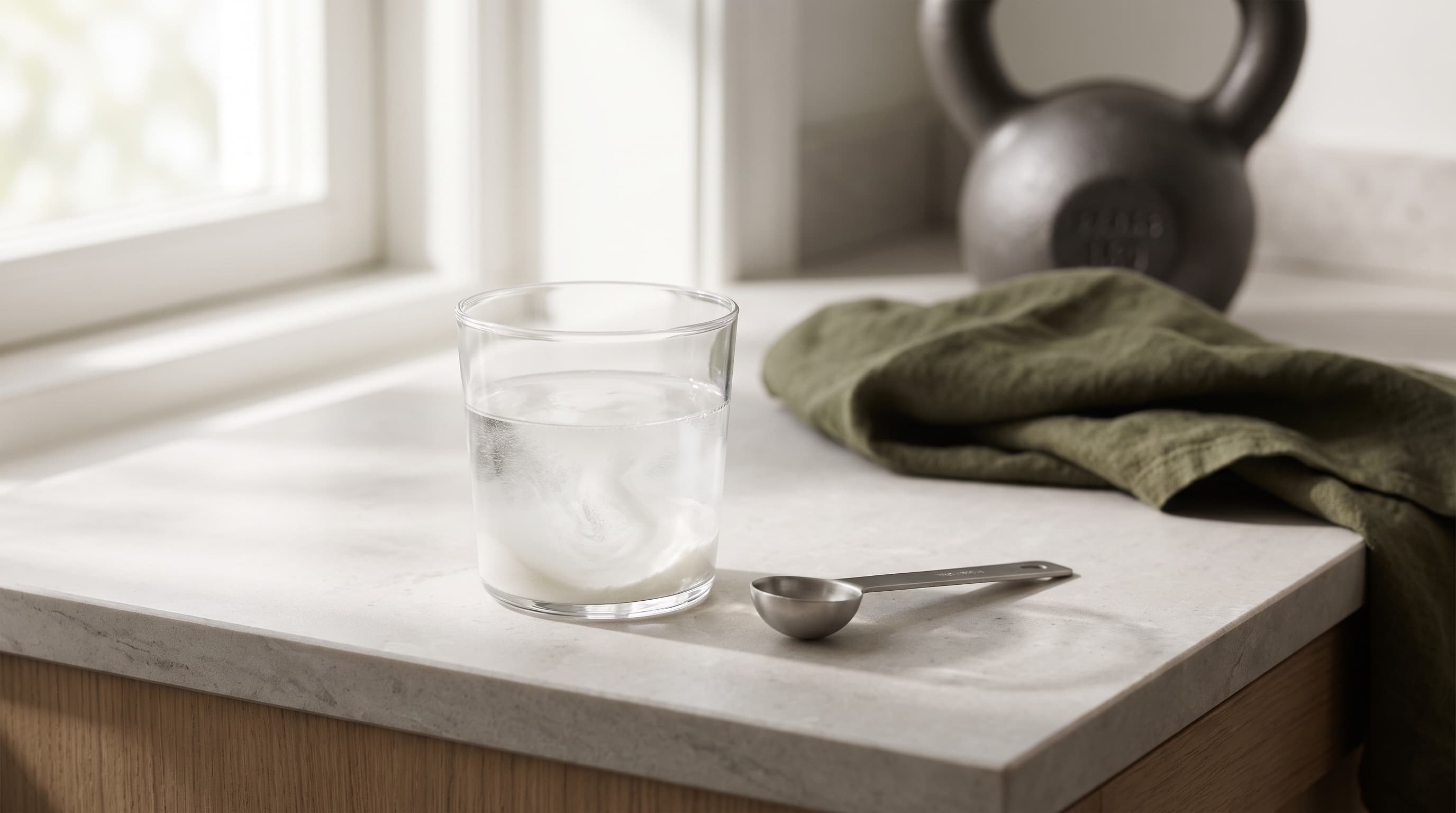
Both authorised creatine claims are based on 3 g of creatine a day, and research mostly uses 3–5 g. A loading phase of about 20 g a day for 5–7 days fills muscle stores faster, but it is optional: at 3 g a day they fill in about three to four weeks. Take it every day, including rest days.
How many grams of creatine should I take a day?
3 g of creatine a day is the intake the authorised claims are based on. Creatine increases physical performance in successive bursts of short-term, high-intensity exercise, and the beneficial effect is obtained with a daily intake of 3 g of creatine.
Most studies use between 3 and 5 g a day, and you will often see 5 g recommended online. Either way, the point is to keep muscle stores topped up – once they are full, extra creatine is simply broken down and passed out in urine.
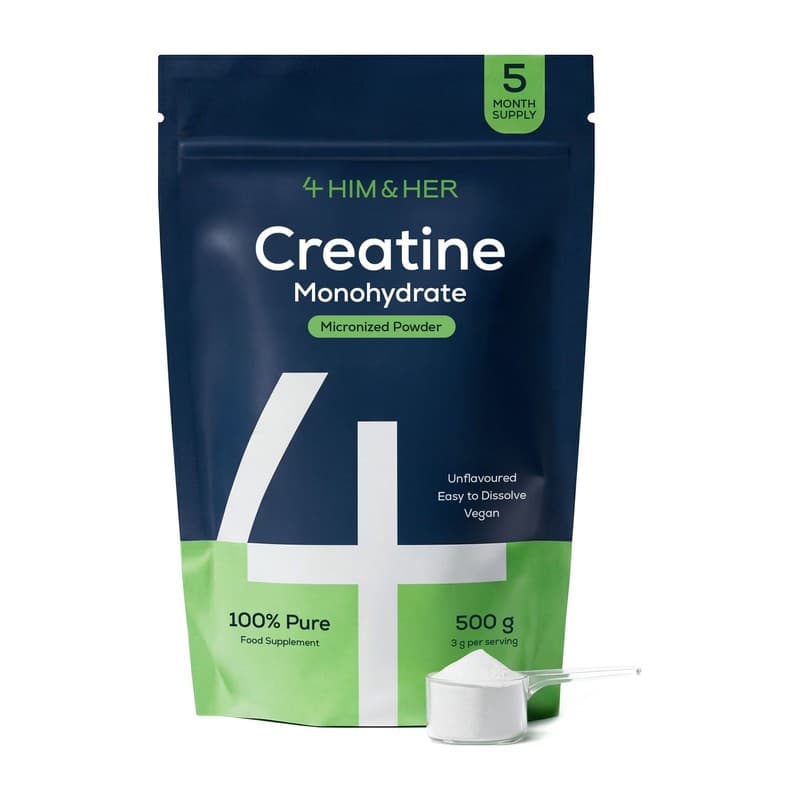
Check whether a label gives grams of creatine or of the compound. Creatine monohydrate is about 88% creatine, so 3.4 g of monohydrate gives 3 g of creatine. That is exactly one scoop of our creatine monohydrate.
Do I need a creatine loading phase?
No. Loading is a shortcut, not a requirement. In research, a loading phase usually means about 20 g a day, split into four 5 g doses, for 5–7 days, followed by a lower daily amount. It fills muscle stores in about a week.
The downsides: loading is when most people notice a jump on the scales from water, and large doses are more likely to upset the stomach. Taking 3 g a day from the start reaches the same full stores – it just takes longer. Our creatine is designed to be taken as one scoop a day with no loading phase.
How long does creatine take to work?
It depends on whether you load. Without loading, research found that 3 g a day raised muscle creatine to the same level as loading after about 28 days. With loading, stores are full in roughly a week. Creatine is not like caffeine – a single dose before a session does nothing noticeable. It works through the stores you build up over weeks.
| Approach | Daily amount | Stores full after |
|---|---|---|
| No loading | 3 g | about 3–4 weeks |
| Loading (research protocol) | about 20 g for 5–7 days, then 3–5 g | about 1 week |
Should you take creatine every day, including rest days?
Yes. Your body breaks down about 1–2% of its creatine every day whether you train or not, so a daily intake keeps stores steady. Skipping rest days lets them drift down slowly. If you miss a day, just carry on the next – don’t double up.
How much is a scoop or a teaspoon of creatine?
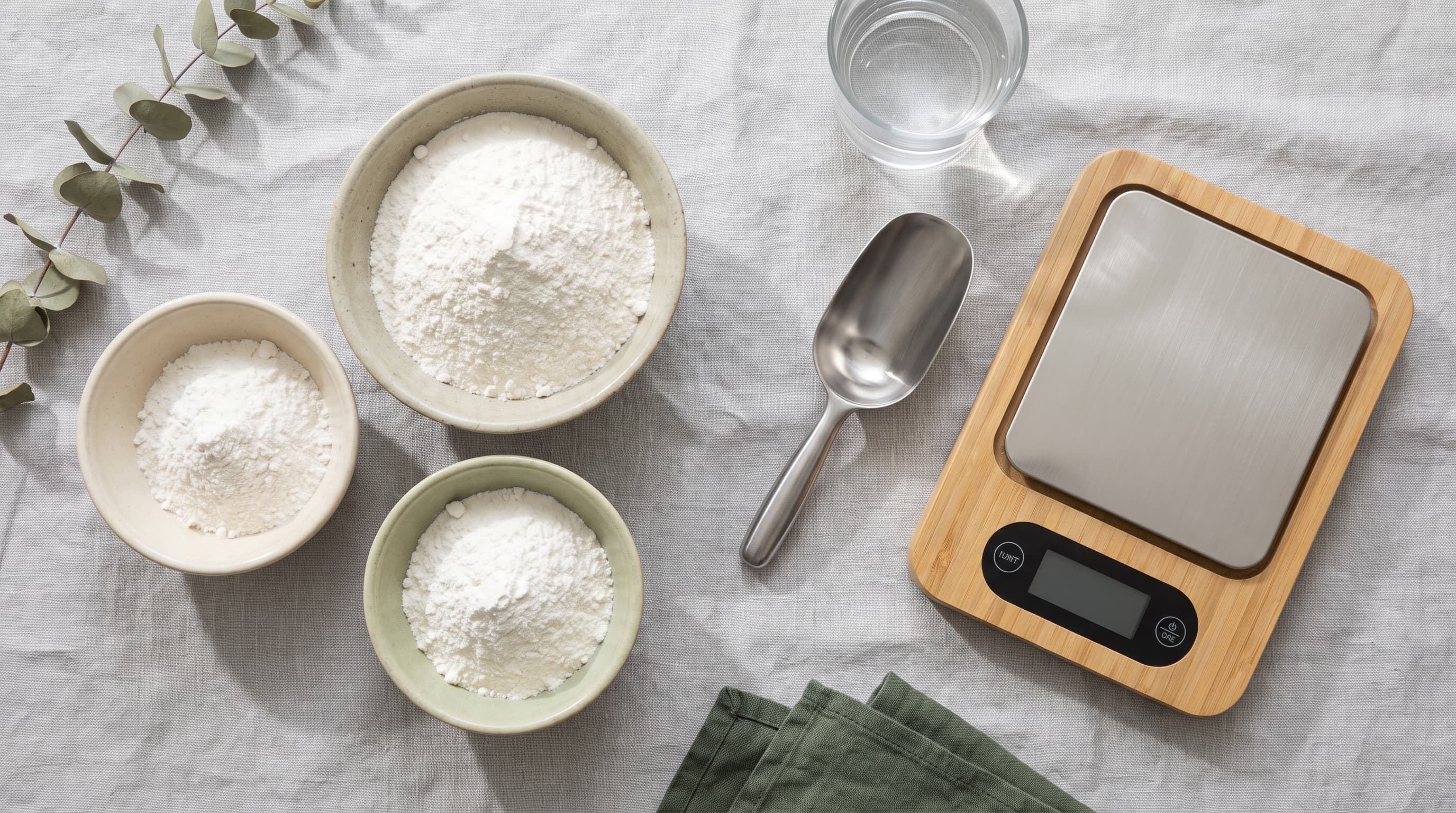
A level teaspoon of creatine powder holds roughly 3–5 g, depending on how finely it is milled and how tightly it is packed – too vague to rely on. Use the scoop that comes with the product, or kitchen scales that weigh to 0.1 g. Scoop sizes vary between brands, so check the label for how much creatine one scoop gives.
Should I base my creatine dose on body weight?
Some coaches and studies use formulas such as 0.03 g per kilo of body weight a day, or 0.3 g per kilo a day for loading. You will see these online, and heavier, very muscular athletes sometimes use more. The authorised claims are based on 3 g a day for adults, regardless of body weight, and that is the amount we recommend.
Is it worth taking 10 g of creatine at once?
No. Muscles can only hold so much, so a big single dose does not fill them faster than a steady daily intake once stores are full. Large single doses are also the main cause of stomach problems: in one study of footballers, diarrhoea was reported by about 56% of those taking 10 g in one go, compared with about 29% of those taking the same amount as two 5 g doses. Don’t take more than the recommended daily dose on the label.
Is it safe to take 3 grams of creatine per day?
For healthy adults, 3 g a day is at the low end of what has been studied, and long-term studies at these intakes have not found harm. It is not suitable for under-18s. If you have kidney disease, are pregnant or breastfeeding, or take medication, ask your doctor first. More in Creatine side effects.
What happens when you stop taking creatine?
Nothing dramatic. Muscle creatine drifts back to its usual level over about four to six weeks, and the water held in muscle goes with it, so you may lose the kilo or so you gained at the start. Your body carries on making its own creatine – supplements do not switch that off permanently.
Do you need to cycle creatine?
There is no good evidence that you need to. Cycling – weeks on, weeks off – became popular on the idea that the body “gets used to” creatine, but research does not support that. Most studies simply use a steady daily amount.
Frequently asked questions
Is 5 g of creatine better than 3 g?
Research uses both. Once muscle stores are full, both maintain them. The authorised claims are based on 3 g of creatine a day, which is what we recommend.
Can I take creatine twice a day?
You can split a daily amount, but there is no need. The total for the day is what matters, and splitting tends to make it easier to forget.
How long does a 500 g pouch of creatine last?
At 3.4 g of creatine monohydrate a day, a 500 g pouch gives about 147 servings – roughly five months.
Should I take more creatine on training days?
No. Take the same amount every day. Creatine works through stored levels, not a boost on the day.
Sources
- Kreider RB et al. – ISSN position stand: safety and efficacy of creatine supplementation (2017)
- Antonio J et al. – Common questions and misconceptions about creatine supplementation (2021)
- Ostojic SM, Ahmetovic Z – Gastrointestinal distress after creatine supplementation in athletes: are side effects dose dependent? (2008)
- GOV.UK – Great Britain nutrition and health claims (NHC) register
- Commission Regulation (EU) No 432/2012 – list of permitted health claims (legislation.gov.uk)