GB
GB Germany
 France
 Spain
Spain Italy
Italy Netherlands
 Norway
 Sweden
 Denmark
 Finland
 Portugal
What does creatine do? How it works, and what it doesn’t do
What creatine is, where it comes from, how it works in short, hard efforts, what the evidence supports – and what it doesn’t do. A plain-English UK guide.

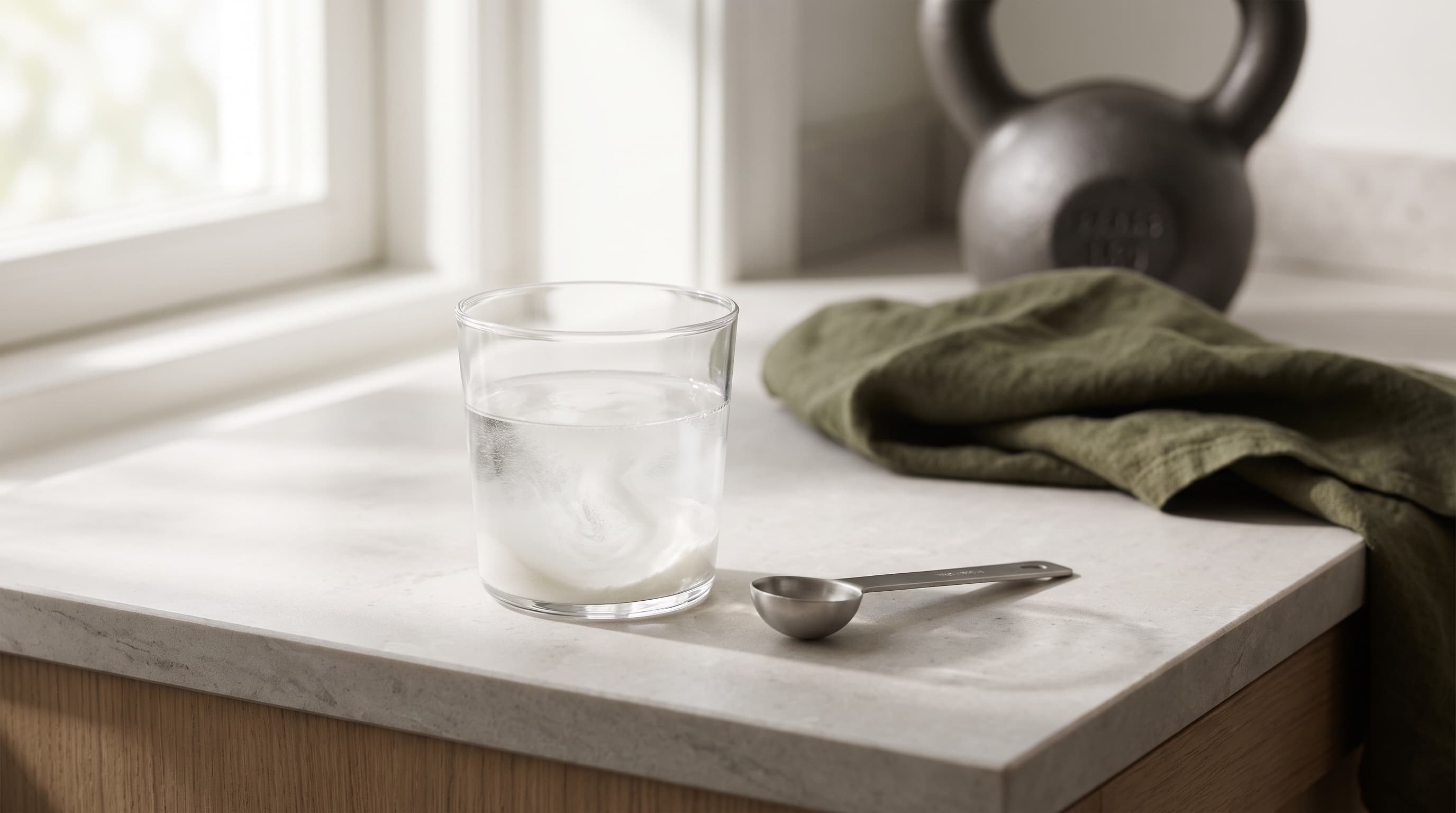
Creatine is a compound your body makes from three amino acids and also gets from meat and fish. It stores quick energy in muscle for short, all-out efforts. Creatine increases physical performance in successive bursts of short-term, high-intensity exercise, with a daily intake of 3 g. It is not a steroid, and it does not boost endurance.
What is creatine?
Creatine is a natural compound, not a drug or a hormone. Your liver, kidneys and pancreas make it from three amino acids – arginine, glycine and methionine – and it is then carried in the blood to the tissues that use the most energy. Around 95% of the body’s creatine sits in skeletal muscle, with small amounts in the brain and heart.
An average adult has about 120 g of creatine in the body. Roughly 1–2% of it is broken down each day into a waste product called creatinine, which the kidneys filter out. That daily loss, roughly 1–3 g depending on body size and muscle mass, is replaced partly by what the body makes and partly by food.
What foods naturally contain creatine?
Creatine is found almost only in animal foods, mainly meat and fish. Raw beef, pork and salmon contain roughly 4–5 g per kilo, and herring a little more. A typical mixed diet supplies about 1 g a day, and cooking destroys some of it.
| Food (raw) | Creatine per 100 g |
|---|---|
| Herring | 0.65–1.0 g |
| Pork | about 0.5 g |
| Beef | about 0.45 g |
| Salmon | about 0.45 g |
| Milk | about 0.01 g |
| Fruit, vegetables, grains, pulses | trace or none |
Is creatine vegan?
Creatine in food is not – it comes from meat and fish. But creatine monohydrate supplements are normally made by chemical synthesis rather than from animal sources, so most are suitable for vegans and vegetarians. Check the label to be sure.
Vegetarians and vegans get little or no creatine from their diet and rely on what the body makes. Studies have found they tend to have lower creatine stores in muscle than people who eat meat, which is one reason creatine is popular among plant-based athletes.
How does creatine work?
Muscles run on a molecule called ATP. During a sprint, a heavy lift or a jump, muscles burn through their ATP within seconds. Creatine is stored in muscle mostly as phosphocreatine, which hands its phosphate back to rebuild ATP almost instantly.
That system powers the first few seconds of maximal effort. Taking creatine regularly tops up the phosphocreatine stores in muscle, so there is more on hand to regenerate ATP across repeated short efforts – which is exactly what the authorised claim describes.
What are the benefits of creatine?
Two effects of creatine are backed by enough evidence to be authorised as health claims in Great Britain and the EU:
- Creatine increases physical performance in successive bursts of short-term, high-intensity exercise. The beneficial effect is obtained with a daily intake of 3 g of creatine.
- Daily creatine consumption can enhance the effect of resistance training on muscle strength in adults over the age of 55. The beneficial effect is obtained with a daily intake of 3 g of creatine in conjunction with resistance training that increases the load over time, done at least three times a week for several weeks, at an intensity of at least 65–75% of your one-rep maximum. The claim is aimed at adults over 55 who do regular resistance training.
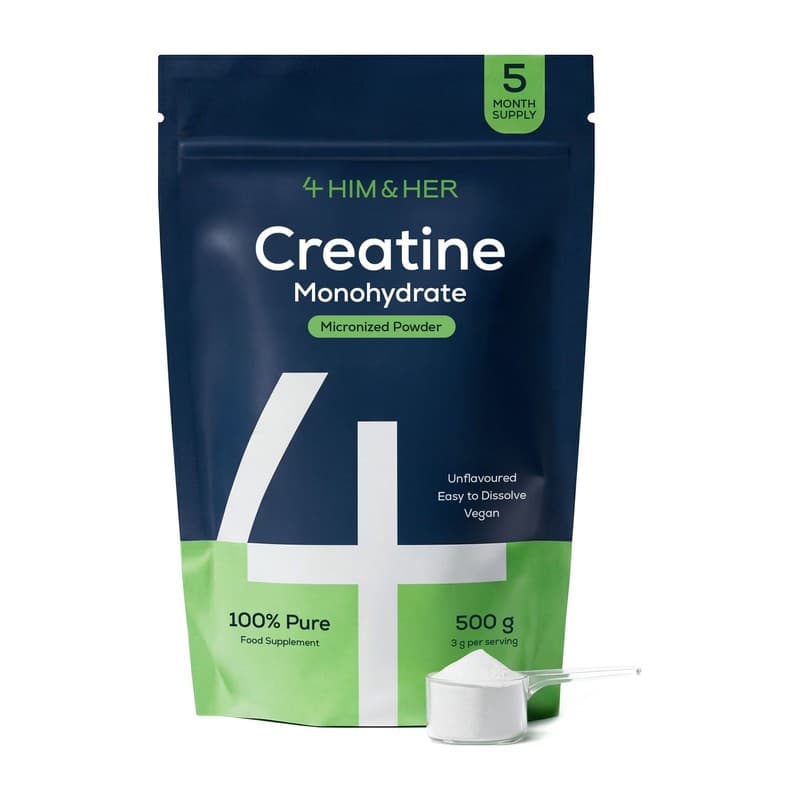
“Successive bursts” means things like sprint intervals, repeated sets in the gym, circuit classes, and stop-start sports such as football, rugby, hockey and tennis. Our creatine monohydrate gives 3 g of creatine in one 3.4 g scoop, the amount both claims are based on.
Is creatine a steroid?
No. Anabolic steroids are synthetic versions of testosterone. Creatine is made from amino acids, is already in your body and your food, and is not a hormone. It is sold legally as a food supplement and is not on the World Anti-Doping Agency prohibited list.
Creatine is also not a testosterone booster. Reviews of the research have not found a consistent effect on testosterone levels. The one study often quoted on hormones is covered in Does creatine cause hair loss?
Does creatine help with running and endurance?
Not as far as the authorised claim goes. The claim covers short, repeated, high-intensity efforts – not long runs, cycling at a steady pace or general fitness. Creatine is also not an energy supplement in the everyday sense: it will not make you feel more awake or less tired. If you run, it fits sprint sessions and intervals rather than your long Sunday run.
Can you take creatine without working out?
You can – creatine is a nutrient, and a supplement will raise the creatine stored in your muscles whether you train or not. But both authorised claims are about exercise: one about short, high-intensity efforts, the other about resistance training in over-55s. Without that training, there is no authorised benefit to point to.
What is creatine monohydrate, and how does it compare with other forms?
Creatine monohydrate is creatine bound to one molecule of water. It is about 88% creatine by weight, which is why 3.4 g of monohydrate gives 3 g of creatine. It is the form used in the large majority of creatine research, including the studies behind the authorised claims.
| Form | What it is | Amount of research |
|---|---|---|
| Creatine monohydrate | Creatine plus one water molecule, about 88% creatine | Hundreds of studies |
| Creatine HCl | Creatine bound to hydrochloric acid; dissolves more easily in water | A small number of studies |
| Creatine ethyl ester | Creatine attached to an ethyl group | Few studies; one found more of it broke down to creatinine |
| Buffered creatine | Creatine with an alkaline buffer added | Few studies |
| Gummies | Creatine (usually monohydrate) in a sweet chew | Same creatine, but the amount per gummy varies; check the label |
Other forms are often sold as needing a smaller dose or causing less bloating. The research on that is limited, so when you compare products, look at how much creatine you get per serving rather than the name of the form.
What does research say about creatine and the brain?
The brain uses creatine too, and researchers are studying whether supplements affect memory and thinking, especially during sleep deprivation, in older adults and in vegetarians. A 2018 systematic review found some positive results for short-term memory, but the studies were small and varied.
How much creatine should you take, and when?
Both authorised claims are based on 3 g of creatine a day. Loading phases are optional, and timing matters far less than taking it every day. See How much creatine per day and When to take creatine. Women take the same amount as men – more in Creatine for women.
Is creatine safe?
For healthy adults at normal intakes, creatine is one of the most studied supplements, and reviews have not found harm to the kidneys or liver. The most common effect is a small rise on the scales from water held in muscle. It is not suitable for under-18s, and anyone with kidney disease, who is pregnant or breastfeeding, or who takes medication should ask a doctor first.
Read the details in Creatine side effects and Does creatine cause hair loss?
Frequently asked questions
What does creatine do for your body?
It stores quick energy in muscle as phosphocreatine, which rebuilds ATP during short, maximal efforts. Creatine increases physical performance in successive bursts of short-term, high-intensity exercise; the beneficial effect is obtained with a daily intake of 3 g of creatine.
Does creatine build muscle?
Creatine does not build muscle on its own – training does that. The authorised claims are about performance in repeated short, high-intensity efforts, and about the effect of resistance training on muscle strength in adults over 55 who train regularly, both at 3 g of creatine a day.
How long does creatine take to work?
At 3 g a day, muscle creatine stores fill up over about three to four weeks. A loading phase fills them in about a week, but it is optional. See How much creatine per day for the detail.
Is creatine natural?
Yes. The body makes about 1 g a day and food supplies about the same. Supplements are usually made synthetically, which means the creatine itself is identical to the creatine in your body but contains no animal products.
Is creatine allowed in sport?
Yes. Creatine is not on the World Anti-Doping Agency prohibited list. Competitive athletes should still choose products that are batch-tested, as any supplement can be contaminated.
Sources
- Kreider RB et al. – ISSN position stand: safety and efficacy of creatine supplementation (2017)
- Antonio J et al. – Common questions and misconceptions about creatine supplementation (2021)
- Commission Regulation (EU) 2017/672 – creatine and resistance training in adults over 55 (legislation.gov.uk)
- GOV.UK – Great Britain nutrition and health claims (NHC) register
- Avgerinos KI et al. – Effects of creatine supplementation on cognitive function of healthy individuals (2018)
- NHS – The vegan diet