GB
GB Germany
 France
 Spain
Spain Italy
Italy Netherlands
 Norway
 Sweden
 Denmark
 Finland
 Portugal
How much iron per day? UK amounts for women and men
The NHS says women aged 19 to 49 need 14.8 mg of iron a day, while men, and women over 50, need 8.7 mg. Plus safe limits for supplements and a sample day.

The NHS says women aged 19 to 49 need 14.8 mg of iron a day, while men aged 19 and over and women aged 50 and over need 8.7 mg. Most people can get this from a varied diet. If you take a supplement, the NHS says 17 mg or less a day is unlikely to cause harm; take more only if your GP advises it.
How much iron do you need per day?
UK recommendations are set as reference nutrient intakes (RNIs) – enough for almost everyone in each group. Women need more than men between their late teens and around 50 because of the iron lost through periods.
| Age and sex | Iron per day |
|---|---|
| Children 1–3 years | 6.9 mg |
| Children 4–6 years | 6.1 mg |
| Children 7–10 years | 8.7 mg |
| Boys 11–18 years | 11.3 mg |
| Girls 11–18 years | 14.8 mg |
| Women 19–49 years | 14.8 mg |
| Women 50 and over | 8.7 mg |
| Men 19 and over | 8.7 mg |
You don’t need to hit the figure exactly every day – it’s your average intake over time that counts.
How much iron per day for a woman?
14.8 mg a day from age 11 to 49, and 8.7 mg from 50. The NHS adds that women who still have periods after 50 may need the higher amount. After the menopause, a woman’s iron needs drop to the same level as a man’s.
Why do men and women over 50 rarely need an iron supplement?
Their requirement, 8.7 mg a day, can usually be met from a varied diet. And because the body has no active way of getting rid of excess iron, extra iron that isn’t needed simply builds up. That’s a particular concern for people with haemochromatosis, an inherited condition that is common in people of northern European – especially Irish, Scottish and Welsh – descent.
So if you’re a man or past the menopause, don’t take iron unless a doctor has found a reason. If you feel tired all the time, see your GP rather than reaching for a supplement – see Iron deficiency symptoms.
What is a safe amount of iron to take daily?
For supplements, the NHS says that taking 17 mg or less a day of iron supplements is unlikely to cause any harm. Doses above about 20 mg can cause side effects such as constipation, feeling sick and stomach pain, and you should only take more than 17 mg a day if your GP advises it.
In 2024 the European Food Safety Authority set a safe level of intake of 40 mg a day for adults, counting iron from food and supplements together. Food already provides some of that, so count every product you take that contains iron.
Are 2 eggs enough iron?
No – but they help. Two large eggs provide about 2 mg of iron, which is around a seventh of the 14.8 mg a woman under 50 needs and nearly a quarter of a man’s 8.7 mg. The iron in eggs is the non-haem kind, which is absorbed less readily than iron from meat or fish.
How do you get 100% of your iron daily?
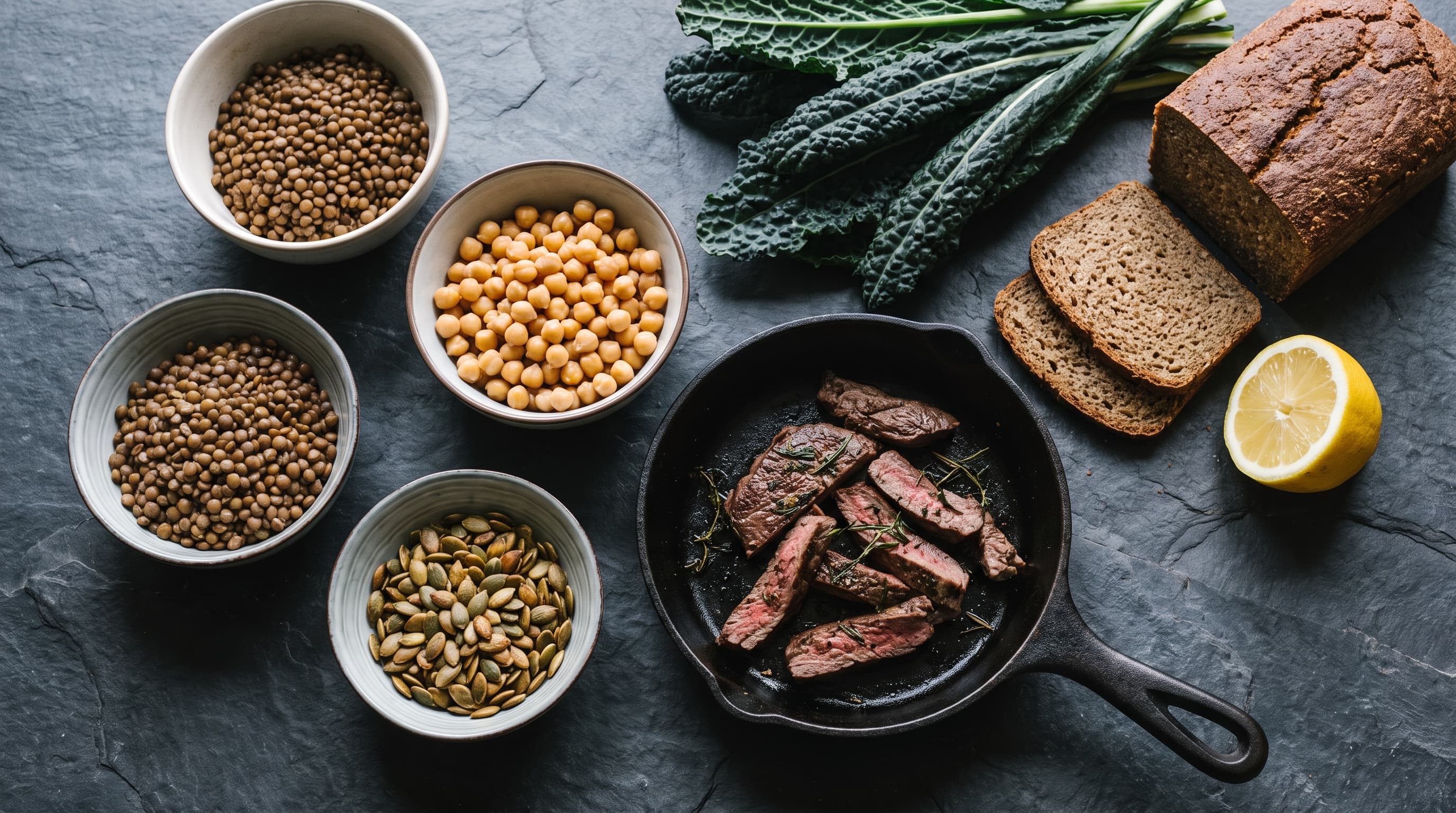
By spreading iron-containing foods across the day rather than relying on one. A day that reaches roughly 14–15 mg might look like this:
| Meal | Food | Iron (approx.) |
|---|---|---|
| Breakfast | Fortified breakfast cereal (30 g) with a glass of orange juice | 3–4 mg |
| Lunch | Two slices of wholemeal bread with hummus, plus a small handful of dried apricots | 3 mg |
| Snack | A small handful of pumpkin seeds (25 g) | 2.5 mg |
| Dinner | Beef and red kidney bean chilli (100 g mince, 80 g beans) with kale | 5–6 mg |
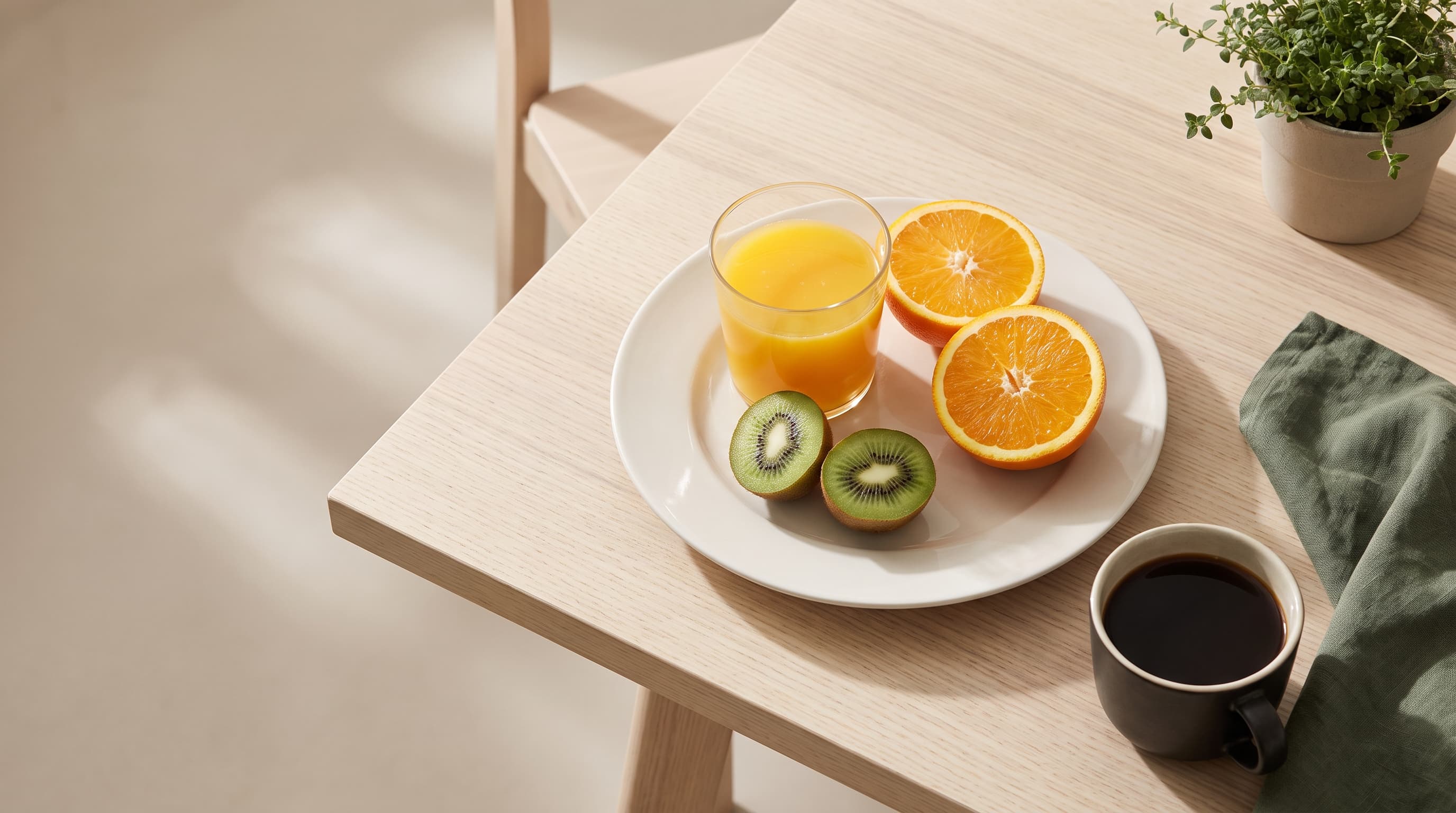
Pairing plant sources with foods rich in vitamin C, and having tea or coffee between rather than with meals, helps you make the most of the iron you eat. There are many more ideas in Iron-rich foods.
How much iron is in a daily iron supplement?
Everyday iron supplements commonly provide around 14 mg, which is 100% of the NRV – the reference value used on food and supplement labels across the UK and EU. The NRV (14 mg) is slightly different from the UK RNI for younger women (14.8 mg) because the two are set for different purposes, but they are very close.
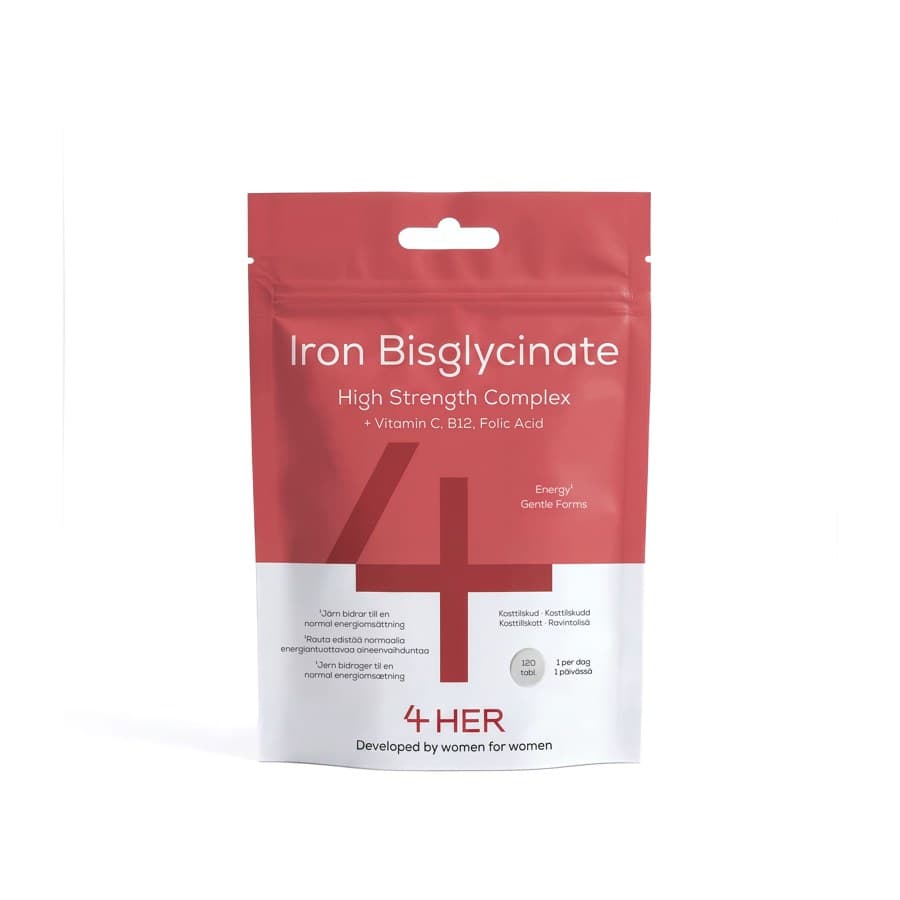
Our Iron Complex is one such supplement: one tablet provides 14 mg of iron as iron bisglycinate – 100% NRV – alongside vitamin C, folate, vitamin B12 and copper. Iron contributes to the reduction of tiredness and fatigue. It’s an adult supplement, one tablet a day, and stays below the NHS 17 mg figure.
Frequently asked questions
How much iron per day for a woman?
The NHS says women aged 19 to 49 need 14.8 mg of iron a day, and women aged 50 and over need 8.7 mg. Women who still have periods after 50 may need the higher amount.
What is a safe amount of iron to take daily?
The NHS says 17 mg or less a day from supplements is unlikely to cause any harm. Take more only if your GP advises it. EFSA’s safe level for adults is 40 mg a day from food and supplements combined.
Are 2 eggs enough iron?
No. Two large eggs give about 2 mg of iron – roughly a seventh of what a woman under 50 needs each day. They are a useful part of a varied diet rather than enough on their own.
How much iron does a man need per day?
Men aged 19 and over need 8.7 mg a day, according to the NHS. Most men get this from food and should not take iron supplements unless a doctor advises it.
Is 65 mg of iron a day too much?
For a supplement taken without medical advice, yes – it is well above the NHS figure of 17 mg a day. Doses like this are only used when a doctor prescribes them, for a set period and with blood tests.
Sources
- NHS – Vitamins and minerals: Iron
- Public Health England – Government Dietary Recommendations (2016)
- British Nutrition Foundation – Nutrition recommendations for women
- EFSA – Scientific opinion on the tolerable upper intake level for iron (2024)
- NHS – Haemochromatosis
- Composition of foods integrated dataset (CoFID)