GB
GB Germany
 France
 Spain
Spain Italy
Italy Netherlands
 Norway
 Sweden
 Denmark
 Finland
 Portugal
Omega-3 in pregnancy: DHA, fish and cod liver oil
Why DHA matters in pregnancy and breastfeeding, how much fish to eat, which fish to avoid, why cod liver oil is off the menu – and who to ask about supplements.

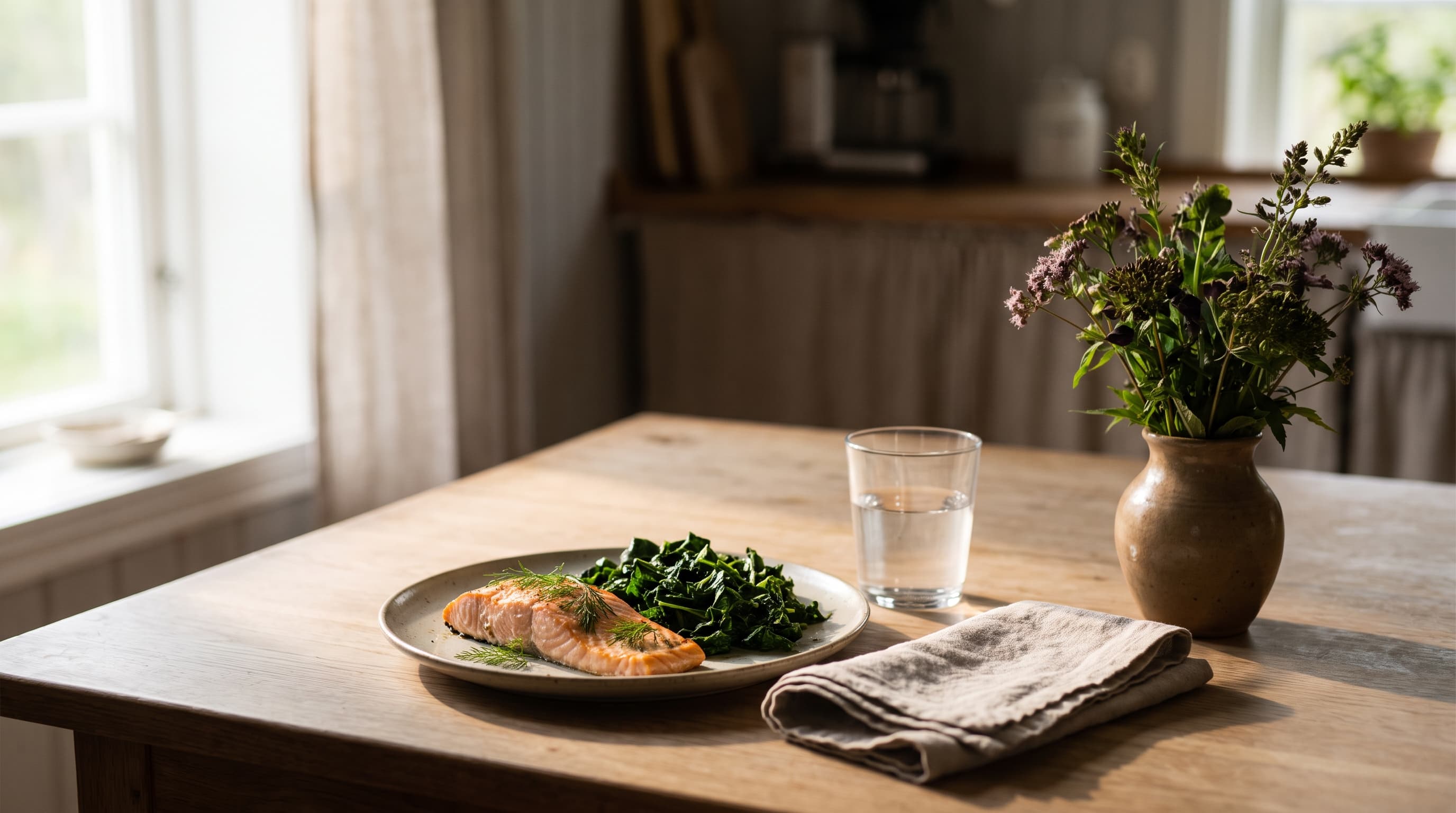
DHA, a long-chain omega-3, plays a part in a baby’s brain and eye development. The NHS advice in pregnancy is food first: 2 portions of fish a week, one of them oily, but no more than 2 portions of oily fish. Avoid shark, swordfish and marlin, and do not take cod liver oil. Discuss any omega-3 supplement with your midwife or GP.
Why does omega-3 matter in pregnancy?
DHA is a building block of the brain and the retina of the eye, and a baby gets it from the mother – through the placenta during pregnancy and through breast milk afterwards. The NHS notes that oily fish is particularly important in pregnancy and breastfeeding because it can help the baby’s nervous system to develop.
On the Great Britain claims register, maternal DHA intake is recognised as contributing to the normal brain development and normal eye development of the foetus and breastfed infants. That applies with a daily intake of 200 mg of DHA on top of the 250 mg of EPA and DHA recommended for adults – in other words, around 450 mg a day of EPA and DHA, including the extra DHA.
How much DHA do you need in pregnancy?
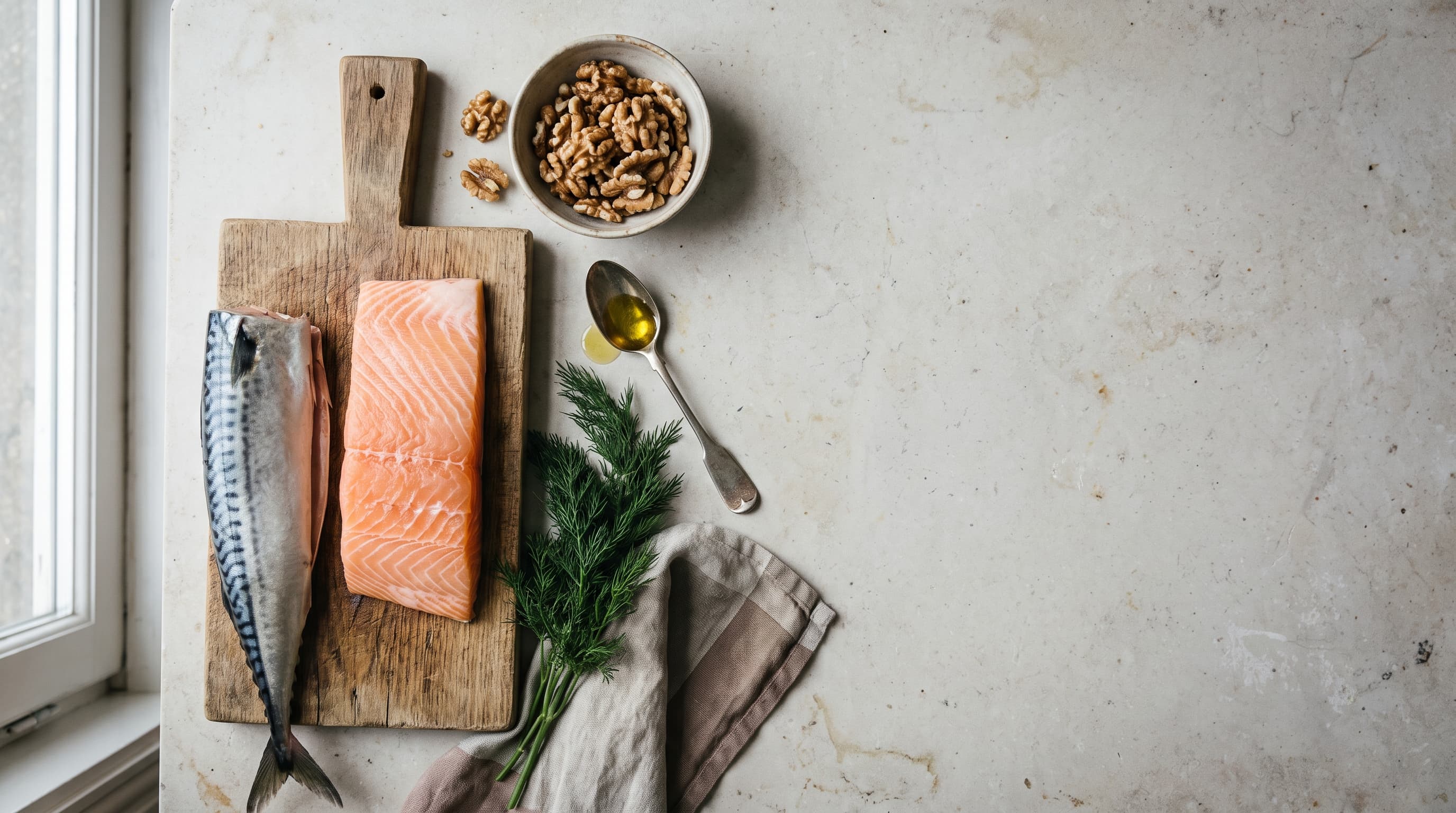
There is no separate UK intake figure for DHA in pregnancy. The claims register uses an extra 200 mg of DHA a day on top of the usual adult intake as its condition. NHS advice is to get it from food: one portion of oily fish such as salmon, sardines or mackerel typically provides well over a gram of EPA and DHA, which is why the NHS advice of 2 portions of fish a week, one of them oily, goes a long way towards it. For how fish compares, see omega-3 foods.
Can you take omega-3 while pregnant?
The NHS does not include omega-3 among the supplements it recommends in pregnancy. Those it does recommend are folic acid (400 micrograms a day before conception and until 12 weeks) and vitamin D (10 micrograms a day).
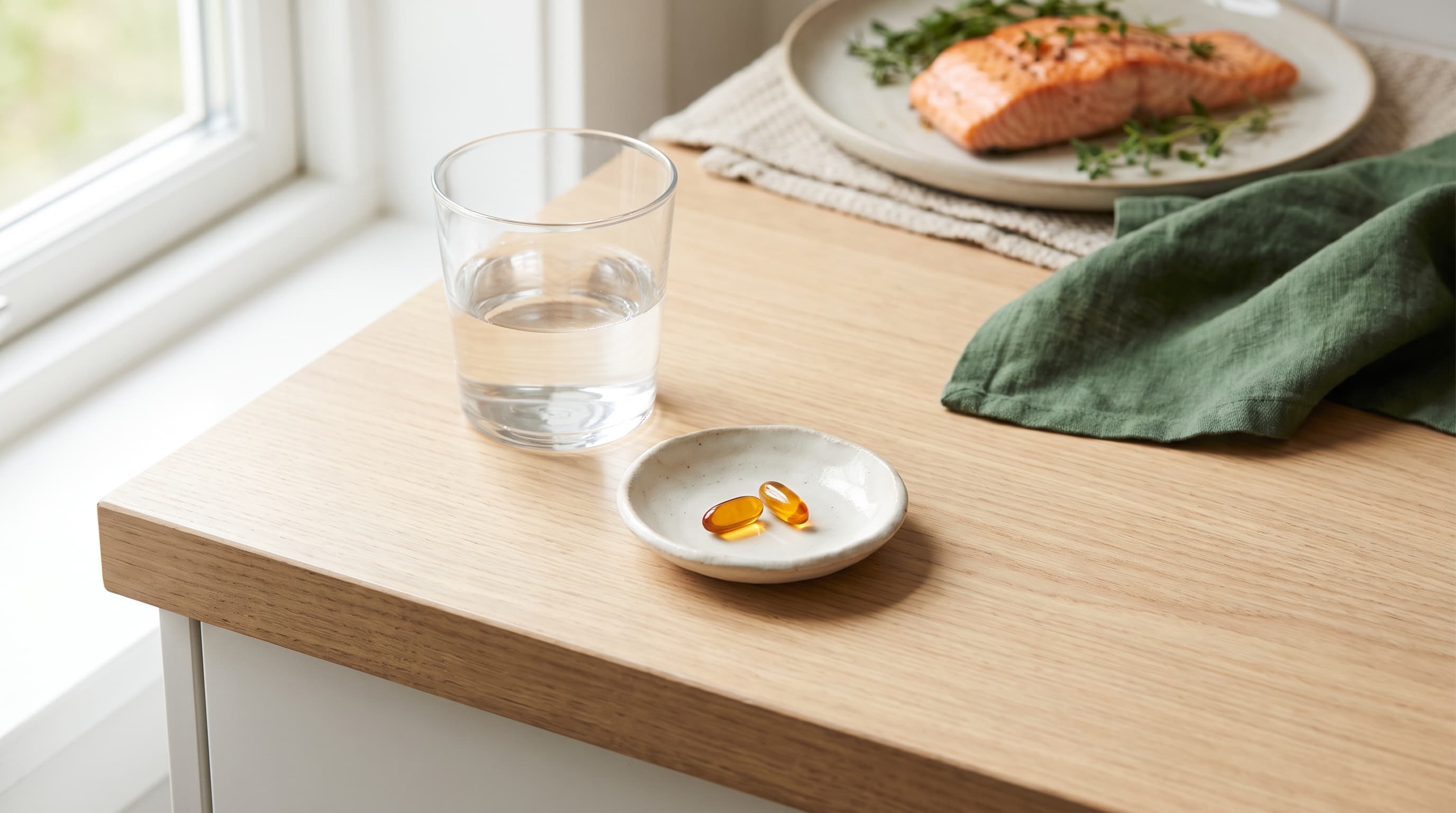
Whether an omega-3 supplement makes sense for you – for example if you do not eat fish – is a decision for your midwife, GP or pharmacist. Many general omega-3 supplements are not intended for use in pregnancy, so check the label and ask before taking one. Never use cod liver oil (see below).
Which fish should you avoid when pregnant?
Fish is good for you and your baby, but some types contain more mercury or other pollutants, and some carry a risk of food poisoning. The NHS advises:
| Fish | Advice |
|---|---|
| Shark, swordfish, marlin | Avoid completely – they contain more mercury |
| Oily fish (salmon, trout, mackerel, sardines, herring) | No more than 2 portions a week (about 140 g each) |
| Tuna | No more than 4 medium cans or 2 tuna steaks a week; tuna does not count as oily fish |
| Raw fish and raw shellfish, including sushi with raw fish | Avoid, even if previously frozen |
| Cold-smoked or cured fish, such as smoked salmon | Only if cooked until steaming hot |
| Cooked fish and cooked shellfish | Safe to eat |
The same limit of 2 portions of oily fish a week applies while breastfeeding, and to anyone who may become pregnant in future.
Is cod liver oil safe in pregnancy?
No. The NHS says not to take cod liver oil, or any supplement containing vitamin A (retinol), when you are pregnant, because too much vitamin A can harm a baby’s development. For the same reason, avoid liver and liver products such as pâté.
What about omega-3 while breastfeeding?
DHA passes into breast milk, so the mother’s diet still matters. The NHS advises breastfeeding women to eat at least 2 portions of fish a week, one of them oily, but no more than 2 portions of oily fish, and no more than 1 portion a week of shark, swordfish or marlin. As in pregnancy, talk to your health visitor, midwife or GP before taking a supplement.
How can you get omega-3 in pregnancy without eating fish?
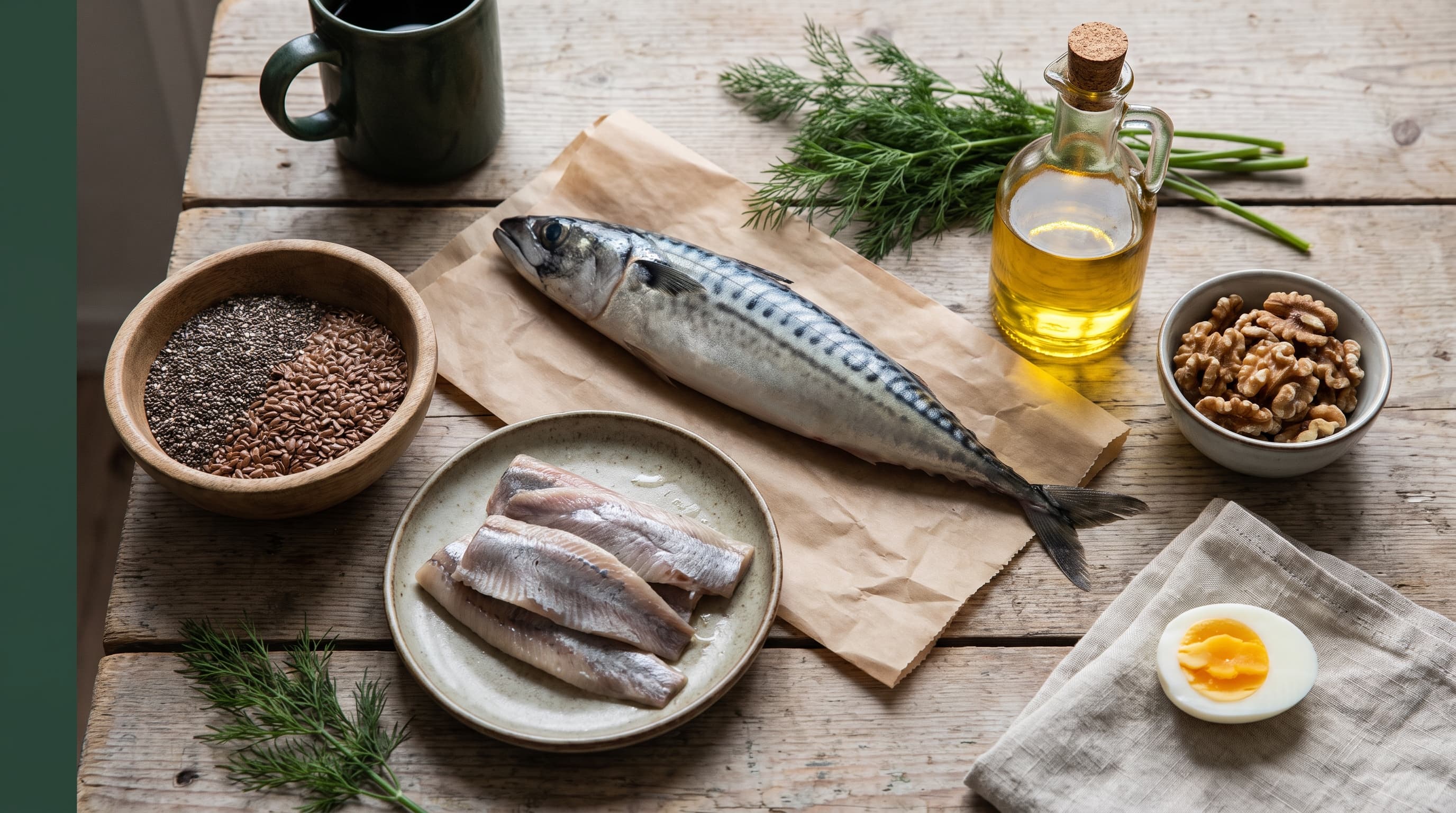
Plant foods – rapeseed oil, ground linseed, chia seeds and walnuts – give ALA, but the body converts little of it into DHA. Some eggs, milks and spreads have added omega-3. If you do not eat fish, ask your midwife or GP whether an algae-based DHA supplement suitable for pregnancy would be appropriate for you. More on food sources in omega-3 foods.
Frequently asked questions
Can I eat salmon when pregnant?
Yes, cooked salmon is safe and a good source of DHA. Keep oily fish, including salmon, to no more than 2 portions a week. Smoked salmon should be cooked until steaming hot, and avoid raw salmon, for example in sushi.
Is tuna safe in pregnancy?
In limited amounts. Have no more than 4 medium cans or 2 tuna steaks a week because of mercury. Tuna does not count towards your oily fish portion.
Should I take a DHA supplement if I don’t eat fish?
It may be worth discussing with your midwife or GP. They can advise whether a supplement is appropriate and which kind; any product should be intended for pregnancy and contain no vitamin A.