GB
GB Germany
 France
 Spain
Spain Italy
Italy Netherlands
 Norway
 Sweden
 Denmark
 Finland
 Portugal
Omega-3 benefits: what is omega-3 actually good for?
What omega-3 is good for, the difference between ALA, EPA and DHA, what happens if you take it daily – and the popular claims about skin and joints that do not hold up.


Omega-3 is a family of essential fats. The two with recognised functions are EPA and DHA, found mainly in oily fish. EPA and DHA contribute to the normal function of the heart (with a daily intake of 250 mg of EPA and DHA). DHA contributes to the maintenance of normal brain function and normal vision (with 250 mg of DHA a day).
What is omega-3?
Omega-3 is not one nutrient but a family of polyunsaturated fats. Your body cannot make them from scratch, so they have to come from food. Three matter most in everyday nutrition, and they are worth keeping apart because they do different things.
| Fatty acid | Where it comes from | What to know |
|---|---|---|
| ALA (alpha-linolenic acid) | Plants: rapeseed oil, linseed (flaxseed), chia seeds, walnuts | A shorter-chain omega-3. The body turns only a small fraction of it into EPA and DHA. |
| EPA (eicosapentaenoic acid) | Oily fish and seafood; algae | A long-chain omega-3 with an authorised heart function, together with DHA. |
| DHA (docosahexaenoic acid) | Oily fish and seafood; algae | A long-chain omega-3 with authorised heart, brain and vision functions. |
When people talk about the benefits of omega-3, they almost always mean EPA and DHA. The omega-3 in fish comes from the micro-algae at the bottom of the marine food chain, which is why algae oil is also a source. For a closer look at where to find them, see omega-3 foods.
What is omega-3 good for?
Three functions of EPA and DHA have been scientifically assessed and are authorised on the Great Britain nutrition and health claims register. Each comes with a condition: the amount you need to take in every day for the effect.
| Function | Nutrient | Daily intake needed |
|---|---|---|
| EPA and DHA contribute to the normal function of the heart | EPA + DHA | 250 mg of EPA and DHA |
| DHA contributes to the maintenance of normal brain function | DHA | 250 mg of DHA |
| DHA contributes to the maintenance of normal vision | DHA | 250 mg of DHA |
Those are maintenance functions: EPA and DHA play a part in keeping the heart, brain and eyes working normally. They are not treatments, and they do not mean that more omega-3 prevents illness. A portion of oily fish such as salmon or mackerel contains well over 250 mg of EPA and DHA, so the NHS advice of at least one portion of oily fish a week goes a long way towards it.
Two further claims exist for EPA and DHA – on normal blood triglyceride levels and normal blood pressure – but they apply only at intakes of 2 g and 3 g a day, far more than most diets or ordinary supplements provide, and they come with a warning not to exceed 5 g a day.
Is omega-3 good for your skin, joints or inflammation?
These are among the most searched omega-3 questions, and many websites answer them with a confident yes. The honest answer is that none of them is an authorised function of omega-3. Research on joints, skin, mood and inflammation exists, but it has not been strong or consistent enough for those claims to be accepted.
- Skin and hair: no authorised claim. Very rarely, a genuine lack of essential fats shows up as a rough, scaly rash – but that is a different situation from everyday dry skin.
- Joints and inflammation: no authorised claim. Results from trials have been mixed, and “anti-inflammatory” is not an accepted description of omega-3.
- Blood thinning: omega-3 can slightly lengthen bleeding time at high doses. That is a safety point, not a benefit – see when to take omega-3 and its side effects.
- Blood pressure: the claim on normal blood pressure needs 3 g of EPA and DHA a day – far more than food or ordinary supplements provide.
What do the NHS and NICE say about omega-3?
UK advice is food first. The NHS recommends at least 2 portions of fish a week, one of them oily, and the British Dietetic Association notes that omega-3 supplements are not recommended for the general population.
NICE, which sets clinical guidance for the NHS, says doctors should not offer omega-3 fatty acid compounds to prevent cardiovascular disease, nor advise omega-3 capsules to prevent a further heart attack. Large trials have not shown that ordinary omega-3 supplements prevent heart disease. For people who have had a heart attack, NICE adds that there is no evidence of harm if they choose to take omega-3 capsules.
What happens if you take omega-3 every day?
Most people notice nothing in particular – and that is expected. Omega-3 is not a stimulant. Taken daily, EPA and DHA are gradually built into the membranes of cells, including red blood cells, and blood levels rise over the following weeks.
After 30 days, levels in the blood will already have moved, but red blood cells live for around four months, so it takes roughly three to four months to reach a new steady level. That is why omega-3 is meant to be taken consistently rather than as a one-off. For the practical side – with food, morning or evening – see when to take omega-3.
Daily use is considered safe for adults at sensible doses. The European Food Safety Authority concluded that supplemental EPA and DHA of up to 5 g a day combined do not raise safety concerns. More is not better – see how much omega-3 per day.
Are the benefits of omega-3 different for women?
No. The functions of EPA and DHA are the same for women and men, and so is the 250 mg intake they are based on. What differs is the advice on fish: girls and women who may have children one day, or who are pregnant or breastfeeding, should have no more than 2 portions of oily fish a week, because oily fish can carry pollutants.
Pregnancy has its own guidance on DHA, fish and cod liver oil, which we cover separately in omega-3 in pregnancy.
Who might consider an omega-3 supplement?
The simplest route to EPA and DHA is oily fish. A supplement is a top-up, not a replacement for a varied diet. It may make sense if you rarely or never eat oily fish, if you simply do not like fish, or if you want a predictable daily amount. Fish oil is not suitable for vegans and vegetarians; some algae-only supplements are – see cod liver oil, fish oil and algae oil compared.
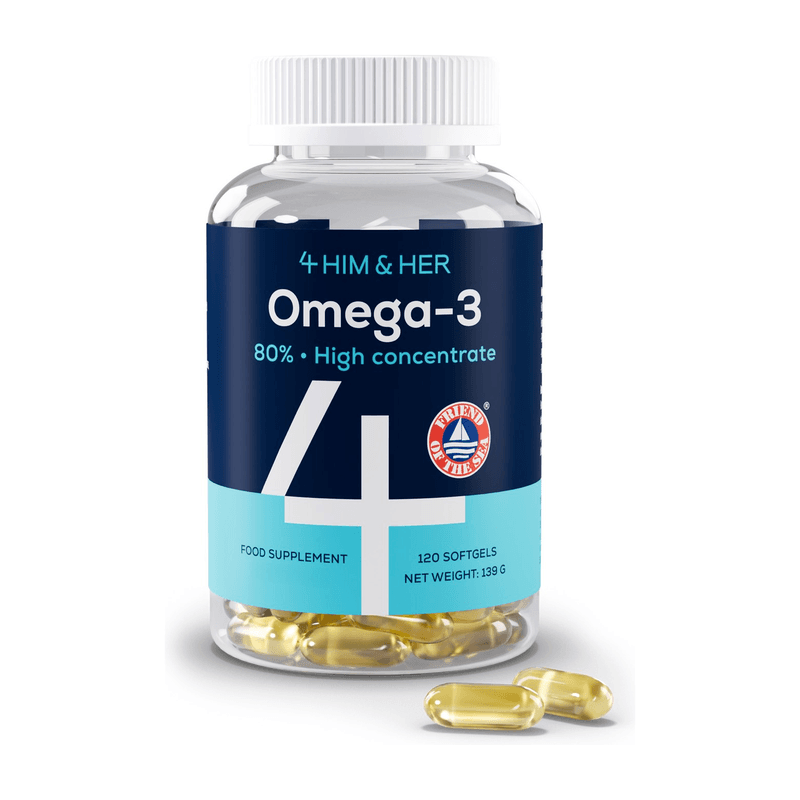
Our Omega-3 Fish Oil is an 80% fish oil concentrate in triglyceride form. Two softgels a day provide 1334 mg of omega-3, including 668 mg of EPA and 500 mg of DHA – 1168 mg of EPA and DHA in total, above the 250 mg on which the heart function is based and twice the 250 mg of DHA behind the brain and vision functions. It is not suitable for under-18s. If you are pregnant or breastfeeding, or take medication, check with your GP or pharmacist first.
Frequently asked questions
What is omega-3 beneficial for?
EPA and DHA contribute to the normal function of the heart, with a daily intake of 250 mg of EPA and DHA. DHA contributes to the maintenance of normal brain function and normal vision, with a daily intake of 250 mg of DHA. These are the authorised functions; claims about skin, joints or inflammation are not.
Is omega-3 good for you?
Yes, omega-3 fats are essential – the body needs them and cannot make them. The easiest way to get EPA and DHA is oily fish: the NHS recommends at least one portion a week as part of 2 portions of fish. Supplements are an option if you eat little or no oily fish.
How long does it take for omega-3 to start working?
There is nothing to feel. Blood levels of EPA and DHA start to rise within days to weeks of taking them daily, and levels in red blood cells take around three to four months to settle at a new steady level. Consistency matters more than timing.
What happens when you take omega-3 for 30 days?
Your blood levels of EPA and DHA will have risen, but they will still be climbing. Most people do not notice any change in how they feel. Some notice mild side effects such as fishy burps or a looser stomach, which taking the capsules with a meal usually helps.
Does omega-3 thin your blood?
At high intakes omega-3 can slightly lengthen bleeding time. EFSA found no increased risk of bleeding with supplemental EPA and DHA up to 5 g a day, but if you take an anticoagulant or are due to have surgery, speak to your doctor or pharmacist first. It is not a benefit to aim for.
Sources
- GOV.UK – Great Britain nutrition and health claims (NHC) register
- NHS – Fish and shellfish
- British Dietetic Association – Omega-3: food fact sheet
- NICE NG238 – Cardiovascular disease: risk assessment and reduction, including lipid modification
- NICE NG185 – Acute coronary syndromes
- EFSA – Scientific opinion on the safety of EPA, DHA and DPA (press release)