GB
GB Germany
 France
 Spain
Spain Italy
Italy Netherlands
 Norway
 Sweden
 Denmark
 Finland
 Portugal
Vitamin D foods and sunlight: where to get vitamin D in the UK
Which foods contain the most vitamin D, how much is in a portion, whether UK milk is fortified, and when the UK sun is strong enough to make vitamin D.

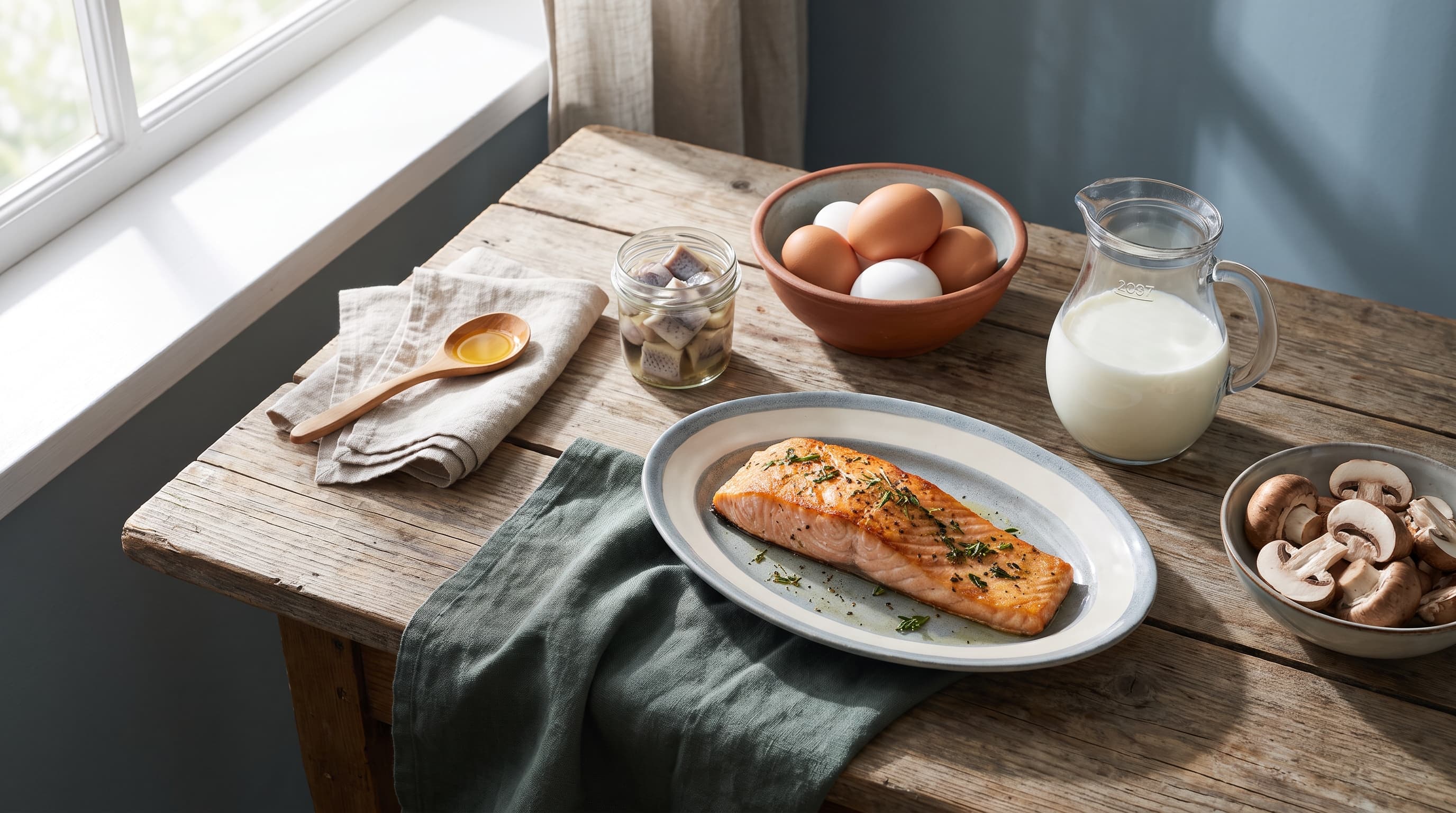
The richest food sources of vitamin D are oily fish such as salmon, mackerel, herring and sardines, cod liver oil, egg yolks, red meat and fortified foods like some breakfast cereals and fat spreads. In the UK, sunlight provides most of our vitamin D from late March to September, but from October to early March the sun is too weak and food alone rarely provides 10 micrograms a day.
Which foods are high in vitamin D?
Only a handful of foods contain much vitamin D, and oily fish is in a league of its own. The UK recommendation is 10 micrograms (µg) a day, so the right-hand column shows how far a typical portion gets you.
| Food | Portion | Vitamin D | Share of 10 µg |
|---|---|---|---|
| Cod liver oil | 1 teaspoon (5 ml) | about 10 µg | about 100% |
| Herring, grilled | 100 g | about 16 µg | about 160% |
| Salmon, tinned (pink or red) | 100 g | about 11–14 µg | over 100% |
| Kippers, grilled | 100 g | about 10 µg | about 100% |
| Salmon, cooked | 100 g fillet | about 7–10 µg | 70–100% |
| Mackerel, grilled | 100 g | about 8.5 µg | about 85% |
| Sardines, tinned | 100 g | about 3.5 µg | about 35% |
| Egg | 1 medium | about 1.6 µg | about 16% |
| Fortified breakfast cereal | 30 g | about 1.2–2.5 µg | 12–25% |
| Fortified soya drink | 200 ml glass | about 1.6 µg | about 16% |
| Fortified fat spread | 10 g | about 0.3–0.8 µg | 3–8% |
| Tuna, tinned | 100 g | about 1 µg | about 10% |
| Red meat | 100 g | under 1 µg | under 10% |
| UK cows’ milk (not fortified) | 200 ml glass | close to 0 µg | – |
What food is the highest in vitamin D?
Per spoonful, cod liver oil – a single teaspoon can provide around the full 10 microgram daily recommendation. It is also rich in vitamin A, so don’t take more than the label says, and don’t take it in pregnancy unless your midwife or GP has advised it.
Among everyday foods, oily fish comes top: herring, salmon, kippers, mackerel, trout and sardines. A 100 g portion of herring, salmon or mackerel provides most or all of a day’s 10 micrograms. White fish such as cod and haddock contain very little.
What drink is high in vitamin D?
Not milk, in the UK. Unlike in some countries, UK cows’ milk is generally not fortified, so it contains almost no vitamin D. The drinks that do contain it are fortified ones:
- many plant drinks – oat, soya and almond – which are often fortified with vitamin D alongside calcium
- some fortified dairy milks and yoghurt drinks sold as “with added vitamin D”
- a few fortified fruit juices
Check the nutrition panel: fortified drinks usually say how much vitamin D a 100 ml serving provides.
Is 2 eggs a day enough vitamin D?
No – but it helps. A medium egg contains about 1.6 micrograms of vitamin D, almost all of it in the yolk, so two eggs provide roughly 3 micrograms: about a third of the UK recommendation of 10 micrograms. Eggs from hens with outdoor access or fed vitamin D-enriched feed can contain more, and some brands state this on the box.
Do mushrooms contain vitamin D?
Ordinary mushrooms grown in the dark contain very little. Mushrooms exposed to UV light – sold as “vitamin D mushrooms” or “high in vitamin D” – make vitamin D2 in the same way our skin makes D3 in the sun, and can provide a useful amount. The level varies a lot, so check the pack.
Can you get enough vitamin D from the sun in the UK?
For part of the year, yes. The NHS says that from about late March or early April to the end of September, most people can make all the vitamin D they need from sunlight on their skin. Between October and early March the sun is too low in the sky for the UVB light your skin needs, so you make little or none however long you spend outdoors.
How much you make in summer depends on:
- Skin tone – people with brown or black skin need longer in the sun to make the same amount.
- Age – older skin makes less vitamin D.
- How much skin is exposed – face and hands alone produce far less than arms and legs.
- Sunscreen and clothing – both block UVB.
- Time of day – UVB is strongest around the middle of the day.
Short periods outdoors are enough for most people – the NHS suggests about 15 minutes without sunscreen 2 or 3 times a week from late March to September, and more often if you have brown or black skin. The sun is strongest between 11am and 3pm. Always cover up or move into the shade before your skin starts to turn red or burn.
Can you get enough vitamin D from food alone?
It’s possible but hard. To reach 10 micrograms a day from food you would need oily fish several times a week plus eggs and fortified foods – and most people in the UK don’t eat like that. That is why the NHS says it’s difficult to get enough vitamin D from food alone and advises everyone to consider a daily supplement in autumn and winter.
For how much you need, and how much is safe, see How much vitamin D per day?
Frequently asked questions
What food is the highest in vitamin D?
Cod liver oil is the richest, with around 10 micrograms in a teaspoon. Of everyday foods, oily fish such as salmon, mackerel, herring and sardines contain the most.
What drink is high in vitamin D?
Fortified drinks – many oat, soya and almond drinks, and some milks and juices with added vitamin D. Ordinary UK cows’ milk is generally not fortified and contains almost none.
Is 2 eggs a day enough vitamin D?
No. Two medium eggs provide about 3 micrograms of vitamin D – roughly a third of the UK recommendation of 10 micrograms a day.
Can you get enough vitamin D from the sun in the UK?
From about late March or early April to the end of September, most people can. From October to early March the sun isn’t strong enough for your skin to make vitamin D, so the NHS advises considering a supplement.
Do mushrooms contain vitamin D?
Only a little, unless they have been exposed to UV light. UV-treated mushrooms contain vitamin D2 and are labelled as a source of vitamin D.
Is there vitamin D in fruit and vegetables?
No fruit or vegetable is a natural source of vitamin D. The only plant-type sources are UV-exposed mushrooms and fortified foods and drinks.