GB
GB Germany
 France
 Spain
Spain Italy
Italy Netherlands
 Norway
 Sweden
 Denmark
 Finland
 Portugal
Vitamin D3 and K2: what they do and whether you need both
What vitamin K2 is, what vitamins D and K actually do, why they’re sold together, K2 foods and who should not take vitamin K – without the hype.


Vitamin D and vitamin K both contribute to the maintenance of normal bones, and vitamin K also contributes to normal blood clotting – which is why they are often combined. You don’t have to take them together, and most people get enough vitamin K from food. If you take an anticoagulant (blood thinner) such as warfarin, consult your doctor before taking vitamin K.
What is vitamin K2?
Vitamin K is a family of related compounds. There are two main types:
- Vitamin K1 (phylloquinone) – found in green leafy vegetables such as kale, spinach and broccoli, and in vegetable oils. It’s the main source of vitamin K in a typical UK diet.
- Vitamin K2 (menaquinones) – a group of forms named MK-4 to MK-13 by the length of their side chain. MK-4 is found in animal foods such as egg yolk, chicken and butter. MK-7 is made by bacteria and found in fermented foods, especially natto (fermented soybeans).
In supplements, K2 is usually MK-7. All of these forms count as vitamin K on a label; the differences between them are chemical, not a health claim.
What do vitamin D and vitamin K actually do?
These are the functions officially recognised on the Great Britain nutrition and health claims register:
- Vitamin D contributes to the maintenance of normal bones.
- Vitamin K contributes to the maintenance of normal bones.
- Vitamin K contributes to normal blood clotting.
- Vitamin D contributes to normal absorption and utilisation of calcium and phosphorus, and to normal blood calcium levels.
- Vitamin D contributes to the maintenance of normal teeth and normal muscle function, and to the normal function of the immune system.
The shared bone claim is the honest reason the two are paired. For everything vitamin D does on its own, see What does vitamin D do?
Should vitamin D3 and K2 be taken together?
You can, but you don’t need to. Vitamin D works without a vitamin K supplement, and the UK advice on vitamin D – 10 micrograms a day, especially in autumn and winter – says nothing about adding K2. A combined tablet is a convenience: one tablet covering two nutrients that both contribute to normal bones.
Both are fat-soluble, so a combined tablet is usually taken with a meal that contains some fat.
What does the research say about vitamin K2 and calcium?
Many websites make claims about vitamin K2 and calcium. The background is that vitamin K is needed to activate certain proteins that bind calcium, such as osteocalcin in bone, and researchers have studied whether extra vitamin K2 affects how calcium is handled in the body.
The results so far are mixed, and the idea is not an authorised health claim in the UK or EU. So we don’t make it – the recognised functions of vitamin K are the maintenance of normal bones and normal blood clotting.
Which foods contain vitamin K2?
- Natto – fermented soybeans, by far the richest source of MK-7.
- Hard and soft cheeses – such as Gouda, Edam, Brie and Emmental, which contain menaquinones made during fermentation.
- Egg yolks, chicken, butter and liver – mainly MK-4.
- Smaller amounts in other fermented foods such as some yoghurts and sauerkraut.
Vitamin K1 is much easier to come by: green leafy vegetables, broccoli, vegetable oils and cereal grains all contain it.
Who should not take vitamin K2?
The key group is anyone taking an anticoagulant (blood-thinning) medicine. Warfarin works against vitamin K, so a change in your vitamin K intake can change how well it works. The NHS says not to take vitamin K supplements while you’re taking warfarin. If you take any other blood thinner, consult your doctor before taking a vitamin K supplement.
As for side effects, the NHS says taking 1 mg (1,000 micrograms) or less of vitamin K from supplements a day is unlikely to cause any harm. 100 micrograms of K2 is a tenth of that.
Do you need vitamin K2 at all?
Probably not from a supplement. Adults need about 1 microgram of vitamin K per kilogram of body weight a day – roughly 65 to 75 micrograms – and the NHS says you should be able to get all you need from a varied, balanced diet. There is no separate UK recommendation for K2.
A combined D3 and K2 tablet makes most sense if you want a single daily tablet for vitamin D and like the idea of including vitamin K too – not because K2 is essential for vitamin D to work.
What’s in our vitamin D3 and K2 tablet?
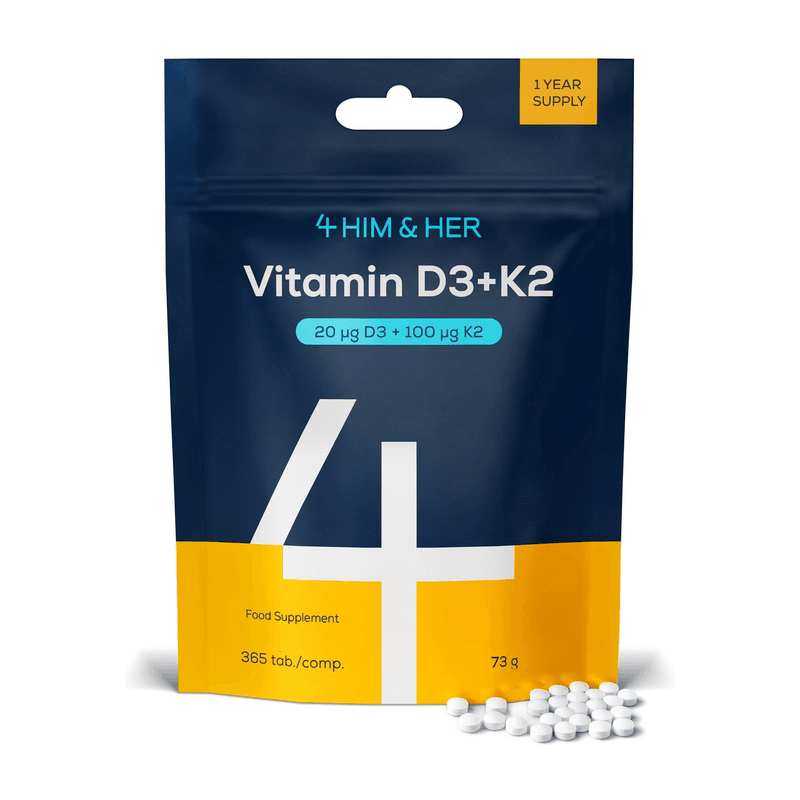
Each small tablet provides 20 µg (800 IU) of vitamin D3 as cholecalciferol – 400% of the nutrient reference value – and 100 µg of vitamin K2 as MK-7 (133% of the nutrient reference value). One tablet a day; a resealable pouch of 365 lasts a year.
Frequently asked questions
Should vitamin D3 and K2 be taken together?
There’s no need to, but you can. Vitamin D and vitamin K both contribute to the maintenance of normal bones, which is why they’re often combined. Vitamin D works without a K2 supplement.
What is vitamin K2 good for?
Vitamin K – including K2 – contributes to the maintenance of normal bones and to normal blood clotting. Other benefits you may read about online are not authorised health claims.
Which foods contain vitamin K2?
Natto (fermented soybeans) is the richest source. Hard and soft cheeses, egg yolks, chicken, butter and liver also contain K2, in smaller amounts.
Who should not take vitamin K2?
Anyone taking warfarin or another anticoagulant (blood-thinning) medicine should consult their doctor first – the NHS says not to take vitamin K supplements with warfarin. If you have a medical condition or take regular medicines, check with your GP or pharmacist.
What is the difference between MK-7 and MK-4?
Both are forms of vitamin K2. MK-4 is found in animal foods such as egg yolk and butter; MK-7 has a longer side chain and is made by bacteria, which is why it’s found in fermented foods like natto. Both count as vitamin K.