GB
GB Germany
 France
 Spain
Spain Italy
Italy Netherlands
 Norway
 Sweden
 Denmark
 Finland
 Portugal
Brittle nails: what causes them and what helps?
Why nails split, peel and break, the deficiencies and conditions to rule out, practical care that helps, and what nutrition – including biotin – can and can’t do.

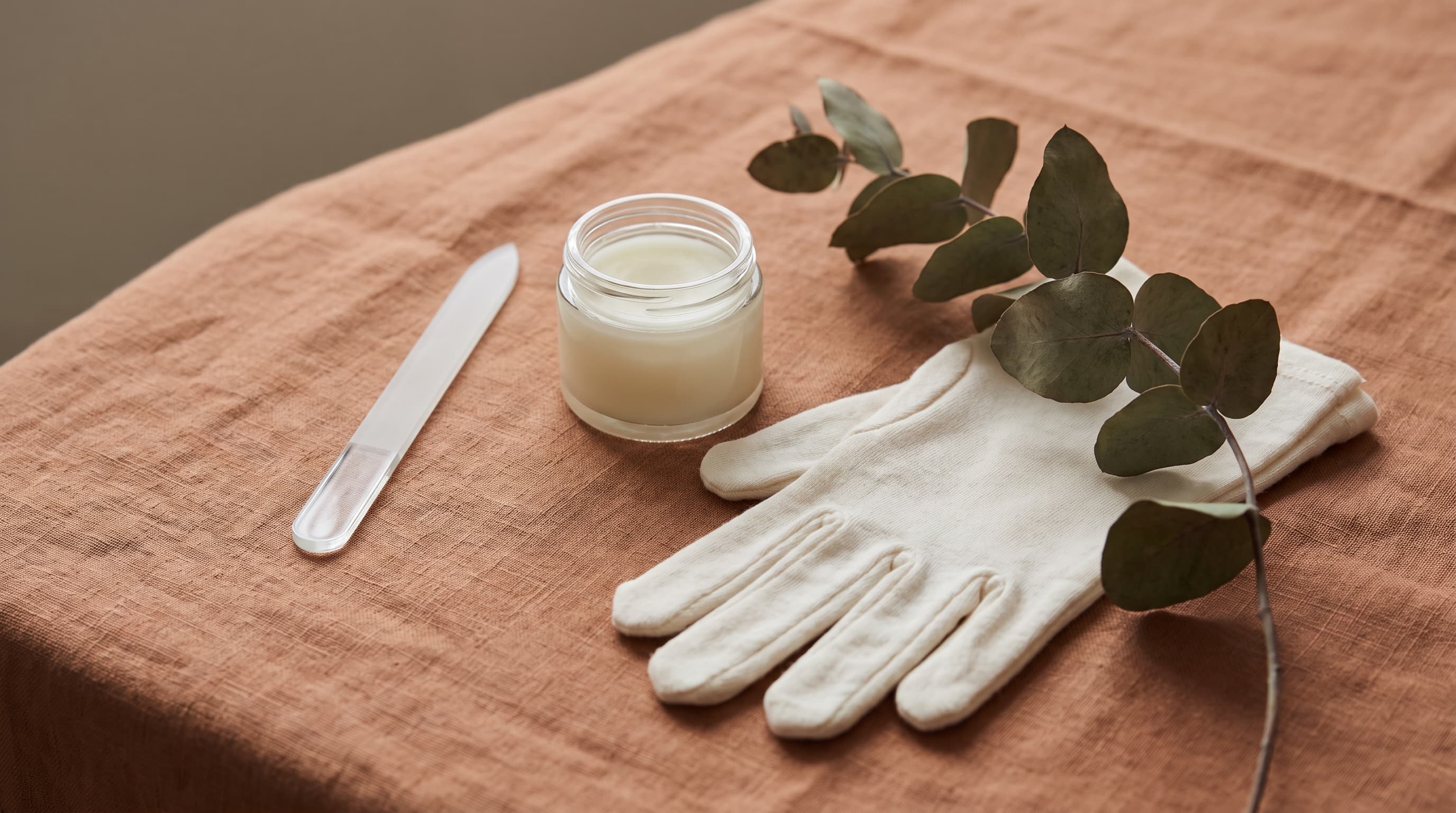
Brittle nails are usually caused by everyday wear: frequent hand-washing, cleaning products, nail varnish remover, cold dry air and ageing. Wearing gloves, moisturising and filing gently help most. Iron deficiency, thyroid problems, psoriasis and fungal infection can also affect nails, so see a GP if they change shape or colour. Zinc and selenium contribute to the maintenance of normal nails.
What are nails made of?
Nails are layers of tightly packed keratin, the same family of proteins found in hair and the outer layer of skin. They grow from the matrix, the area under the skin at the base of the nail, by only a few millimetres a month – so a whole fingernail takes around six months to grow out, and a toenail far longer.
A healthy nail holds a small amount of water between its layers, which keeps it flexible. When nails dry out or the layers are repeatedly soaked and dried, they lose that flexibility and start to split, peel at the tip (onychoschizia) or break easily (onychorrhexis).
What causes brittle nails?
Most brittle nails have an everyday cause:
- Water and detergents. Frequent hand-washing, washing-up and cleaning products strip the nails and swell and shrink the keratin layers.
- Nail varnish remover, especially acetone-based, and heavy use of gel or acrylic nails.
- Cold, dry weather and central heating.
- Ageing. The NHS notes that nails can break more easily as you get older.
- Pregnancy, during which nails can become harder, softer or more brittle – they usually recover within six months of the birth.
- Biting, picking or using your nails as tools.
What deficiency causes brittle nails?
The best-established one is iron deficiency. The NHS lists nail changes such as spoon-shaped nails (koilonychia) among the symptoms of iron deficiency anaemia. Heavy periods and pregnancy are very common causes, and it needs a blood test and treatment from your GP.
Nails can also change with other conditions the NHS lists, including thyroid problems, psoriasis, fungal nail infection, diabetes, and heart, lung or liver disease. Some medicines affect nails too.
Which nutrients contribute to normal nails?
On the Great Britain nutrition and health claims register, two minerals have an authorised nail claim:
- Zinc contributes to the maintenance of normal nails. Good sources include meat, shellfish such as crab and mussels, cheese, nuts and seeds.
- Selenium contributes to the maintenance of normal nails. Brazil nuts are a rich source, along with fish, eggs, offal and poultry.
Both minerals also contribute to the maintenance of normal hair and to the protection of cells from oxidative stress. Most people who eat a varied diet get enough of both, and too much selenium can itself damage nails and hair – so more isn’t better.
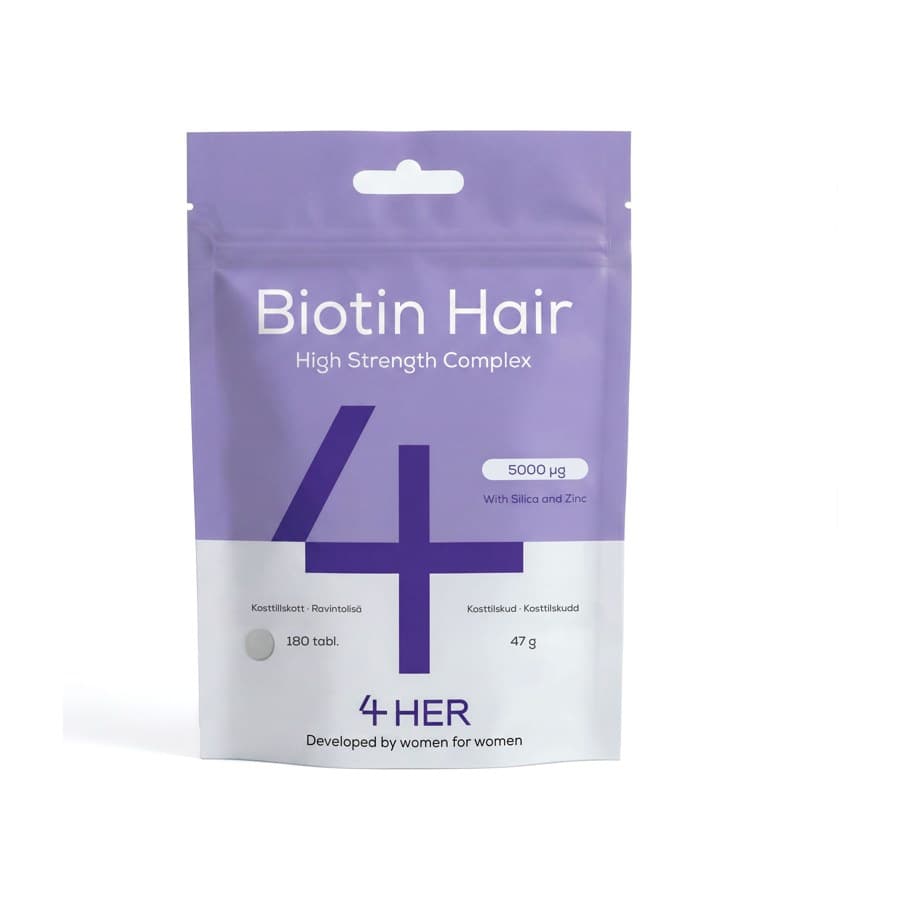
Our Biotin Complex provides 3 mg of zinc (30% NRV) and 55 µg of selenium (100% NRV) per two-tablet serving, alongside biotin and copper. It is the zinc and selenium that relate to nails – biotin has no authorised nail claim. Two vegan tablets a day, for adults.
Does biotin help nails?
Biotin is widely sold for nails, but there is no authorised health claim for biotin and nails, and the evidence is small and old. The studies usually quoted are from the early 1990s: one examined clippings from eight people with brittle nails under an electron microscope before and after biotin, and another looked back at the records of 35 patients at a nail clinic, 22 of whom (63%) were judged to have improved. Neither compared biotin with a placebo, and people in both already had brittle nails. A 2017 review of biotin for hair and nails concluded there isn’t sufficient evidence for supplements in healthy people.
Biotin does contribute to the maintenance of normal hair and skin – more in What is biotin? – but you shouldn’t expect it to change your nails.
How can I strengthen my nails naturally?
No product can promise stronger nails, but simple care makes a real difference to how they hold up:
- Wear rubber gloves for washing-up and cleaning, and cotton-lined ones if your hands sweat.
- Moisturise your hands, nails and cuticles regularly, especially after washing – a thick hand cream or ointment rubbed into the nail works well at night.
- Keep nails short and trim them after a bath or shower, when they are softer, cutting straight across.
- File in one direction with a fine file or a glass file, rather than sawing back and forth.
- Use acetone-free remover, and give your nails breaks from gels, acrylics and heavy varnish.
- Don’t pick, bite or use nails as tools, and clean under them gently with a soft brush rather than anything sharp.
Because nails grow slowly, it takes several months for a change in care to show along the whole length of the nail.
Frequently asked questions
What causes brittle nails?
Usually everyday wear: frequent hand-washing and cleaning products, nail varnish remover, gels and acrylics, cold dry air and ageing. Iron deficiency, thyroid problems, psoriasis and fungal infection can also cause nail changes.
What deficiency causes brittle nails?
Iron deficiency is the best-established cause, and can make nails spoon-shaped. It needs a blood test and treatment from your GP rather than guesswork with supplements.
Does biotin help nails?
There is no authorised health claim for biotin and nails, and the evidence comes from a few small, uncontrolled studies from the early 1990s. Zinc and selenium are the nutrients that contribute to the maintenance of normal nails.
How can I strengthen my nails naturally?
Wear gloves for wet work, moisturise hands and nails regularly, keep nails short, file in one direction, use acetone-free remover and avoid picking or biting. Eat a varied diet, and see a GP if your nails change shape or colour.
When should I see a GP about my nails?
If a nail changes shape or colour or falls off without a clear reason, or the skin around it is red, swollen and sore. Your GP can check for infection, iron deficiency, thyroid problems or psoriasis.
Sources
- NHS – Nail problems
- NHS – Fungal nail infection
- NHS – Iron deficiency anaemia
- NHS – Psoriasis
- Department of Health and Social Care – Great Britain nutrition and health claims (NHC) register
- NHS – Vitamins and minerals: others (copper, selenium, zinc)
- British Nutrition Foundation – Vitamins and minerals
- Chessa MA et al. – Pathogenesis, clinical signs and treatment recommendations in brittle nails: a review. Dermatol Ther (Heidelb) (2020)
- Colombo VE et al. – Treatment of brittle fingernails and onychoschizia with biotin. J Am Acad Dermatol (1990)
- Hochman LG et al. – Brittle nails: response to daily biotin supplementation. Cutis (1993)
- Patel DP et al. – A review of the use of biotin for hair loss. Skin Appendage Disord (2017)