GB
GB Germany
 France
 Spain
Spain Italy
Italy Netherlands
 Norway
 Sweden
 Denmark
 Finland
 Portugal
What is biotin (vitamin B7) and what does it do?
What biotin (vitamin B7) does in the body, how much you need, the best food sources, who is at risk of deficiency and why more isn’t better.

Biotin is vitamin B7, a water-soluble B vitamin. It contributes to normal energy-yielding metabolism, the normal functioning of the nervous system and the maintenance of normal hair, skin and mucous membranes. Adults are thought to need only about 40 micrograms a day, which a varied diet usually provides, so true deficiency is rare in the UK.
Which vitamin is biotin?
Biotin is vitamin B7 – one of the eight B vitamins. You may also see it called vitamin H, an older name that has largely dropped out of use. Like the other B vitamins it is water-soluble, so the body doesn’t keep large reserves of it and any excess you don’t need leaves in your urine.
Inside the body, biotin works as a helper (a coenzyme) for a handful of enzymes called carboxylases. These enzymes are involved in making fatty acids, in breaking down certain amino acids and in producing glucose – which is why biotin is described as being involved in metabolism. The NHS sums it up simply: biotin is needed in very small amounts to help the body make fatty acids.
What is biotin good for?
The functions of biotin that are officially recognised on the Great Britain nutrition and health claims register are:
- Biotin contributes to normal energy-yielding metabolism.
- Biotin contributes to normal macronutrient metabolism.
- Biotin contributes to normal functioning of the nervous system.
- Biotin contributes to normal psychological function.
- Biotin contributes to the maintenance of normal hair.
- Biotin contributes to the maintenance of normal skin.
- Biotin contributes to the maintenance of normal mucous membranes.
Notice the wording: these are about maintaining normal function. Biotin is often marketed for faster hair growth, thicker hair or stronger nails. None of those is an authorised claim, and there is no authorised claim for biotin and nails at all. What the research does and doesn’t show for hair is covered in Does biotin help hair growth?
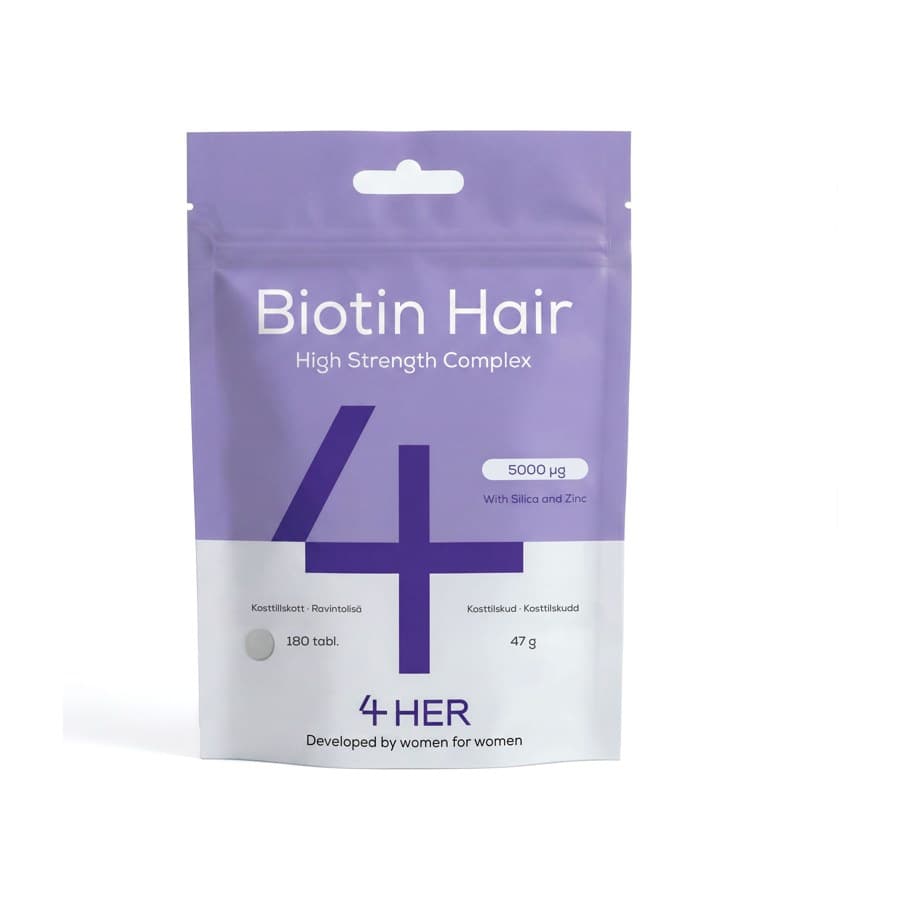
Our Biotin Complex provides 10,000 µg of biotin (as D-biotin) per two-tablet serving, together with zinc and selenium, which contribute to the maintenance of normal hair, and copper, which contributes to normal hair pigmentation. It also contains bamboo stem extract as a source of silica, which has no authorised function. Two vegan tablets a day; a resealable pouch of 180 lasts three months.
How much biotin per day do you need?
Not much. The UK has no reference nutrient intake (RNI) for biotin, and the NHS points out that the bacteria in your bowel make biotin, so it isn’t clear whether you need any extra from your diet at all. The figures you’ll see quoted are:
| Figure | Amount | What it is |
|---|---|---|
| Nutrient reference value (NRV) | 50 µg a day | The figure used for the “% NRV” on food and supplement labels |
| EFSA adequate intake | 40 µg a day | The European Food Safety Authority’s estimate of what covers adults’ needs |
| NHS supplement guidance | 0.9 mg (900 µg) or less a day | The amount from supplements the NHS says is unlikely to cause any harm |
One microgram (µg) is a thousandth of a milligram, so these are tiny amounts. The NHS adds that biotin is found in a wide range of foods, but only at very low levels.
What foods are high in biotin?
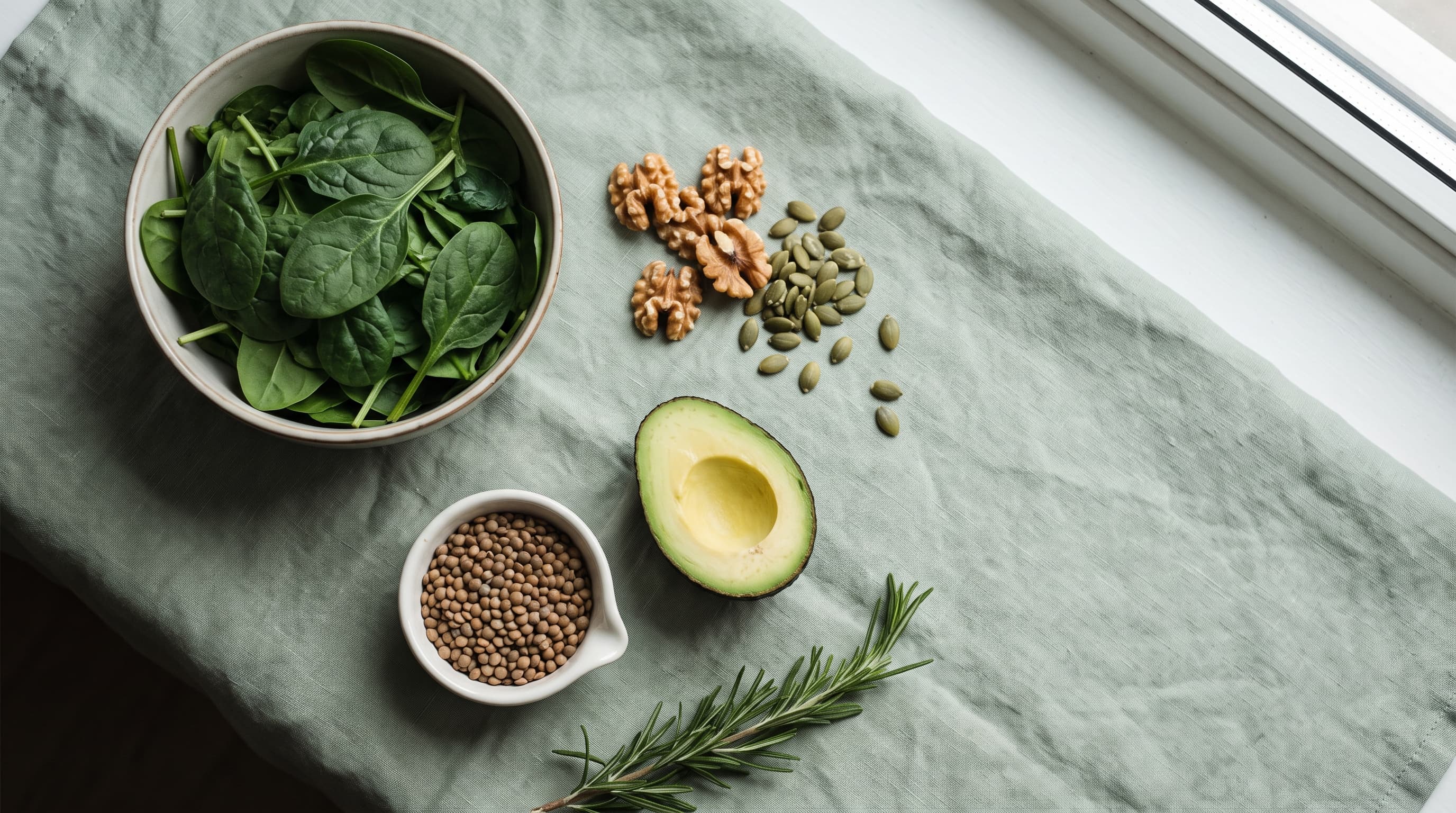
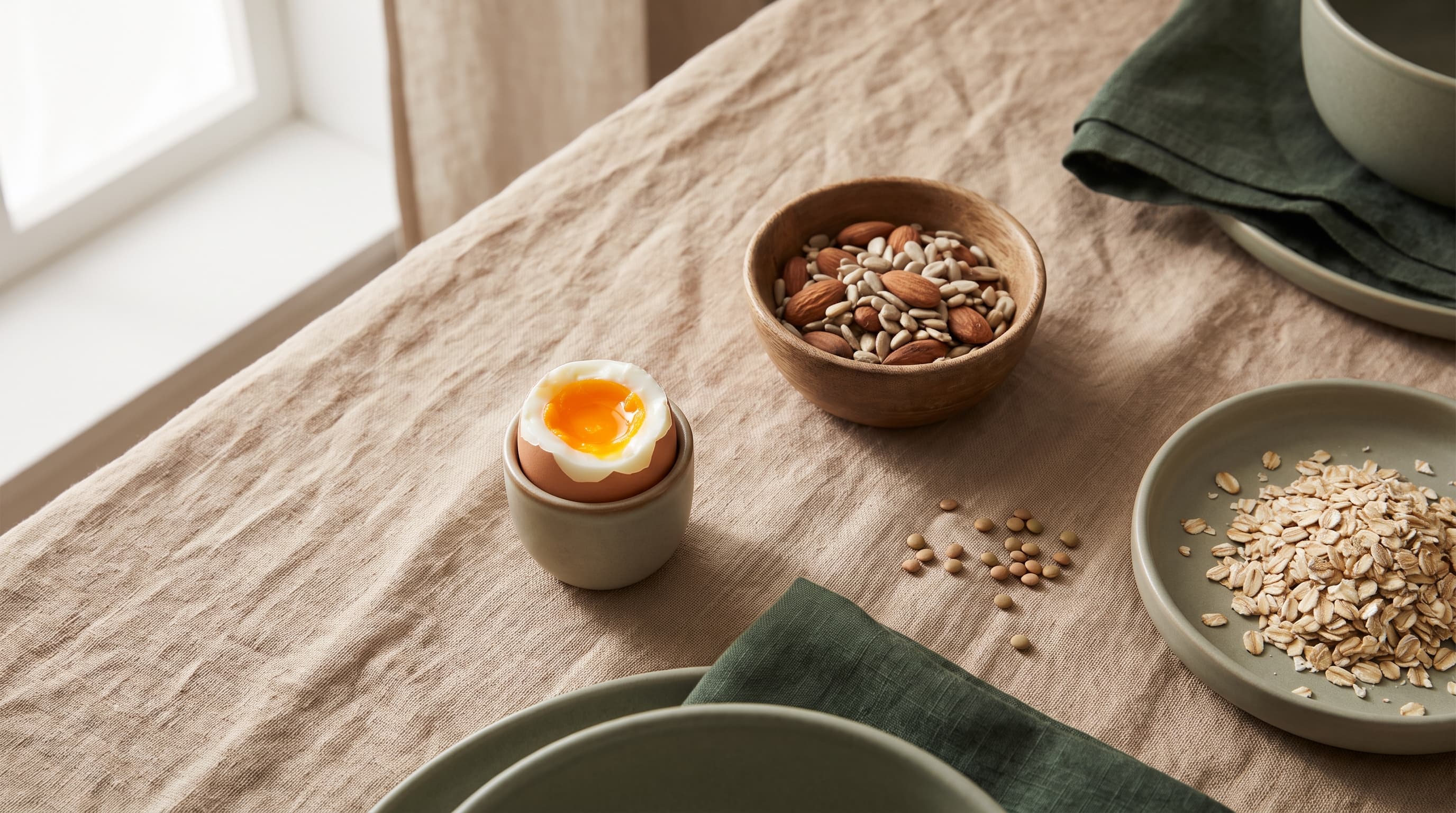
Biotin is spread across lots of foods, mostly in small amounts. The richest everyday sources are:
- Liver and other offal – by far the most concentrated source.
- Eggs – most of the biotin is in the yolk.
- Pulses such as soya beans, peanuts, lentils and chickpeas.
- Nuts and seeds, including almonds, walnuts and sunflower seeds.
- Oats and other wholegrains.
- Fish such as salmon, plus meat, milk and cheese in smaller amounts.
Because so many foods contribute a little, people who eat a reasonably varied diet – including vegetarians and vegans who eat pulses, nuts, seeds and wholegrains – tend to get enough without trying.
Why does raw egg white matter?
Raw egg white contains a protein called avidin, which binds tightly to biotin and stops it being absorbed. Cooking the egg changes avidin’s shape so it no longer does this. A raw egg in the odd smoothie isn’t a problem, but regularly eating large amounts of raw egg white over months is one of the few known dietary causes of biotin deficiency. Eggs eaten whole and cooked are a good source of biotin, not a threat to it.
What are the signs of biotin deficiency?
Biotin deficiency is rare in people who eat a normal diet. When it does happen, the signs build up gradually and can include:
- thinning hair, sometimes with loss of hair colour
- a red, scaly rash, often around the eyes, nose and mouth
- brittle nails
- sore, red eyes (conjunctivitis)
- low mood, tiredness and tingling or numbness in the hands and feet
People at higher risk include those with the inherited condition biotinidase deficiency, people who drink heavily over a long period, people taking certain anti-epilepsy medicines long term, people fed through a drip for long periods, and those who regularly eat a lot of raw egg white. Some research suggests biotin levels can fall during pregnancy – but if you are pregnant, take only the supplements your midwife or GP recommends, and ask them before adding anything else.
Why do biotin supplements contain so much more than you need?
Many biotin supplements provide 1,000 to 10,000 µg a day – 20 to 200 times the NRV. Ours provides 10,000 µg, which appears on the label as 20,000% NRV. That raises two fair questions.
Is it safe? No tolerable upper intake level has been set for biotin in Europe, because there were not enough data to set one. The NHS is more cautious: it says there isn’t enough evidence to know what the effects of taking high daily doses of biotin supplements might be, that taking too much might be harmful, and that 0.9 mg or less a day from supplements is unlikely to cause any harm. A 10,000 µg (10 mg) supplement is more than ten times that figure, and you should know that before you choose one. Our product is for adults only; don’t exceed the dose on the pack, and if you are pregnant, breastfeeding, taking medication or have a medical condition, check with your doctor first.
Does more work better? No. The authorised functions above are met at a fraction of these doses, and taking more does not produce a bigger effect – the body simply excretes what it doesn’t use. A higher amount is not a stronger product. If you already eat a varied diet, think of a biotin supplement as a top-up, not a treatment.
Where can you read more about biotin, hair and nails?
- Does biotin help hair growth? – what the evidence shows for people with normal biotin levels.
- Vitamins for hair – which nutrients have an authorised hair function, and which deficiencies are linked to shedding.
- Brittle nails – causes, practical care and what nutrition can and can’t do.
- Hair loss in women – the main causes and when to see a GP.
- How to get thicker hair – what you can and can’t change.
Frequently asked questions
What is biotin good for?
Biotin contributes to normal energy-yielding metabolism, normal macronutrient metabolism, normal functioning of the nervous system and normal psychological function, and to the maintenance of normal hair, skin and mucous membranes. Those are the authorised functions on the Great Britain claims register.
Which vitamin is biotin?
Biotin is vitamin B7, one of the eight water-soluble B vitamins. It is sometimes still called vitamin H, an older name.
How much biotin per day?
Very little. EFSA’s adequate intake for adults is 40 µg a day, and the NRV used on labels is 50 µg. The UK sets no RNI for biotin. The NHS says 0.9 mg or less a day from supplements is unlikely to cause any harm.
What foods are high in biotin?
Liver and other offal, eggs (especially the yolk), pulses such as soya beans and peanuts, nuts and seeds, oats and wholegrains, and fish such as salmon. Meat and dairy add smaller amounts.
What are the signs of biotin deficiency?
Thinning hair, a red scaly rash around the eyes, nose and mouth, brittle nails, sore eyes, low mood and tingling in the hands and feet. Deficiency is rare on a normal diet, and these symptoms have more common causes, so see your GP.
Is it OK to take biotin every day?
No upper limit has been set for biotin in Europe, but the NHS says there isn’t enough evidence on high daily doses and that 0.9 mg or less a day from supplements is unlikely to cause any harm. Many products contain more. Follow the label, don’t exceed the stated dose and check with your doctor if you are pregnant, breastfeeding, on medication or have a medical condition.
Sources
- NHS – Vitamins and minerals: B vitamins and folic acid
- Department of Health and Social Care – Great Britain nutrition and health claims (NHC) register
- Commission Regulation (EU) No 432/2012 – Annex (as retained in GB law)
- EFSA – Scientific opinion on dietary reference values for biotin (2014)
- Mock DM – Biotin: from nutrition to therapeutics. J Nutr (2017)
- Patel DP et al. – A review of the use of biotin for hair loss. Skin Appendage Disord (2017)