GB
GB Germany
 France
 Spain
Spain Italy
Italy Netherlands
 Norway
 Sweden
 Denmark
 Finland
 Portugal
Does biotin help hair growth? What the evidence says
Biotin contributes to the maintenance of normal hair – but does it make hair grow? What the studies show, how the hair cycle works and when to see a GP.

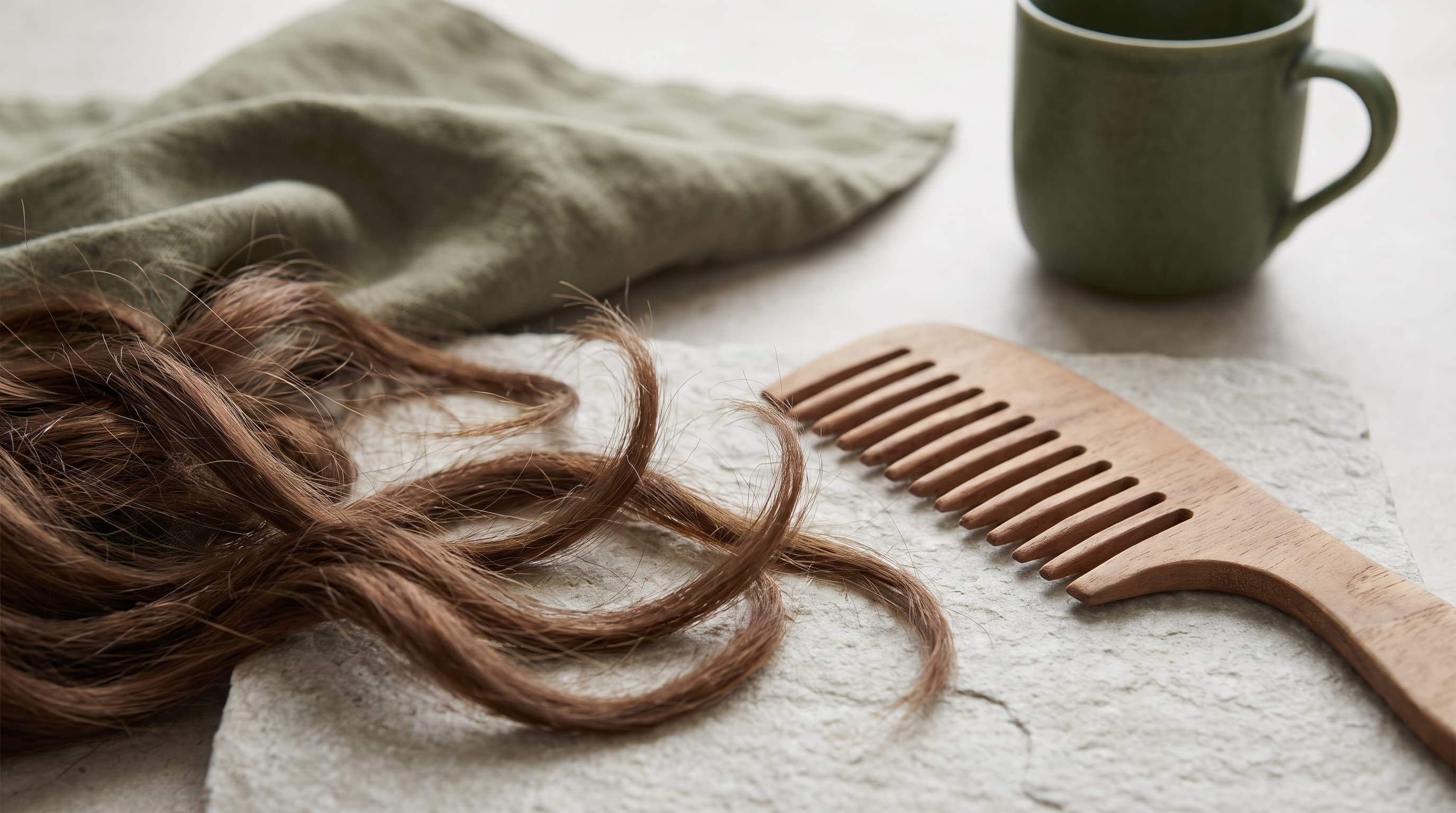
Biotin contributes to the maintenance of normal hair, but there is no good evidence that biotin supplements make hair grow faster or thicker in people whose biotin levels are already normal. Studies showing hair improving with biotin involve people with a genuine deficiency or rare conditions. If your hair is thinning or shedding, see a GP to find the cause.
What does biotin do for hair?
Hair is made mostly of a protein called keratin, produced by fast-dividing cells in the hair follicle. Biotin is a coenzyme for enzymes involved in fat, protein and energy metabolism, and the follicle is a very active tissue – which is the biological reason biotin matters for hair.
That is reflected in the authorised claim: biotin contributes to the maintenance of normal hair. The key word is maintenance. The claim says biotin is one of the nutrients your body needs to keep hair normal. It does not say biotin grows hair, thickens it or makes it stronger, and no such claim is authorised for biotin or any other nutrient.
Is biotin good for hair if your levels are normal?
This is where the marketing and the evidence part ways. A 2017 review in the journal Skin Appendage Disorders searched the published case reports and trials of biotin for hair and nails. It found 18 reported cases – and in every one, the person had an underlying cause such as a biotin deficiency, an inherited condition or a rare hair or nail disorder. The authors concluded that there isn’t sufficient evidence for biotin supplements in healthy people.
A second 2017 review reached the same conclusion: it found no randomised controlled trial of biotin’s effect on hair quantity or quality, and described biotin’s popularity as far out of proportion to the evidence. Studies of multi-ingredient “hair” supplements test mixtures of many ingredients, so they can’t tell you what biotin alone does.
Put simply: if you are genuinely low in biotin, correcting that matters for your hair. If you aren’t – and on a normal diet most people aren’t – extra biotin is not expected to change how your hair grows.
Which B vitamins matter for hair?
Of the B vitamins, biotin is the only one with an authorised hair claim. Two others often come up when hair loss is investigated, although the evidence linking them to hair is mixed:
- Vitamin B12 – a deficiency can cause anaemia, with extreme tiredness, lack of energy and pins and needles. It is more likely in vegans who don’t take a B12 supplement or eat fortified foods, older people and people with pernicious anaemia, the most common cause in the UK.
- Folate (B9) – a lack of folate can also cause anaemia. Adults need 200 µg of folate a day, according to the NHS.
In both cases the answer is a blood test and treatment through your GP, not a hair supplement. For the wider list – iron, vitamin D, zinc and protein – see Vitamins for hair.
How long would any change in your hair take to show?
Any product promising visible results in a week, four weeks or even three months should be treated with suspicion. Here’s why. Scalp hair grows in cycles:
- Growing phase (anagen) – around 85% of hairs at any time, lasting several years.
- Resting phase (telogen) – around 15% of hairs, resting for two to four months before they shed and a new hair pushes through.
Hair grows slowly. So even when the cause of a problem is found and fixed – an iron deficiency treated, say – it takes months for the change to show. A week of any supplement cannot produce a visible difference, and for people with normal biotin levels there is no evidence biotin produces one at all.
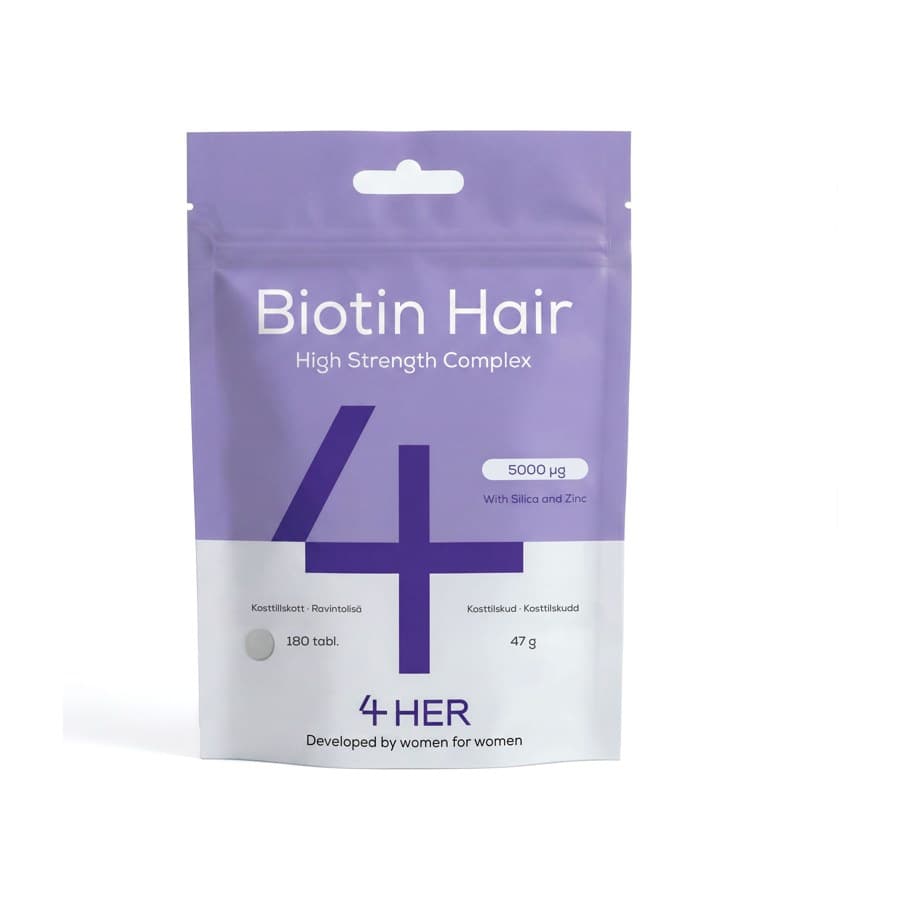
What do our biotin tablets contain for hair?
Our Biotin Complex is built around the nutrients that have an authorised hair function – nothing more is claimed for it:
- Biotin, 10,000 µg – contributes to the maintenance of normal hair.
- Zinc, 3 mg – contributes to the maintenance of normal hair.
- Selenium, 55 µg – contributes to the maintenance of normal hair.
- Copper, 1 mg – contributes to normal hair pigmentation.
It also contains bamboo stem extract as a source of silica, which has no authorised function. The biotin dose is far above the 50 µg NRV, and a higher amount does not mean a greater effect. It is also more than ten times the 0.9 mg a day that the NHS says is unlikely to cause any harm from supplements – see What is biotin? for what that means. Two vegan tablets a day, for adults only.
If I stop taking biotin, will my hair fall out?
No. Stopping biotin doesn’t trigger hair loss. Your body’s biotin comes mainly from food, and if your levels were normal before you started, they will be normal after you stop. If you notice more shedding after stopping, it is likely to be a coincidence of timing: the common triggers of shedding (illness, stress, childbirth, dieting) show up about three months after the event, so look back at what happened then – and see your GP if the shedding carries on.
When should you see a doctor about your hair?
Losing 50 to 100 hairs a day is normal. See your GP if your hair is falling out in clumps or patches, if it is thinning noticeably, if the loss came on suddenly, or if you have other symptoms such as tiredness, feeling cold or heavy periods. A doctor can examine your scalp and arrange blood tests for things like iron and thyroid function.
Frequently asked questions
Is biotin good for hair?
Biotin contributes to the maintenance of normal hair, so you need enough of it. But there is no good evidence that extra biotin makes hair grow faster or thicker in people whose levels are already normal – which, on a varied diet, is most people.
How long does it take biotin to help with hair growth?
There is no reliable timeline, because there is no evidence biotin changes hair growth in people without a deficiency. Resting hairs take two to four months to shed and hair grows slowly, so any real change in hair, whatever the cause, takes months to show.
Biotin results after 1 week – is that realistic?
No. Hair grows slowly and in cycles lasting months to years, so no supplement can make a visible difference to your hair in a week.
If I stop taking biotin will my hair fall out?
No. Stopping biotin does not cause hair loss. Your diet keeps supplying biotin, and if your levels were normal before, they stay normal afterwards.
What does biotin do for hair?
Biotin helps enzymes involved in fat, protein and energy metabolism, and contributes to the maintenance of normal hair. It is maintenance, not growth – it helps keep normal hair normal rather than adding hair.
Does biotin make hair thicker?
There is no evidence it does in people with normal biotin levels, and no authorised claim says so. Hair thickness is largely set by genetics and hormones; see our guide to getting thicker hair for what you can influence.
Sources
- Patel DP et al. – A review of the use of biotin for hair loss. Skin Appendage Disord (2017)
- Soleymani T et al. – The infatuation with biotin supplementation: is there truth behind its rising popularity? J Drugs Dermatol (2017)
- Almohanna HM et al. – The role of vitamins and minerals in hair loss: a review. Dermatol Ther (Heidelb) (2019)
- British Association of Dermatologists – Telogen effluvium
- NHS – Hair loss
- NHS – Vitamins and minerals: B vitamins and folic acid
- NHS – Vitamin B12 or folate deficiency anaemia
- Department of Health and Social Care – Great Britain nutrition and health claims (NHC) register