GB
GB Germany
 France
 Spain
Spain Italy
Italy Netherlands
 Norway
 Sweden
 Denmark
 Finland
 Portugal
Vitamins for hair: which nutrients actually matter?
Which vitamins and minerals have a recognised role in hair, which deficiencies are linked to hair loss, and how to read a “hair, skin and nails” label.

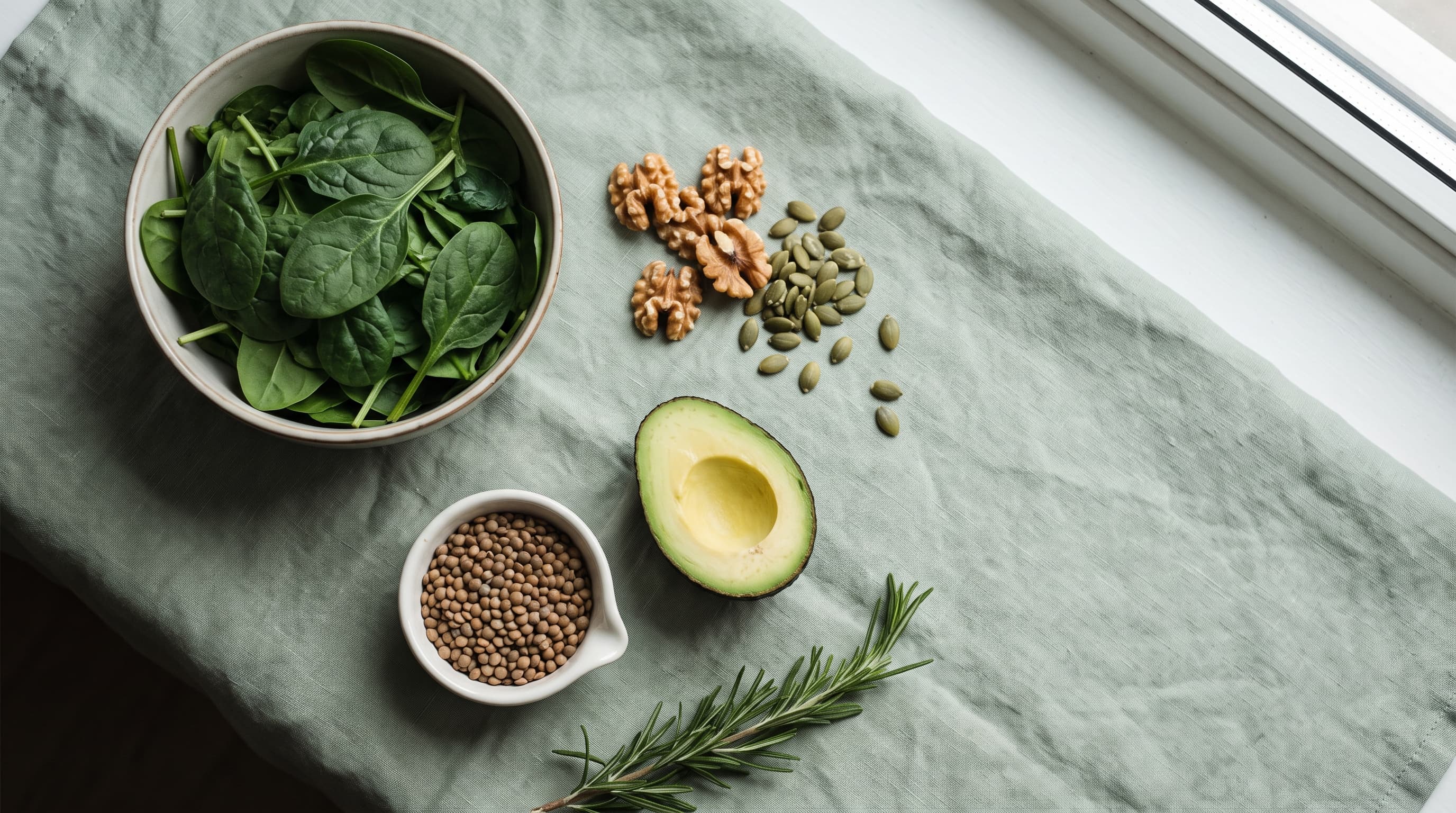
Biotin, zinc and selenium contribute to the maintenance of normal hair, and copper contributes to normal hair pigmentation. Separately, a lack of iron, vitamin B12, vitamin D or protein is linked to hair shedding – but that needs a blood test and treatment through your GP. No vitamin is proven to make healthy hair grow faster.
What vitamins are good for hair growth?
Hair follicles are among the busiest tissues in the body, so they rely on a steady supply of nutrients. But “good for hair” covers two very different things, and it helps to keep them apart:
- Nutrients with a recognised hair function. These have an authorised health claim: the evidence was strong enough for regulators to accept that they play a role in normal hair.
- Nutrients whose deficiency is linked to hair loss. Being short of these can contribute to shedding. Correcting a real deficiency matters – but topping up when you aren’t deficient isn’t expected to help.
Neither group contains a nutrient that is proven to make normal, healthy hair grow faster, thicker or longer.
Which nutrients have an authorised role in hair?
On the Great Britain nutrition and health claims register, four nutrients have a hair-related claim:
| Nutrient | Authorised claim | Good food sources |
|---|---|---|
| Biotin (vitamin B7) | Contributes to the maintenance of normal hair | Liver, eggs, pulses, nuts and seeds, oats |
| Zinc | Contributes to the maintenance of normal hair | Meat, shellfish, cheese, nuts and seeds |
| Selenium | Contributes to the maintenance of normal hair | Brazil nuts, fish, eggs, offal, poultry |
| Copper | Contributes to normal hair pigmentation | Nuts, shellfish, offal |
Copper’s claim is about pigmentation – the normal production of hair colour – not about reversing grey hair, which is mostly down to age and genes. Zinc, selenium and copper also contribute to the protection of cells from oxidative stress.
Biotin is the nutrient most associated with hair, and the one with the biggest gap between reputation and evidence. Its hair claim is about maintenance; studies showing hair improving with biotin involve people who were deficient or had rare conditions. The full picture is in Does biotin help hair growth?
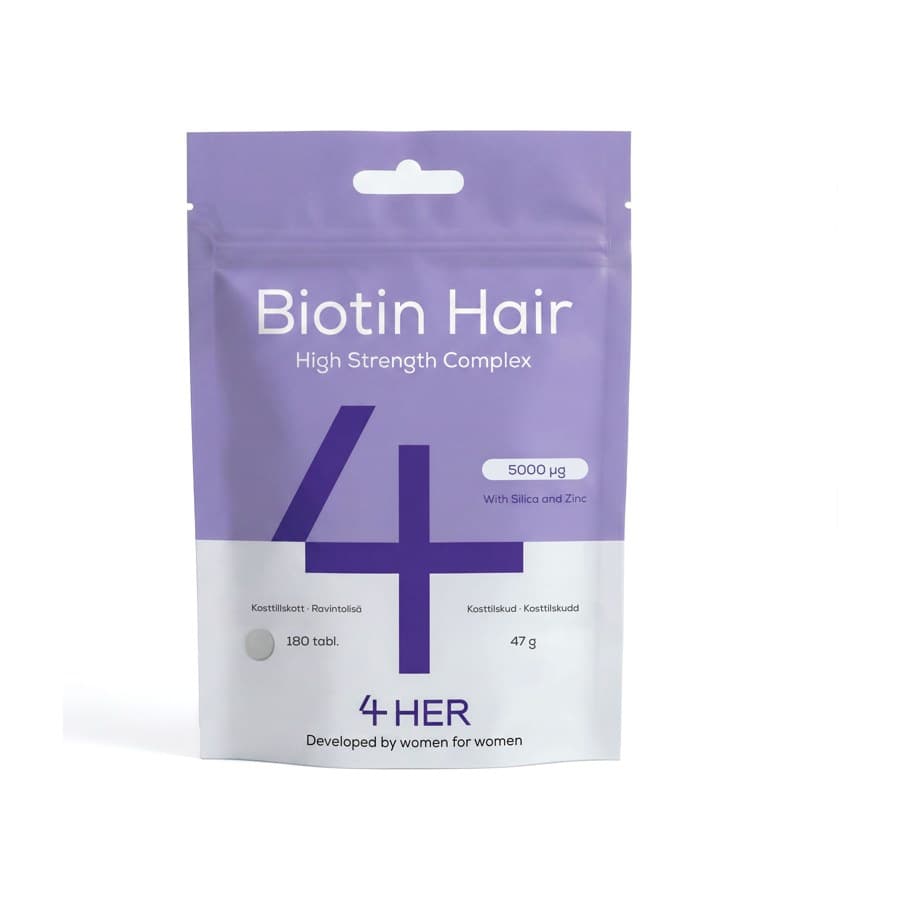
Our Biotin Complex combines all four: 10,000 µg biotin, 3 mg zinc and 55 µg selenium, which contribute to the maintenance of normal hair, and 1 mg copper, which contributes to normal hair pigmentation. Two vegan tablets a day, for adults. The biotin dose is far above the 50 µg NRV, and more biotin does not mean more effect.
What vitamin am I lacking if my hair is thinning and falling out?
There’s no way to tell from your hair alone – and often the cause isn’t a nutrient at all. These are the deficiencies a GP is most likely to check for:
- Iron. Iron deficiency is one of the causes of temporary hair loss listed by the NHS, and it is common in women who have heavy periods, are pregnant or eat little meat. Doctors often look at ferritin, a measure of your iron stores, as well as haemoglobin.
- Vitamin B12 and folate. A lack of either can cause anaemia, with extreme tiredness and a lack of energy. Their link with hair loss is less clear, but they are commonly checked.
- Vitamin D. Low vitamin D has been linked in studies with some types of hair loss, though it isn’t clear whether it is a cause. The NHS advises everyone in the UK to consider a daily vitamin D supplement in autumn and winter anyway – see Vitamin D deficiency.
- Protein and energy. Crash diets and rapid weight loss are a well-known trigger for shedding a few months later.
Lack of which vitamins causes hair loss?
Genuine deficiencies of iron, zinc and biotin can contribute to hair loss, as can a severe lack of protein; vitamin B12 and folate are often checked too, although their link with hair loss is less clear. Too much of some nutrients can also cause it – very high intakes of vitamin A and selenium are both linked to hair loss, which is one reason more isn’t better.
But most hair loss in the UK isn’t caused by diet. The commonest causes are pattern hair loss, which runs in families, and temporary shedding after illness, stress or childbirth. Hair loss in women explains these and when to see your GP.
Do hair, skin and nails vitamins really work?
It depends what you expect. If your diet is short of a nutrient, a supplement can fill the gap. If you’re hoping for longer, thicker or shinier hair, no ingredient has an authorised claim for that. When you read a “hair, skin and nails” label, it helps to know which ingredients carry an authorised claim and which don’t:
- Authorised: biotin, zinc, selenium and copper (as above). Look for the amount per daily dose and the % NRV.
- No authorised claim: silica (including bamboo and horsetail extracts), keratin, collagen, millet and plant oils such as rosemary oil. They may be studied, but none is permitted to claim an effect on hair.
Be wary of before-and-after photos, “results in 30 days” promises and anything described as a hair growth treatment. A food supplement can’t legally claim to treat or prevent hair loss.
What are the big 3 for thinning hair?
Online, the “big 3” usually refers to three medical treatments for pattern hair loss: minoxidil (a lotion or foam), finasteride (a tablet) and ketoconazole shampoo. They aren’t vitamins. Finasteride is used for male pattern baldness and the NHS says women should not use it; minoxidil is used by both men and women; the evidence for ketoconazole shampoo is much thinner.
None of these is right for every type of hair loss, they only work while you keep using them, and not all are available on the NHS. Talk to a GP or pharmacist before starting any of them.
Frequently asked questions
What vitamins are good for hair growth?
No vitamin is proven to make healthy hair grow faster. Biotin, zinc and selenium contribute to the maintenance of normal hair, and copper contributes to normal hair pigmentation. A lack of iron or protein, and possibly vitamin D or B12, is linked to shedding – a GP can test for these.
What vitamin am I lacking if my hair is thinning and falling out?
Iron is the main nutrient to check, and a GP may also test vitamin B12, folate and vitamin D – but many cases of thinning aren’t nutritional at all. Ask your GP for a blood test rather than guessing.
Lack of which vitamins cause hair loss?
Deficiencies of iron, zinc and biotin, and a severe lack of protein, can contribute to hair loss; B12 and folate are often checked as well. Too much vitamin A or selenium can also cause it. Most hair loss isn’t caused by diet, so see your GP.
Do hair, skin and nails vitamins really work?
They can fill a gap in your diet. Biotin, zinc, selenium and copper have authorised hair-related functions; silica, horsetail, keratin and collagen do not. No supplement can claim to grow, thicken or strengthen hair.
What are the big 3 for thinning hair?
Usually minoxidil, finasteride and ketoconazole shampoo – medical treatments, not vitamins. Finasteride is not for women. Speak to a GP or pharmacist before using any of them.
Sources
- Department of Health and Social Care – Great Britain nutrition and health claims (NHC) register
- Commission Regulation (EU) No 432/2012 – Annex (as retained in GB law)
- Almohanna HM et al. – The role of vitamins and minerals in hair loss: a review. Dermatol Ther (Heidelb) (2019)
- NHS – Hair loss
- NHS – Iron deficiency anaemia
- NHS – Vitamin B12 or folate deficiency anaemia
- NHS – Vitamins and minerals: others (copper, selenium, zinc)
- NHS – Finasteride
- British Nutrition Foundation – Vitamins and minerals