GB
GB Germany
 France
 Spain
Spain Italy
Italy Netherlands
 Norway
 Sweden
 Denmark
 Finland
 Portugal
Collagen-rich foods: what contains collagen and what doesn’t
Which foods contain collagen, why plants have none, whether eggs and bone broth count, and the nutrients – protein and vitamin C – your body uses to make its own.

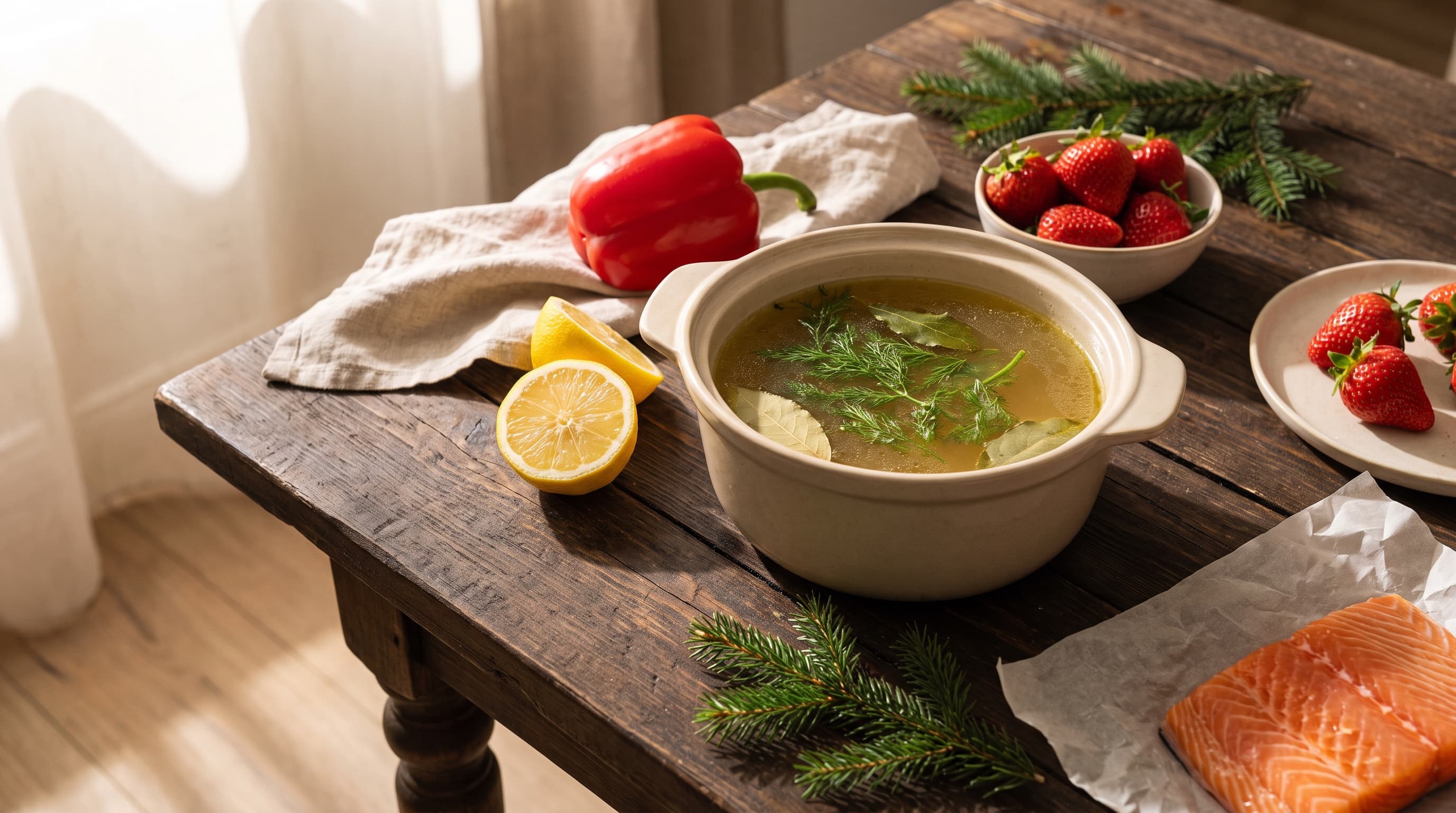
Collagen is only found in animal foods, in the connective tissue: skin-on chicken and fish, slow-cooked tough cuts, bone broth and gelatine. Plants contain none. Your body builds its own collagen from the protein you eat. Vitamin C – from citrus fruit, peppers, strawberries and broccoli – contributes to normal collagen formation for the normal function of blood vessels, bones, cartilage, gums, skin and teeth.
What foods are high in collagen?
Collagen is the protein in an animal’s connective tissue – skin, tendons, cartilage and bone. So the foods richest in it are the parts we often trim off or cook for hours:
- Skin-on chicken and fish – the skin, and the gelatinous bits around wings and thighs, are mostly collagen. Chicken wings, drumsticks and salmon or mackerel with the skin on all count.
- Tough, slow-cooked cuts – shin, brisket, oxtail, ox cheek, lamb shank and pork belly. Long, gentle cooking turns their collagen into gelatine, which is why a stew goes rich and glossy.
- Bone broth and stock – simmering bones, joints and skin pulls collagen into the liquid. A stock that sets to a jelly in the fridge contains plenty of gelatine.
- Gelatine – cooked, partly broken-down collagen, used in jelly, panna cotta and some sweets.
- Pork rind and crackling – pig skin is largely collagen, though crackling is also high in fat and salt.
- Small whole fish – sardines and whitebait eaten with skin and bones.
Lean meat such as chicken breast or a trimmed steak contains relatively little collagen. It is excellent protein, but most of it is muscle protein rather than connective tissue.
Why do plant foods contain no collagen?
Plants do not make collagen – their structure comes from cellulose and other fibres instead. No fruit, vegetable, nut, seed or grain contains collagen, and products labelled “vegan collagen” contain amino acids, vitamins or plant extracts rather than collagen itself.
That does not mean vegetarians and vegans cannot make collagen. The body builds it from amino acids, and a varied plant diet with beans, lentils, soya, nuts, seeds and grains provides all of them.
Does bone broth contain collagen?
Yes, but how much varies enormously. A study that analysed homemade, café and shop-bought bone broths found the amounts of collagen amino acids differed widely between recipes, and that broths made to a standard recipe contained far less than a 20 g serving of the collagen supplements used in research. Shop-bought broths contained less than homemade ones.
Bone broth is a good, warming base for soups and stews, and a stock that sets to a jelly has more gelatine in it than a thin one. Just don’t rely on it to deliver a particular amount of collagen.
Is there collagen in eggs?
Hardly any that you would eat. The thin membrane between the shell and the egg white contains collagen, but the white and yolk do not in any meaningful amount.
Eggs are still useful here: they are a complete protein, supplying all the essential amino acids the body needs to build its proteins – collagen included.
Do you need vitamin C to make collagen?
Yes. Vitamin C is essential for the enzymes that stabilise the collagen triple helix, which is why a severe lack of it causes scurvy, with bleeding gums and slow wound healing. Vitamin C contributes to normal collagen formation for the normal function of blood vessels, bones, cartilage, gums, skin and teeth.
Adults aged 19 to 64 need 40 mg of vitamin C a day, according to the NHS, and you should be able to get all you need from a varied diet. Your body cannot store it, so you need it in your diet every day. Good sources include:
- citrus fruit, such as oranges and orange juice
- peppers
- strawberries and blackcurrants
- broccoli and Brussels sprouts
- potatoes
More is not better: the NHS says taking more than 1,000 mg of vitamin C a day can cause stomach pain, diarrhoea and wind.
What other nutrients does the body use to make collagen?
- Enough protein overall – collagen is made from amino acids, mainly glycine, proline and lysine. UK adults need about 0.75 g of protein per kilo of body weight a day, and most already eat more.
- Zinc – helps with making new cells and enzymes, and with wound healing. Found in meat, shellfish, dairy foods such as cheese, bread and cereal products.
- Copper – needed by an enzyme that links collagen fibres together. Found in nuts, shellfish and offal.
The NHS says you should be able to get all the zinc and copper you need from a varied diet. Taking high doses of zinc reduces the amount of copper the body can absorb, and the NHS advises not taking more than 25 mg of zinc supplements a day unless a doctor advises it.
Are there foods that boost collagen?
Lists of “collagen-boosting foods” – avocado, tomatoes, garlic, dark chocolate and so on – are mostly guesswork. Some contain vitamin C or other nutrients the body uses, but no food has been shown to raise collagen production above normal in healthy, well-fed people.
The most reliable things you can do for the collagen you already have are not dietary at all: protect your skin from the sun and don’t smoke. Beyond that, a varied diet with enough protein and plenty of fruit and vegetables covers what your body needs.
Frequently asked questions
Is gelatine a good source of collagen?
Yes. Gelatine is collagen that has been partly broken down by heat, so it is almost pure collagen protein. Most gelatine is made from pork or beef, which matters for some diets and religions.
Does chicken skin have collagen?
Yes. Chicken skin and the connective tissue around wings, thighs and feet are among the richest everyday sources of collagen.
Is there collagen in milk or cheese?
No. Milk proteins are mainly casein and whey, not collagen. Dairy is still a good source of the protein the body uses to make its own collagen.
Can vegans get collagen?
Not from food – collagen only comes from animals. But the body makes its own collagen from amino acids, which a varied vegan diet with pulses, soya, nuts and grains can provide.
Sources
- NHS – Vitamin C
- NHS – Others: copper, zinc and other vitamins and minerals
- British Nutrition Foundation – Protein
- Alcock RD et al. – Bone broth unlikely to provide reliable concentrations of collagen precursors (Int J Sport Nutr Exerc Metab, 2019)
- NHS – Meat in your diet
- NHS – The Eatwell Guide
- GOV.UK – Great Britain nutrition and health claims (NHC) register