GB
GB Germany
 France
 Spain
Spain Italy
Italy Netherlands
 Norway
 Sweden
 Denmark
 Finland
 Portugal
Hair loss in women: causes and when to see a GP
Why women lose hair – from shedding after stress or childbirth to female-pattern hair loss and alopecia areata – what a GP may test, and how it is treated.

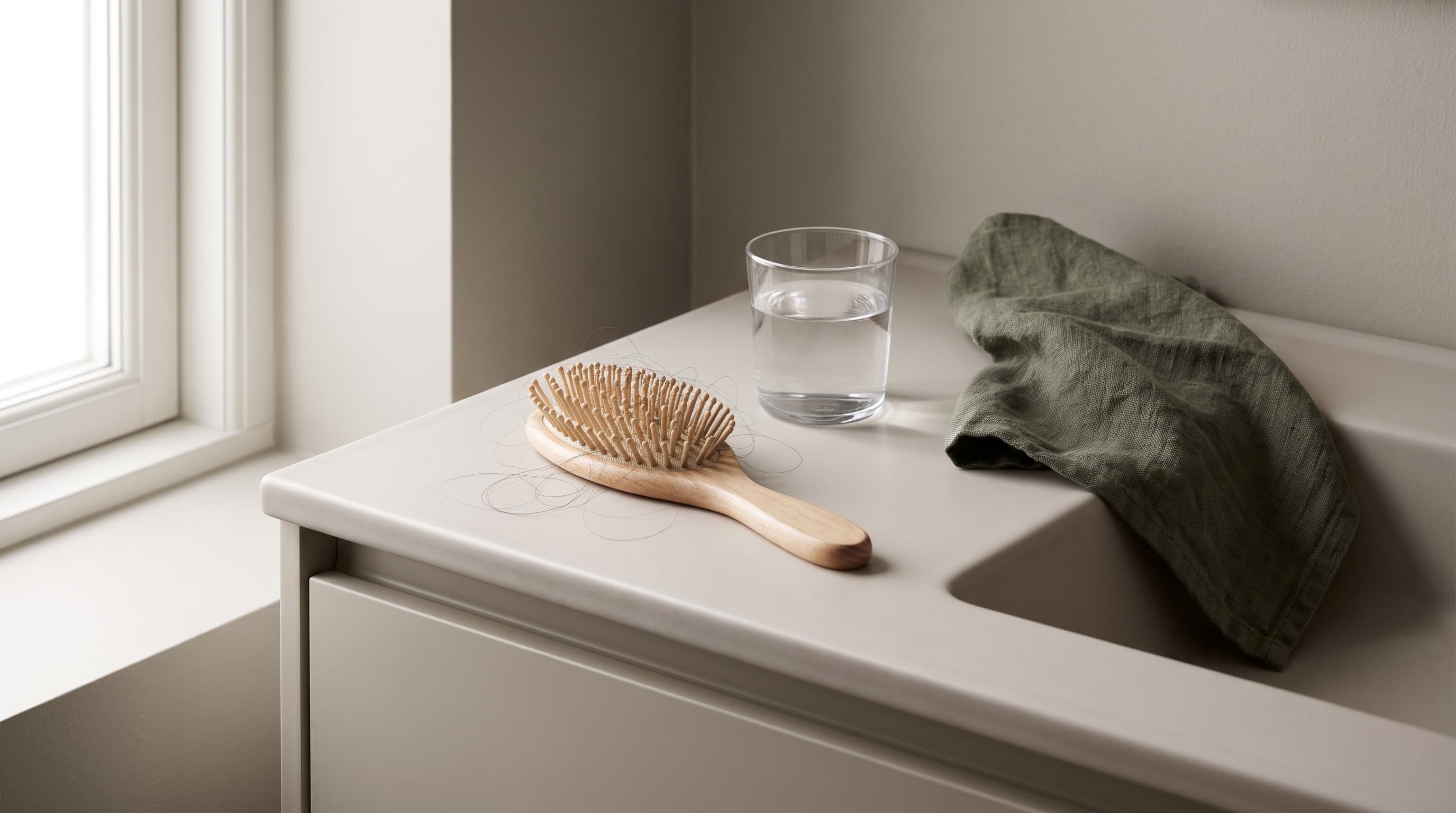
Losing 50 to 100 hairs a day is normal. Noticeable hair loss in women is most often female-pattern hair loss, which runs in families, or temporary shedding a few months after illness, stress, childbirth or dieting. Thyroid problems, iron deficiency and some medicines can also cause it. See a GP if your hair loss is sudden, patchy or worrying you.
How much hair loss is normal for a woman?
Everyone sheds hair every day. The NHS says losing about 50 to 100 hairs a day is normal, and most of the time you won’t notice it. Each hair grows for several years, rests for two to four months and then falls out as a new hair pushes through behind it, so the total amount on your head stays roughly the same.
Hair loss becomes worth looking into when you notice far more in the plughole or on your brush than usual, when your parting widens or your ponytail feels thinner, or when you find bald patches.
What are the main types of hair loss in women?
- Female-pattern hair loss (androgenetic alopecia). Gradual thinning over the top and crown, with a widening parting. The front hairline usually stays put. It tends to run in families and becomes more common after the menopause.
- Telogen effluvium. Sudden, diffuse shedding from all over the scalp, typically about three months after a trigger such as childbirth, a high fever or serious illness, surgery, a major life event, extreme dieting or rapid weight loss, starting a new medicine or stopping the contraceptive pill. It usually settles by itself within three to six months.
- Alopecia areata. Smooth, round bald patches, caused by the immune system attacking hair follicles. In most people hair regrows by itself within a year, but further episodes are common.
- Traction alopecia. Thinning at the hairline and temples from styles that pull, such as tight braids, ponytails, weaves and extensions. Caught early it is reversible; long-term pulling can make it permanent.
Less often, hair loss is caused by scalp conditions that scar the follicles. These need prompt assessment by a dermatologist, because scarred follicles can’t regrow hair.
What vitamin am I lacking if my hair is thinning and falling out?
Sometimes none – most hair loss in women isn’t caused by diet. But a few deficiencies are worth ruling out, and a GP can check them with a blood test:
- Iron. Iron deficiency is one of the most common treatable causes, especially if you have heavy periods, are pregnant, have recently given birth or eat little meat. Hair loss is listed by the NHS as a symptom of iron deficiency anaemia, and doctors may also check ferritin, your iron stores.
- Vitamin B12 and folate. Deficiency can cause anaemia, with extreme tiredness and a lack of energy. The link with hair loss is less clear, but they are often checked.
- Vitamin D. Low levels have been linked with some types of hair loss in studies, although it isn’t clear whether low vitamin D causes it.
If a test finds a deficiency, your GP will advise on the right treatment and dose. Taking supplements without a diagnosis can hide the cause or, with iron, cause harm.
Which health conditions and medicines can cause hair loss?
- Thyroid problems. The NHS lists dry hair or hair loss among the symptoms of an underactive thyroid, along with tiredness, feeling cold, weight gain, dry skin and irregular or heavy periods.
- Polycystic ovary syndrome (PCOS). Hair loss is one of the symptoms of PCOS, alongside irregular periods, excess facial or body hair, oily skin and acne.
- Menopause. The NHS lists hair thinning or hair loss among the symptoms of the menopause and perimenopause.
- After pregnancy. Many women shed a lot of hair a few months after giving birth. It is a form of telogen effluvium and usually settles without treatment, although it can take many months for hair to return to its usual thickness.
- Medicines and treatments. Chemotherapy is the best-known cause, but a number of other medicines list hair loss as a possible side effect. Rapid weight loss for any reason – including with weight-loss injections – can also trigger shedding.
When should I see a GP about hair loss?
See your GP if you are worried about your hair loss, and especially if:
- it has started suddenly, or you are losing hair in clumps
- you have bald patches
- your scalp is itchy, burning, red, scaly or sore
- you have other symptoms such as tiredness, heavy periods, weight changes or feeling cold
- it is affecting how you feel about yourself
Before your appointment, it helps to note when the hair loss started, anything that happened in the months before it, and a list of all the medicines and supplements you take. The NHS advises seeing a GP before paying for treatment at a private hair clinic.
What tests might a GP do for hair loss?
A GP or dermatologist will usually start by looking at your scalp and the pattern of loss, and asking about your health, periods, diet, recent events and medicines. They may gently pull a few hairs to see how easily they come out. Depending on what they find, blood tests may include:
- a full blood count and ferritin (iron stores)
- thyroid function
- vitamin B12, folate and vitamin D
- hormone tests if PCOS is suspected
Occasionally, a dermatologist may take a small skin sample (biopsy) from the scalp if the cause isn’t clear.
Can hair loss be reversed naturally?
Some hair loss reverses on its own. Telogen effluvium usually settles within three to six months, and hair then regrows; alopecia areata often regrows by itself; traction alopecia can recover once the pulling stops. Treating an underlying cause, such as iron deficiency or a thyroid problem, can also let hair recover over the following months.
Female-pattern hair loss doesn’t reverse by itself. No diet, oil or supplement has been shown to treat it, and food supplements cannot legally claim to treat or prevent hair loss.
How is hair loss in women treated?
Treatment depends on the cause, and is prescribed or advised by a GP, pharmacist or dermatologist. Options can include:
- Minoxidil lotion or foam for female-pattern hair loss. It doesn’t work for everyone, takes months to show an effect and only works while you keep using it. The NHS notes that women should not use finasteride.
- Steroid creams or injections and other treatments for alopecia areata, usually under a dermatologist.
- Treating the underlying cause – iron, thyroid medicine, or reviewing a medicine that may be responsible.
- Wigs and other cosmetic options, some of which are available on the NHS, and support or counselling if hair loss is affecting your wellbeing.
If you are thinking about ways to make your hair look fuller in the meantime, How to get thicker hair covers gentle care and styling.
Frequently asked questions
What vitamin am I lacking if my hair is thinning and falling out?
Iron deficiency is the main nutritional cause to rule out in women, and a GP may also check vitamin B12, folate and vitamin D. Many cases aren’t nutritional at all, so ask your GP for a blood test rather than guessing.
What is androgenetic alopecia?
It is the medical name for pattern hair loss. In women it causes gradual thinning over the top and crown with a widening parting, tends to run in families and becomes more common after the menopause.
Can hair loss be reversed naturally?
Temporary shedding after illness, stress or childbirth usually recovers within months, and alopecia areata often regrows by itself. Female-pattern hair loss doesn’t reverse on its own, and no supplement has been shown to treat it.
When should I see a GP about hair loss?
Whenever you’re worried – and especially if hair loss is sudden, comes out in clumps or patches, your scalp is sore or scaly, or you have other symptoms such as tiredness or heavy periods.
Is it normal to lose hair after having a baby?
Yes. Many women shed a lot of hair a few months after giving birth, and it usually settles without treatment. See your GP if it doesn’t, or if you also feel very tired, as iron deficiency and thyroid problems can both follow pregnancy.
Sources
- NHS – Hair loss
- British Association of Dermatologists – Telogen effluvium
- British Association of Dermatologists – Alopecia areata
- NHS – Iron deficiency anaemia
- NHS – Underactive thyroid (hypothyroidism): symptoms
- NHS – Polycystic ovary syndrome: symptoms
- NHS – Menopause: symptoms
- NHS – Vitamin B12 or folate deficiency anaemia
- Almohanna HM et al. – The role of vitamins and minerals in hair loss: a review. Dermatol Ther (Heidelb) (2019)