GB
GB Germany
 France
 Spain
Spain Italy
Italy Netherlands
 Norway
 Sweden
 Denmark
 Finland
 Portugal
Foods for prostate health: what the evidence really says
Tomatoes, lycopene, pumpkin seeds, red meat, caffeine and alcohol: what research really shows about food and the prostate, and why no food shrinks it.

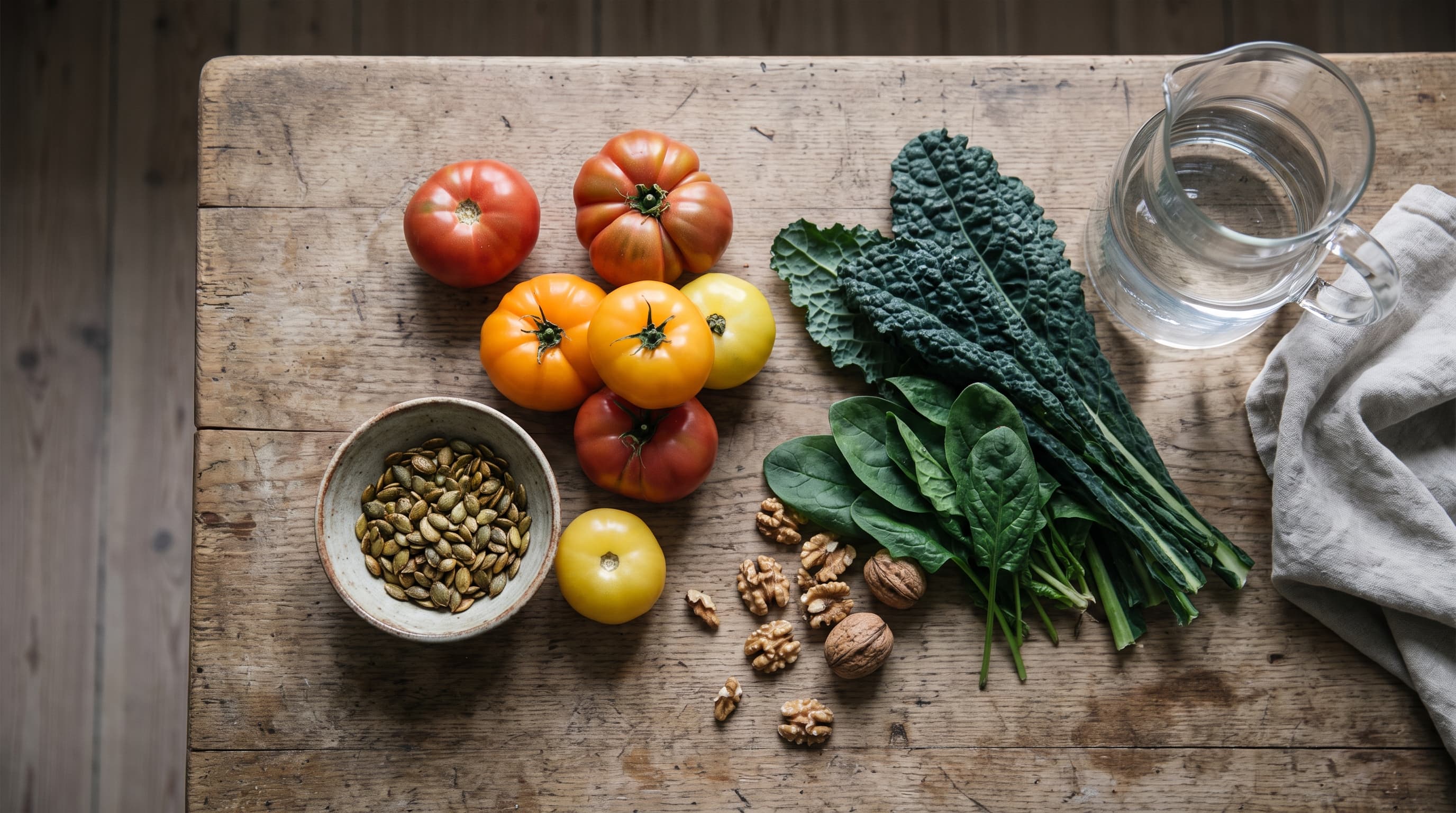
No food or supplement has been shown to shrink the prostate or prevent prostate cancer. The best-supported advice is a balanced diet based on the NHS Eatwell Guide, with plenty of vegetables, fruit, wholegrains, pulses and fish, less red and processed meat, and a healthy weight. Tomatoes (rich in lycopene) and pumpkin seeds are being researched, but the evidence is mixed and not conclusive.
Can any food shrink the prostate or prevent prostate cancer?
No. As Prostate Cancer UK puts it, no single food has been proven to lower your risk of prostate cancer, and there is no evidence that supplements do either. Nor is there a food that shrinks an enlarged prostate – that takes prescription medicine or surgery, as our guide to enlarged prostate symptoms explains.
What diet can do is support your overall health, help you keep a healthy weight and – for some men – ease urinary symptoms. That is worth having, but be wary of any product or article that promises more.
What foods are good for the prostate?
The pattern of your diet matters more than any single “superfood”. Prostate Cancer UK recommends a balanced diet containing all the food groups in the NHS Eatwell Guide, the same advice given for general health:
- Plenty of vegetables and fruit – at least five portions of a variety each day, such as tomatoes, leafy greens, broccoli and cabbage.
- Wholegrains, beans, lentils and other pulses for fibre, which also helps avoid constipation that can make urinary symptoms worse.
- Fish – at least two portions a week, one of them oily, such as salmon, sardines or mackerel – in place of some red meat.
- Unsaturated oils and spreads, such as olive or rapeseed oil, in small amounts.
- Less red and processed meat, sugary drinks and highly processed food.
Keeping to a healthy weight is the diet-related change with the strongest evidence behind it. The World Cancer Research Fund lists overweight and obesity as a risk factor for prostate cancer, and Prostate Cancer UK notes that a healthy weight could lower the risk of aggressive prostate cancer.
What is lycopene and where is it found?
Lycopene is the natural red pigment that gives tomatoes their colour. It is a carotenoid – the same family as the beta-carotene in carrots – but the body doesn’t turn it into vitamin A. Good sources include:
- tomatoes, and especially concentrated tomato products such as tomato purée, passata, tinned tomatoes and tomato soup
- watermelon
- pink grapefruit
- guava and papaya
The body takes up lycopene more easily from cooked tomatoes than from raw ones, especially when they are eaten with a little oil, because heat breaks down the plant cell walls and lycopene dissolves in fat. That makes tomato sauces, soups and purées useful sources.
Is lycopene good for the prostate?
It is one of the most studied food compounds in prostate research, but the evidence is not conclusive. A 2017 analysis of 42 observational studies found that men with higher lycopene intakes or blood levels had a slightly lower rate of prostate cancer, but no lower rate of advanced prostate cancer. Observational studies can’t show cause and effect, though – men who eat more tomatoes may differ in many other ways – and Prostate Cancer UK notes that some studies have found a link while others have not.
So lycopene has not been shown to lower prostate cancer risk or to help an enlarged prostate. Tomatoes are still a healthy food to enjoy as part of your five a day; just don’t rely on them, or on lycopene supplements, to protect your prostate.
Are pumpkin seeds good for your prostate?
Pumpkin seeds are a nutritious food that contains fibre, protein and minerals such as magnesium and zinc (see our guides to magnesium-rich foods and foods high in zinc). Their reputation for prostate health, however, rests on limited research.
One of the largest trials, the German GRANU study, followed 1,431 men aged 50 to 80 with urinary symptoms from an enlarged prostate for a year. Men who ate 10 g of pumpkin seed a day reported somewhat more improvement than those on placebo, but capsules of pumpkin seed extract did no better than placebo, and the researchers said the findings needed to be confirmed before pumpkin seed could be recommended.
A handful of pumpkin seeds is a good snack. It is not a treatment, and it is no reason to delay seeing your GP about urinary symptoms.
Do caffeine and alcohol make prostate symptoms worse?
They can make urinary symptoms worse, even though they don’t affect the prostate itself. Caffeine and alcohol both make the kidneys produce more urine and can irritate the bladder, so the NHS advises men with an enlarged prostate to cut down on them.
- Drink enough through the day – the NHS suggests 6 to 8 cups or glasses – so your pee stays a clear pale yellow.
- Drink less before bed if you get up at night to pee, but don’t cut your total intake too much.
- Swap some tea and coffee for decaffeinated versions.
- Keep alcohol within the UK guideline of no more than 14 units a week, spread over 3 or more days.
Our guide to frequent urination and nocturia has more practical tips.
Should I cut down on red meat and dairy?
For red and processed meat, the NHS advises that if you eat more than 90 g a day (cooked weight), you cut down to 70 g or less – mainly because of the link with bowel cancer. Prostate Cancer UK says the evidence for prostate cancer specifically is limited, but suggests limiting red meat and avoiding processed meat as much as possible as part of a healthy diet.
For dairy, some studies link high intakes with prostate cancer and others don’t. Prostate Cancer UK says there is currently no recommendation for men to eat less dairy, which remains a useful source of calcium and protein.
Should I take supplements for my prostate?
Prostate Cancer UK says there is no evidence that supplements lower the risk of prostate cancer, and some may even be harmful. It also says studies suggest herbal remedies are unlikely to improve the symptoms of an enlarged prostate. Food first is the better approach.
Frequently asked questions
What is the best drink for the prostate?
Water. No drink has been shown to protect the prostate, but staying well hydrated with water while cutting back on caffeine, alcohol and fizzy drinks can help if you have urinary symptoms.
Do soya foods or oily fish protect the prostate?
Not as far as we know. Prostate Cancer UK says some studies have found that foods such as soya, oily fish and tomato products might lower the risk of prostate cancer, but others have not. They are still good choices as part of a balanced diet.
How many tomatoes should I eat for lycopene?
There is no recommended amount, because lycopene has not been shown to prevent prostate problems. Including tomatoes or tomato-based dishes regularly is a healthy way to reach your five a day.
Can losing weight help prostate symptoms?
The NHS says being overweight can make the symptoms of an enlarged prostate worse and recommends keeping to a healthy weight, and the World Cancer Research Fund links overweight and obesity with a higher risk of prostate cancer. Losing excess weight is good for your overall health too.
Sources
- Prostate Cancer UK – Can I reduce my risk of prostate cancer?
- Prostate Cancer UK – Enlarged prostate treatment
- World Cancer Research Fund – Prostate cancer
- NHS – The Eatwell Guide
- NHS – Meat in your diet
- NHS – Enlarged prostate
- NHS – The risks of drinking too much
- Rowles JL et al. – Increased dietary and circulating lycopene are associated with reduced prostate cancer risk: a systematic review and meta-analysis (2017)
- Vahlensieck W et al. – Effects of pumpkin seed in men with lower urinary tract symptoms due to BPH: the GRANU study (2015)