GB
GB Germany
 France
 Spain
Spain Italy
Italy Netherlands
 Norway
 Sweden
 Denmark
 Finland
 Portugal
Magnesium-rich foods: the best sources and how much they contain
Seeds, nuts, wholegrains, beans and spinach are among the best sources of magnesium. How much is in everyday UK foods – and does magnesium make you gain weight?

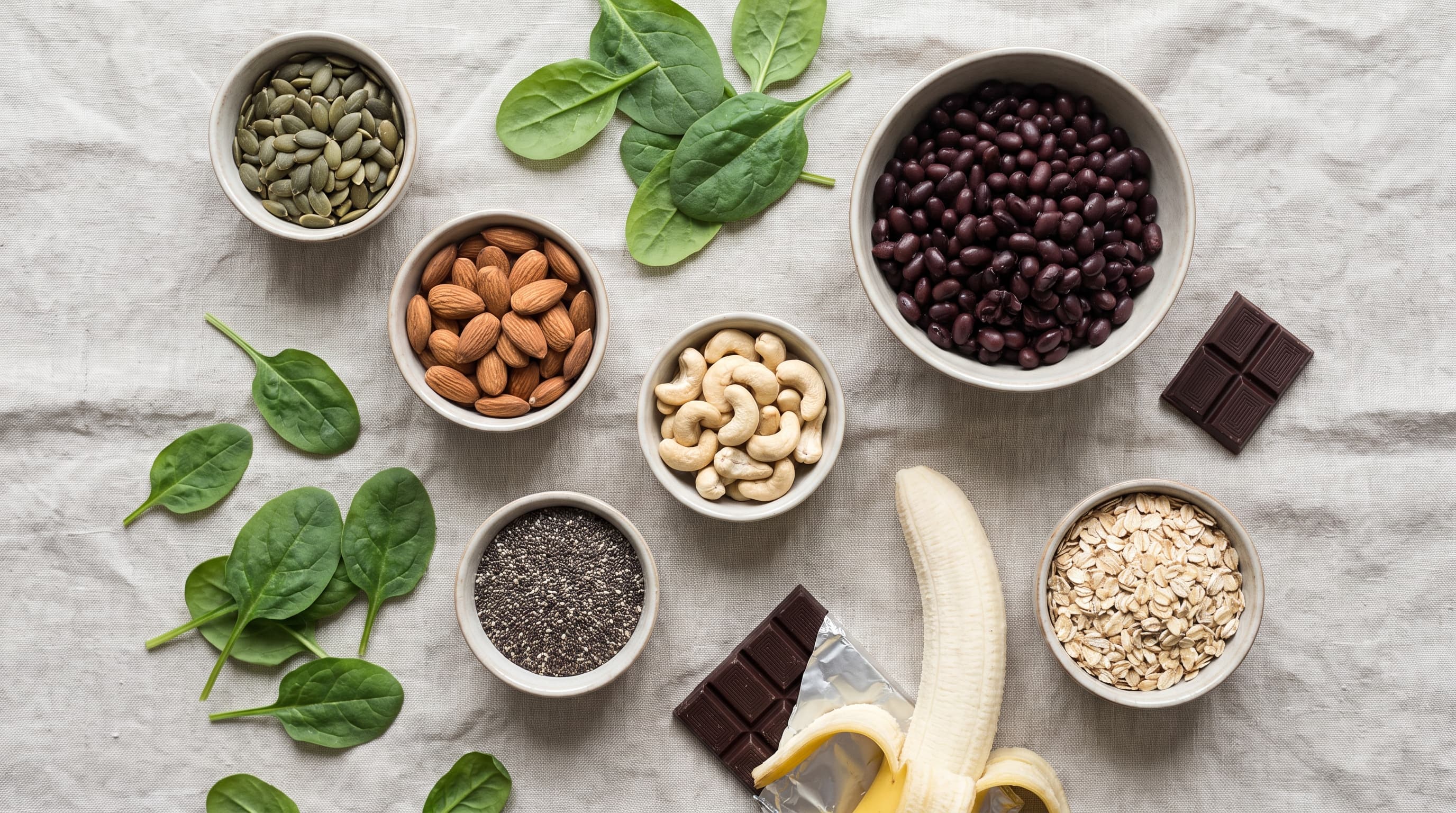
The richest sources of magnesium are seeds, nuts, wholegrains, beans and green leafy vegetables. A 30 g handful of pumpkin seeds or almonds gives about 80 mg – roughly 30% of a woman’s daily 270 mg. Wholemeal bread, baked beans, brown rice, fish, milk and yoghurt add more. Most people who eat a varied diet get much of what they need from food.
Which foods are highest in magnesium?
| Food | Portion | Magnesium (approx.) |
|---|---|---|
| Sunflower seeds | 30 g | 115 mg |
| Baby spinach, boiled | 80 g | 90 mg |
| Pumpkin seeds | 30 g (a small handful) | 80 mg |
| Almonds | 30 g (about 25) | 80 mg |
| Cashew nuts | 30 g | 80 mg |
| Brazil nuts | 20 g (about 6) | 80 mg |
| Brown rice, boiled | 150 g | 70 mg |
| Peanuts, plain | 30 g | 65 mg |
| Baked beans in tomato sauce | Half a 415 g tin | 60 mg |
| Edamame beans, boiled | 80 g | 50 mg |
| Baked potato, with skin | 1 medium (180 g) | 50 mg |
| Porridge oats | 40 g (dry) | 45 mg |
| Mackerel, grilled | 100 g | 40 mg |
| Wheat biscuits (Weetabix type) | 2 biscuits | 30–40 mg |
| Red kidney beans, canned | 80 g | 30 mg |
| Salmon, baked | 100 g | 30 mg |
| Wholemeal bread | 1 medium slice | 25 mg |
| Plain (dark) chocolate | 30 g | 25 mg |
| Banana | 1 medium | 25 mg |
| Low-fat plain yoghurt | 150 g | 25 mg |
| Semi-skimmed milk | 200 ml | 20 mg |
Wholegrain foods contain much more magnesium than refined ones, because a lot of it sits in the outer layers of the grain – wholemeal bread has about three times as much as white. The NHS names spinach, nuts and wholemeal bread as good everyday sources.
How can I get 270–300 mg of magnesium a day from food?
Here’s an example of an ordinary day that comfortably covers it:
- Breakfast: porridge made with semi-skimmed milk, topped with a sliced banana – about 90 mg
- Snack: a small handful of almonds – about 80 mg
- Lunch: half a tin of baked beans on two slices of wholemeal toast – about 110 mg
- Dinner: baked salmon with a jacket potato and spinach – about 170 mg
The NHS says men need 300 mg and women 270 mg a day. Read more in How much magnesium do you need per day?
What drinks are high in magnesium?
Most drinks contain only small amounts. A mug of filter coffee has around 15–20 mg, tea just a few milligrams and a glass of semi-skimmed milk about 20 mg. Hot chocolate made with cocoa powder and milk contributes a bit more. Tap water adds a little magnesium too, more in hard-water areas, and the amount in bottled mineral waters varies widely – check the label.
Does magnesium make you gain weight?
No. Magnesium itself has no calories, and there’s no evidence that magnesium at normal doses causes weight gain. A magnesium capsule or tablet provides virtually no energy.
A few things might explain why some people feel it does:
- Gummies, effervescent tablets and powders can contain sugar or other ingredients that provide calories.
- Magnesium-rich foods such as nuts, seeds and chocolate are high in energy – it’s the food, not the magnesium, that brings the calories.
- Temporary bloating or a change in your digestion can feel like weight gain, but it isn’t fat.
Equally, there’s no good evidence that magnesium helps you lose weight.
Is food enough, or do you need a supplement?
For most people, food is enough – the NHS says you should be able to get all the magnesium you need from a varied and balanced diet. A supplement can be a way to top up if your intake is low, for example on a restricted diet. Food supplements shouldn’t replace a varied, balanced diet and a healthy lifestyle.
If you’re comparing supplements, see Types of magnesium: which form is best?
Frequently asked questions
Is one banana a day enough magnesium?
No. A medium banana has around 25–30 mg of magnesium – about a tenth of what a woman needs in a day. Bananas are a useful extra, but seeds, nuts, wholegrains and beans contribute far more.
Which fruit has the most magnesium?
Among everyday fruit, bananas and avocados are relatively good sources, and dried fruit such as figs contains more per portion. Fruit is still a smaller source than seeds, nuts and beans.
Are eggs high in magnesium?
No. An egg contains only around 8 mg of magnesium. Eggs are a good source of protein and other nutrients, but not of magnesium.
Is coffee high in magnesium?
Not really. A mug of filter coffee contains around 15–20 mg, a small fraction of your daily needs. Instant coffee made with water has less.
Does cooking destroy magnesium?
Magnesium isn’t destroyed by heat, but some leaches into cooking water, especially from vegetables. Steaming, or using the cooking water in soups and sauces, keeps more of it.
Which foods contain both magnesium and zinc?
Pumpkin seeds, cashews, beans and lentils, wholegrain cereals and oats provide both. Meat, shellfish and dairy are good sources of zinc but contain less magnesium.