GB
GB Germany
 France
 Spain
Spain Italy
Italy Netherlands
 Norway
 Sweden
 Denmark
 Finland
 Portugal
Types of magnesium: which form is best? Glycinate, citrate, malate and oxide compared
Glycinate, citrate, malate, oxide, taurate and more – how the types of magnesium differ in absorption, stomach comfort and magnesium content, and how to choose.

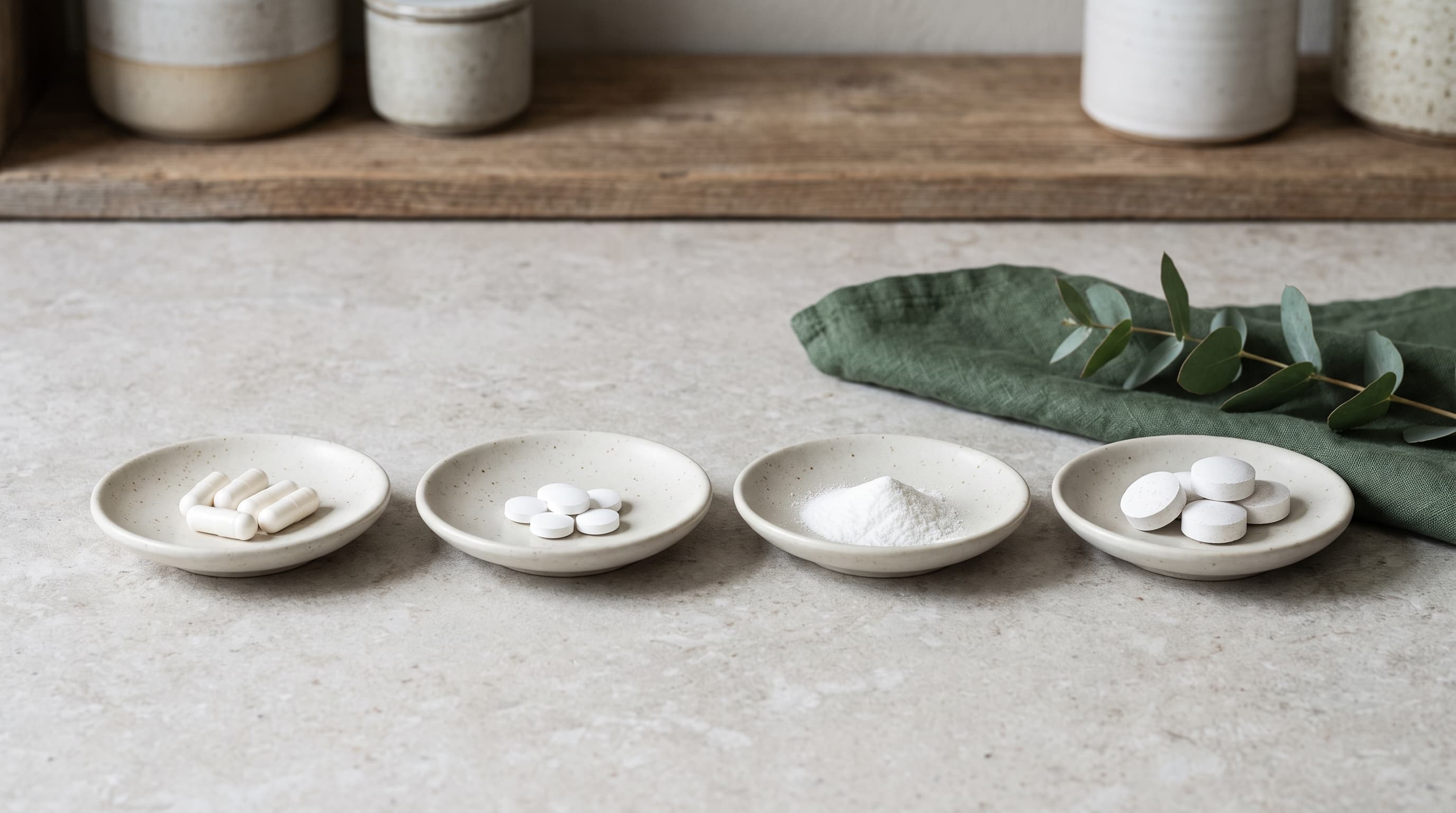
There’s no single type of magnesium that’s best for everyone. Organic forms such as glycinate and citrate are generally absorbed better than magnesium oxide, and glycinate is usually the gentlest on the stomach. Oxide packs the most magnesium into a tablet but is less well absorbed. Choose on how your stomach copes, the amount of magnesium per daily dose and the price.
Why are there so many types of magnesium?
Magnesium can’t sit on its own in a capsule or tablet. It’s always bound to another substance – an acid, an amino acid or oxygen – and that partner gives the form its name. The pairing affects how easily the magnesium dissolves, how well it’s absorbed in the gut and how your stomach reacts.
Once it’s absorbed, magnesium does the same job whatever form it came in. Magnesium contributes to normal muscle function, normal functioning of the nervous system and a reduction of tiredness and fatigue, among other things.
What are the different types of magnesium?
| Form | Bound to | Magnesium content | What to know |
|---|---|---|---|
| Glycinate (bisglycinate) | The amino acid glycine | about 14% | Well absorbed, usually described as the gentlest on the stomach |
| Citrate | Citric acid | about 16% | Well studied and well absorbed; can have a laxative effect at higher doses |
| Malate | Malic acid | about 15% | Organic form, often used in complexes |
| Lactate | Lactic acid | about 12% | Organic form that is well absorbed |
| Taurate | The amino acid taurine | about 9% | Little magnesium per gram; mostly found in blends |
| L-threonate | Threonic acid | about 7–8% | Newer form marketed for the brain; research is limited |
| Carbonate | Carbonic acid | about 29% | Inorganic form, also used in indigestion remedies |
| Oxide | Oxygen | about 60% | Most magnesium per tablet but the least well absorbed; can loosen stools |
Organic forms – glycinate, citrate, malate and lactate – are generally absorbed a little better than inorganic forms such as oxide and carbonate. How much difference that makes in real life isn’t clear, and absorption also depends on the dose, what you’ve eaten and how much magnesium your body already has.
You’ll also see magnesium sulphate (Epsom salts) and magnesium chloride sprays and flakes. These are used in baths and on the skin, and there’s little good evidence that much magnesium gets into the body that way.
Is magnesium glycinate or citrate better?
Both are organic forms that are well absorbed. The biggest difference is how your gut responds: citrate draws water into the bowel and can act as a laxative at higher doses, while glycinate is usually gentler. If you have a sensitive stomach, glycinate may suit you better. If you want a well-studied form at a lower price, citrate works well.
Read more about glycinate in Magnesium glycinate: what it is, what it’s good for and when to take it.
What is magnesium malate?
Magnesium malate is magnesium bound to malic acid, which is found naturally in fruit such as apples. It’s an organic, well-absorbed form that is often sold as a “daytime” magnesium, though there’s no good evidence that it works differently from other forms once absorbed. It’s commonly combined with glycinate and citrate in complexes.
Is it better to take more than one type of magnesium?
Complexes with two, three or more forms – often sold as “3-in-1” or “triple magnesium” – are popular in the UK. They let you get a decent amount of magnesium in fewer capsules, and the forms dissolve in slightly different ways. There’s no strong evidence, though, that a combination is absorbed better than one good form on its own.
Check the ingredients list to see which forms are in it and how much magnesium each one provides. Some products sold as glycinate are bulked out with cheaper oxide.
What is the best magnesium supplement in the UK?
“Best of” lists in magazines and online weigh price, form, dose and taste in different ways, and the winner depends on who’s judging. You’ll get a better answer by comparing products yourself:
- How much magnesium is in a daily dose? The amount of magnesium glycinate or citrate is not the same thing.
- Which form or forms does it contain?
- How many capsules or tablets do you need to take a day?
- What does a daily dose cost – not a tub?
- Is the dose at or below 250 mg of magnesium a day from supplements?
- Does it contain additives you’d rather avoid, or a gelatine capsule if you’re vegan?
Which type of magnesium should I choose?
- Sensitive stomach: glycinate – or take your supplement with food and split the dose.
- Lower price and a well-studied form: citrate.
- Fewer capsules a day: a multi-form complex, or oxide if your stomach tolerates it.
- Vegan: check the capsule is HPMC (plant cellulose) rather than gelatine.
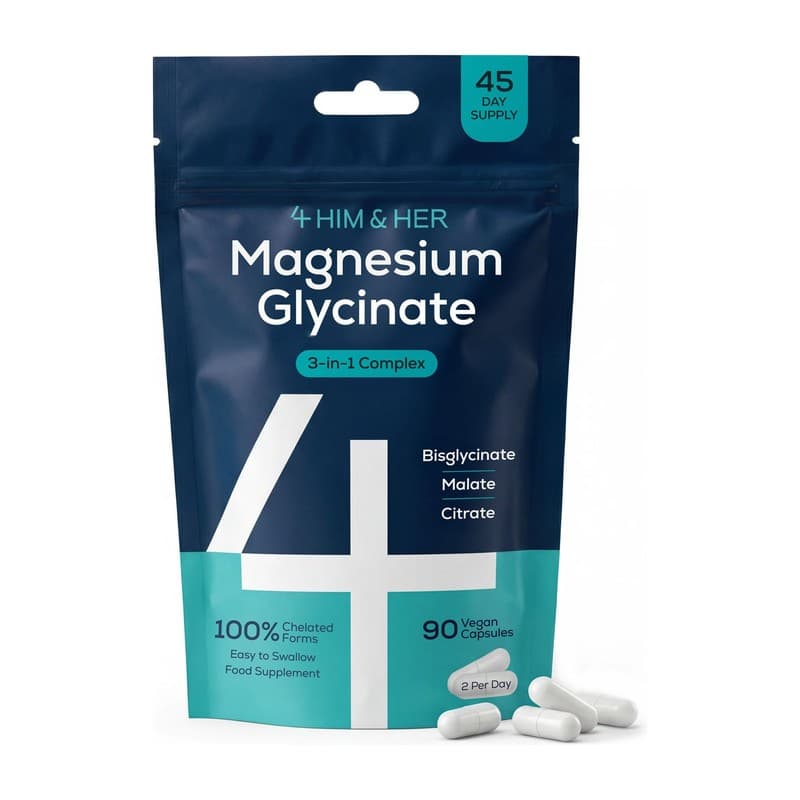
Our magnesium combines three forms: 130 mg of magnesium from bisglycinate, 60 mg from citrate and 60 mg from malate – 250 mg of magnesium in a daily dose of two vegan capsules, with 5 mg of vitamin B6.
Frequently asked questions
Which magnesium is best for your stomach?
Magnesium glycinate is usually described as the gentlest. Oxide and citrate are more likely to cause loose stools, especially at higher doses. Whatever the form, taking it with food and splitting the dose can help.
Which magnesium is best for muscle cramps?
Every form delivers the same mineral, and magnesium contributes to normal muscle function whichever form it comes in. The NHS lists common causes of leg cramps such as ageing, overdoing exercise, pregnancy, some medicines and dehydration – and often there’s no clear cause – so if you get them often, see your GP.
Is magnesium oxide bad?
No, but it’s less well absorbed than organic forms and more likely to cause loose stools. Its advantage is that one tablet can hold a lot of magnesium, so you take fewer.
What does 3-in-1 magnesium mean?
That the supplement contains three different forms of magnesium, such as bisglycinate, citrate and malate. Always check how much magnesium comes from each form.
What does the NHS say about the best magnesium supplement?
The NHS doesn’t recommend a particular type. It says you should be able to get all the magnesium you need from a varied and balanced diet, and that 400 mg or less a day from supplements is unlikely to cause harm. The European upper level for supplements is lower, at 250 mg a day.