
 GB
GB Germany
 France
 Spain
Spain Italy
Italy Netherlands
 Norway
 Sweden
 Denmark
 Finland
 Portugal
Magnesium glycinate: what it is, what it’s good for and when to take it
Magnesium glycinate is magnesium bound to the amino acid glycine. What it’s good for, how it compares with citrate, how much to take and who should avoid it.

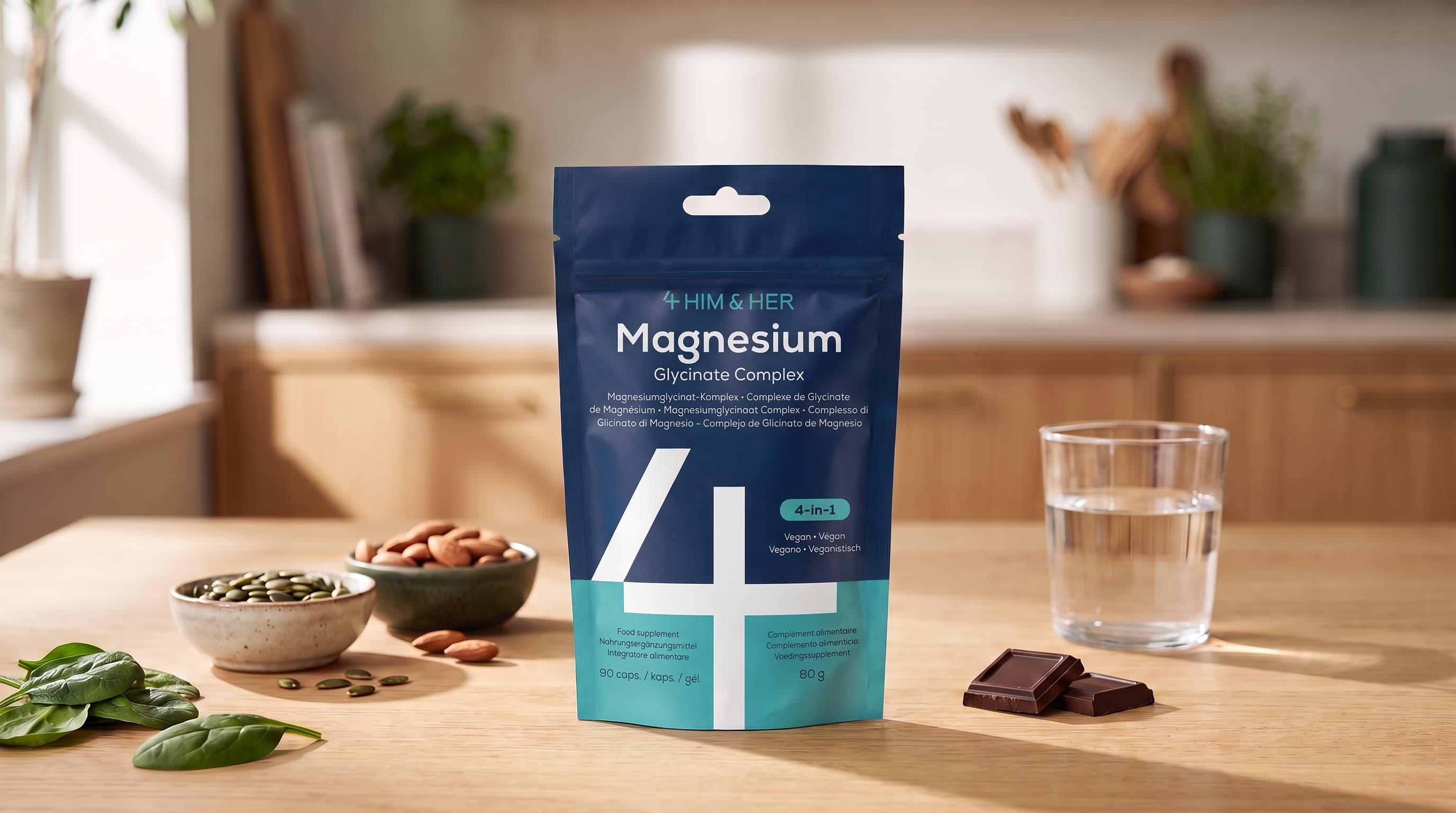
Magnesium glycinate – often labelled magnesium bisglycinate – is magnesium bound to the amino acid glycine. It is well absorbed and generally gentle on the stomach. The benefits come from the magnesium itself, which contributes to normal muscle function, normal functioning of the nervous system and a reduction of tiredness and fatigue. You can take it at any time of day; taking it consistently matters more.
What is magnesium glycinate?
Magnesium is a mineral your body needs every day but can’t make for itself, so it has to come from food or, if you choose, a supplement. In a capsule or tablet, magnesium is always bound to something else, and that partner gives the form its name. In magnesium glycinate, the partner is glycine – the smallest of the amino acids.
When each magnesium atom is bound to two glycine molecules, it’s called magnesium bisglycinate. On UK shop shelves and labels the two names are used for the same thing, and you’ll sometimes see “magnesium diglycinate” too.
What is magnesium glycinate good for?
The benefits come from the magnesium, not from the form it’s bound to. Under the authorised health claims on the Great Britain nutrition and health claims register, magnesium contributes to:
- a reduction of tiredness and fatigue
- normal muscle function
- normal functioning of the nervous system
- normal psychological function
- electrolyte balance
- normal energy-yielding metabolism
- the maintenance of normal bones and teeth
- normal protein synthesis
What sets glycinate apart from other forms is how well it’s absorbed and how kind it tends to be on the gut – not what the magnesium does once it’s in your body. You’ll see glycinate sold online as the form for sleep, stress or anxiety. None of those are authorised health claims in the UK, and the research on magnesium and sleep is limited.
Is magnesium glycinate better than other forms of magnesium?
Every form delivers the same mineral. They differ in how much magnesium they carry per gram, how well they’re absorbed and how your stomach reacts.
| Form | Magnesium bound to | Magnesium content | What to know |
|---|---|---|---|
| Glycinate (bisglycinate) | The amino acid glycine | about 14% | Well absorbed and usually described as gentle on the stomach |
| Citrate | Citric acid | about 16% | Well studied and well absorbed; can have a laxative effect at higher doses |
| Malate | Malic acid | about 15% | Often combined with other forms in complexes |
| Oxide | Oxygen | about 60% | Lots of magnesium per tablet but less well absorbed; more likely to loosen stools |
Organic forms such as glycinate and citrate are generally absorbed a little better than magnesium oxide, although how much difference that makes in practice isn’t clear. There’s no single form that’s best for everyone – choose on how your stomach copes, how many capsules you’re happy to take and the cost per daily dose. We compare more forms in Types of magnesium: which form is best?
When should you take magnesium glycinate?
No time of day has been shown to work best. Plenty of people take magnesium in the evening as part of their routine; others take it with breakfast. What matters is taking it regularly.
- Take it with a meal if you have a sensitive stomach.
- Split the daily dose between morning and evening if taking it all at once upsets your stomach.
- Stick to the dose on the label.
There’s more detail in When is the best time to take magnesium?
How much magnesium glycinate should I take?
In the UK, the NHS says adults aged 19 to 64 need 300 mg of magnesium a day for men and 270 mg a day for women, and that you should be able to get all you need from a varied and balanced diet. Good sources include nuts, seeds, wholemeal bread, spinach, beans and brown rice.
For supplements, the NHS advises that 400 mg or less a day from supplements is unlikely to cause any harm. The European Food Safety Authority sets a lower tolerable upper level of 250 mg a day of magnesium from supplements for adults and children from 4 years, because higher amounts can cause diarrhoea. We use the stricter 250 mg figure. Neither limit includes the magnesium in ordinary food.
See the best food sources in Magnesium-rich foods, and the full breakdown by age in How much magnesium do you need per day?
What are the side effects of magnesium glycinate?
Taken at the dose on the label, magnesium is considered safe for healthy adults – your kidneys clear any excess. The most common side effects are loose stools or diarrhoea, usually at higher doses, and sometimes nausea or stomach cramps. Glycinate tends to cause fewer of these problems than oxide or citrate.
If it doesn’t agree with you, take it with food, split the dose or cut back. If you have kidney problems, speak to your GP before taking any magnesium supplement.
Who should not take magnesium glycinate?
Most healthy adults can take magnesium at the recommended dose. Talk to your GP or pharmacist first if any of these apply to you:
- You have kidney disease or reduced kidney function. Your kidneys get rid of excess magnesium; if they’re not working well, it can build up in the body.
- You take medicines regularly – for example certain antibiotics, bisphosphonates for osteoporosis such as alendronic acid, levothyroxine for an underactive thyroid, or diuretics (water tablets).
- You have a heart condition or take medicine for high blood pressure. Some of these medicines, such as diuretics (water tablets), can change your magnesium levels.
- You’re pregnant or breastfeeding. Speak to your midwife, GP or pharmacist before starting any supplement.
Adult magnesium supplements aren’t meant for children. Ours is not suitable for under-18s, and children normally get enough magnesium from food.
What should you not take with magnesium glycinate?
Magnesium can bind to some medicines in the gut so less of them is absorbed. That includes some antibiotics (tetracyclines such as doxycycline, and quinolones such as ciprofloxacin), bisphosphonates such as alendronic acid, and levothyroxine. Usually leaving a gap of a few hours between them is enough.
If you take any medicine regularly, ask your pharmacist how best to space it with a magnesium supplement – they can check against your own prescriptions.
Who might benefit from a magnesium supplement?
Food comes first. A supplement can be a way to top up if your intake is low – and in the UK that isn’t rare. The National Diet and Nutrition Survey (2016 to 2019) found that around 1 in 9 adults, and nearly half of girls aged 11 to 18, have magnesium intakes below the lower reference nutrient intake, the level that is likely to be too low for most people.
Some medicines, such as diuretics and proton pump inhibitors like omeprazole, can also lower magnesium levels when taken long term – usually over a year or more in the case of proton pump inhibitors. If you think you might be low, speak to your GP rather than guessing. Food supplements shouldn’t replace a varied, balanced diet and a healthy lifestyle.
How do I choose the best magnesium glycinate?
There’s no single best magnesium glycinate, and online round-ups weigh price, taste and dose in very different ways. Here’s what actually separates one product from another:
- Look at the amount of magnesium per daily dose, not the amount of magnesium glycinate.
- Read the ingredients list. Some products sold as glycinate also contain other forms, such as oxide – it should say so there.
- Work out the cost per daily dose rather than per tub.
- Stay at or below 250 mg of magnesium a day from supplements unless your GP has advised otherwise.
- Check what the capsule is made of if you’re vegan – gelatine capsules aren’t.
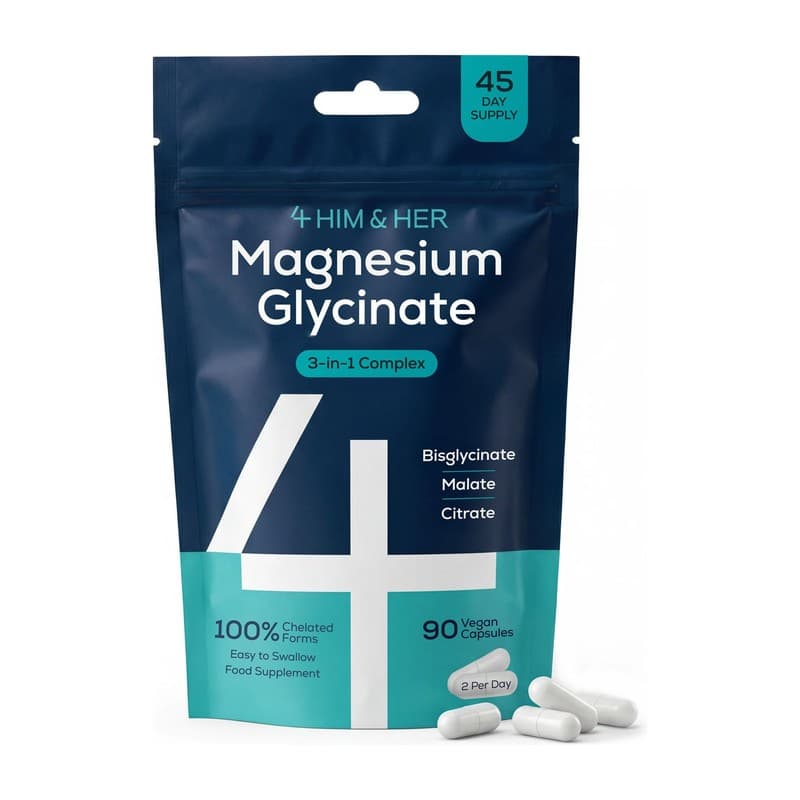
Our own magnesium is a three-form complex: 130 mg of magnesium from bisglycinate, 60 mg from citrate and 60 mg from malate – 250 mg of magnesium in a daily dose of two vegan capsules, plus 5 mg of vitamin B6. Vitamin B6 contributes to a reduction of tiredness and fatigue and to normal functioning of the nervous system.
Frequently asked questions
Is magnesium glycinate the same as magnesium bisglycinate?
In practice, yes. Bisglycinate means each magnesium atom is bound to two glycine molecules, and that’s the form you’ll usually find in supplements sold as magnesium glycinate.
Can I take magnesium glycinate at night?
Yes. You can take magnesium at any time of day. Lots of people take it in the evening because it fits their routine – what matters is taking it regularly and not going over the recommended dose.
Can you take too much magnesium glycinate?
Yes. Too much magnesium from supplements most often causes diarrhoea, nausea and stomach cramps. Stick to the dose on the label and stay at or below 250 mg of magnesium a day from supplements. Very high doses are mainly a risk if your kidneys aren’t working properly.
Is magnesium glycinate bad for your kidneys?
Not at normal doses if your kidneys are healthy – they simply clear what you don’t need. If you have kidney disease, though, magnesium can build up, so don’t take a supplement unless your GP or kidney team has said it’s OK.
Can magnesium glycinate help with anxiety?
There’s no authorised health claim for magnesium and anxiety. Magnesium contributes to normal psychological function, but that isn’t the same as treating anxiety. If anxiety is affecting your daily life, speak to your GP – in England you can also refer yourself to NHS Talking Therapies.
Can magnesium glycinate help with sleep?
There’s no authorised health claim for magnesium and sleep, and the studies are few and small. Read what the research actually shows in Magnesium for sleep: what does the research say? If poor sleep has gone on for months or is affecting your daily life, see your GP.
Why don’t doctors recommend magnesium?
Because most people who eat a varied diet already get enough. The NHS says you should be able to get all the magnesium you need from food, so GPs tend to suggest a supplement only when there’s a reason – such as a condition, a low blood test result or a medicine that lowers magnesium.
Is 1,000 mg of magnesium glycinate a lot?
It depends what the number refers to. If the label says 1,000 mg of magnesium glycinate, that’s only around 140 mg of actual magnesium, because about 14% of the compound’s weight is magnesium. If it says 1,000 mg of magnesium, that’s far above both the NHS and EFSA limits. Always read the line that gives the amount of magnesium.
How long does magnesium glycinate take to work?
Magnesium isn’t a medicine with a quick effect you can feel. Your body stores most of its magnesium in bones and muscles, and a supplement is meant to be taken daily over time. If you already get plenty from your diet, you may not notice any difference at all.
Is it OK to take magnesium glycinate every day?
Yes. Magnesium is meant to be taken daily as part of a routine, and healthy adults can take it long term at the recommended dose. If you have a medical condition or take medicines, check with your GP or pharmacist.
Can I take magnesium glycinate while pregnant?
The UK reference intake for magnesium doesn’t go up in pregnancy, and most women get enough from food. Speak to your midwife, GP or pharmacist before taking any supplement while pregnant or breastfeeding.
Can I take magnesium glycinate with vitamin D or zinc?
Yes. Magnesium is often combined with vitamin D or zinc, and they can be taken at the same time. Just keep each one within its recommended dose.
Why do some magnesium supplements contain vitamin B6?
Magnesium and vitamin B6 share several authorised health claims. Both contribute to a reduction of tiredness and fatigue, to normal functioning of the nervous system and to normal psychological function.
Why do I feel weird after taking magnesium glycinate?
The most common reactions are an upset stomach, nausea or loose stools, especially on an empty stomach or at a high dose. Try taking it with food or splitting the dose. If you feel unwell, stop taking it and ask your pharmacist – or call NHS 111 if you’re worried.
Is magnesium glycinate vegan?
Magnesium glycinate itself isn’t normally made from animal sources, but the capsule may be gelatine. Check the ingredients – a capsule made from HPMC (hydroxypropyl methylcellulose) is vegan.
Sources
- NHS – Vitamins and minerals: Others (magnesium)
- Public Health England – Government Dietary Recommendations (2016)
- British Nutrition Foundation – Vitamins and minerals
- EFSA – Tolerable Upper Intake Levels for vitamins and minerals (2006)
- NHS – Taking alendronic acid with other medicines and supplements
- MHRA Drug Safety Update – Proton pump inhibitors in long-term use: reports of hypomagnesaemia
- GOV.UK – Great Britain nutrition and health claims (NHC) register
More articles
 Vitamins & minerals
Types of magnesium: which form is best? Glycinate, citrate, malate and oxide compared
5 min read Vitamins & minerals
How much magnesium do you need per day – and can you have too much?
5 min read Vitamins & minerals
When is the best time to take magnesium? Morning, night or with food
3 min read