GB
GB Germany
 France
 Spain
Spain Italy
Italy Netherlands
 Norway
 Sweden
 Denmark
 Finland
 Portugal
When to take omega-3, and what are the side effects?
Morning or night, with or without food, what not to mix it with and who should check first – plus the common side effects of omega-3 fish oil and what to do about them.


Take omega-3 with a meal, at whatever time of day you will remember. Fats are absorbed better with food, and taking capsules with a meal also makes fishy burps and stomach upset less likely – the most common side effects. Morning or evening makes no real difference. Check with a doctor first if you take blood-thinning medication or are pregnant.
What are the side effects of omega-3?
Omega-3 supplements are well tolerated by most people. When side effects happen, they are usually mild and digestive:
- Fishy burps or aftertaste – the most common complaint, especially with capsules taken on an empty stomach.
- Heartburn, nausea or an unsettled stomach.
- Loose stools or diarrhoea, mostly at higher doses.
- Bad breath or a fishy smell, occasionally.
Taking the capsules with a meal or splitting the dose between two meals often helps. If symptoms carry on, stop and speak to a pharmacist.
Does omega-3 thin your blood?
Omega-3 can slightly lengthen bleeding time, which is why it is often described as “blood thinning”. At normal supplement doses this is small: the European Food Safety Authority concluded that supplemental EPA and DHA of up to 5 g a day do not increase the risk of bleeding episodes in adults.
It becomes relevant in three situations: very high doses, combining omega-3 with medicines that affect blood clotting, and before surgery. Tell your surgeon or dentist about any supplements you take before an operation. A thinner-blood effect is not a benefit to aim for.
Is omega-3 linked to an irregular heartbeat?
In January 2024 the UK medicines regulator, the MHRA, warned of a dose-dependent increase in the risk of atrial fibrillation (an irregular heartbeat) with prescription omega-3-acid ethyl ester medicines in people with heart disease or heart risk factors. The risk was highest at 4 g a day, the dose used to treat high triglycerides.
That signal comes from prescription doses well above ordinary supplements, in people who already have heart problems. Even so, if you have a heart condition, ask your GP before taking any omega-3 supplement, and seek medical advice if you notice palpitations, dizziness or breathlessness.
When should you not take omega-3?
Check with your GP or pharmacist before taking an omega-3 supplement if you:
- take an anticoagulant such as warfarin, apixaban or rivaroxaban, or an antiplatelet such as clopidogrel or aspirin
- have a bleeding disorder or are due to have surgery
- have a heart rhythm problem or other heart condition
- are pregnant, trying for a baby or breastfeeding – see omega-3 in pregnancy
- are under 18 – most adult supplements are not intended for children
- are allergic to fish – fish oil is not suitable for you
What should you not mix omega-3 with?
- Blood-thinning medicines – the combination may add to the effect on bleeding, so your doctor or pharmacist should know.
- Cod liver oil or other fish oils – they also contain EPA and DHA, so add up the total. Cod liver oil also contains vitamin A, which should not be doubled up. See cod liver oil vs omega-3.
- Several supplements with vitamin A or D – if your omega-3 product contains them, count them alongside any multivitamin or vitamin D you take.
Omega-3 is commonly taken alongside other supplements such as vitamin D or magnesium. There is no known problem with coffee or tea.
Should I take omega-3 in the morning or at night?
Either. There is no good evidence that one time of day works better than another. What helps is taking it with a meal that contains some fat: EPA and DHA are fats, and they are absorbed better alongside food. A meal also helps the capsules settle and makes reflux less likely.
If fishy burps bother you, try taking omega-3 with your evening meal, so any aftertaste is less noticeable, or split the dose between breakfast and dinner. If you take other supplements in the morning, adding omega-3 to that routine makes it easier to remember.
Does omega-3 interfere with sleep?
There is no evidence that omega-3 keeps you awake, so taking it with your evening meal is fine. Equally, sleep is not an authorised function of omega-3, so there is no reason to take it at night for that purpose. If reflux bothers you when lying down, take it earlier in the day.
How long does it take for omega-3 to start working?
Omega-3 builds up gradually. Levels in the blood begin to rise within days to weeks, and levels in red blood cells take around three to four months to reach a new steady level. You are unlikely to feel this, which is why taking it every day matters more than the exact time. For the amounts involved, see how much omega-3 per day.
How do you take our Omega-3 Fish Oil?
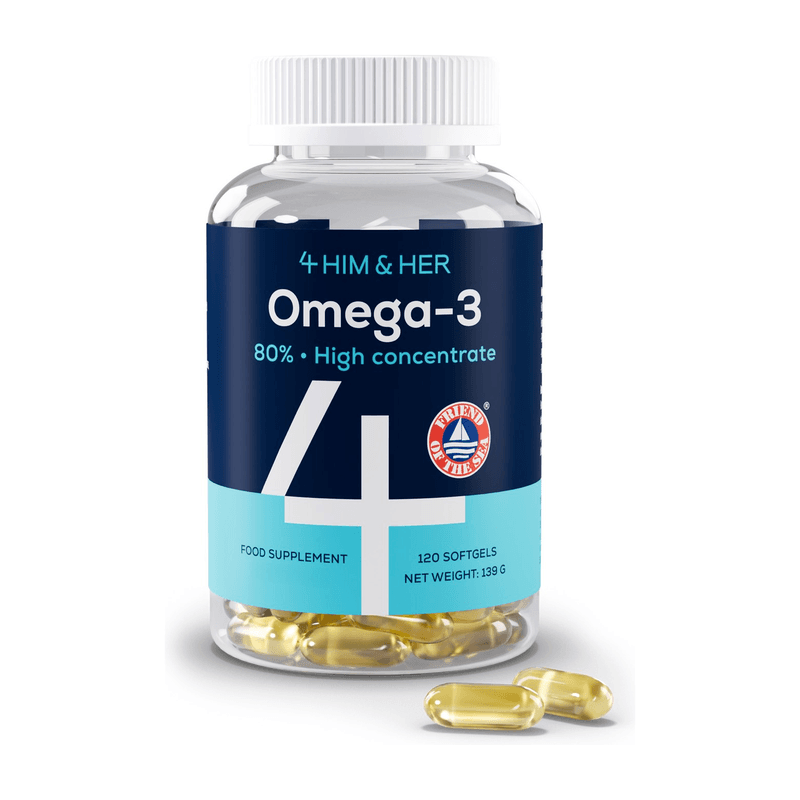
Take two softgels a day with water, ideally with a meal. Do not exceed the recommended daily dose. The softgels are swallowed whole, so most people notice no fishy aftertaste. A pack of 120 softgels lasts 60 days.
Two softgels provide 668 mg of EPA and 500 mg of DHA. EPA and DHA contribute to the normal function of the heart (with a daily intake of 250 mg of EPA and DHA). Not suitable for under-18s. Store in a cool, dry place out of the reach of children.
Frequently asked questions
Should I take omega-3 morning or night?
Whichever suits you. Timing makes no real difference to how much you absorb; taking it with a meal does. Choose the meal you never skip, and take it then every day.
Can I take omega-3 on an empty stomach?
You can, but it is more likely to cause fishy burps, reflux or nausea, and fats are absorbed better with food. Taking omega-3 with a meal is the simplest way to avoid both problems.
Can I take omega-3 with vitamin D?
Yes, they are commonly taken together, and a meal suits both because they are fat-soluble. If your omega-3 is cod liver oil, it already contains vitamin D (and vitamin A), so count it in your daily total.
Can omega-3 cause diarrhoea?
It can, mostly at higher doses. Take it with food, stick to the dose on the label and, if it continues, try splitting the dose or stopping and speaking to a pharmacist.