GB
GB Germany
 France
 Spain
Spain Italy
Italy Netherlands
 Norway
 Sweden
 Denmark
 Finland
 Portugal
Is cod liver oil the same as omega-3? Fish, krill and algae oil
Cod liver oil, fish oil, krill oil and algae oil compared: how much EPA and DHA each provides, why cod liver oil adds vitamin A and D, and which suits vegans.


Not quite. Cod liver oil is one source of omega-3, but it is pressed from cod livers and also contains vitamins A and D, which matters in pregnancy and if you take other vitamins. Fish oil comes from the body of oily fish, krill oil from small crustaceans and algae oil from algae. All supply EPA and DHA; what counts is how much.
Is cod liver oil the same as omega-3?
Cod liver oil contains omega-3, but it is not the same thing as an omega-3 fish oil supplement. Omega-3 is the type of fat; cod liver oil, fish oil, krill oil and algae oil are different places to get it from.
- Cod liver oil is made from the liver of cod. Alongside EPA and DHA, it naturally contains vitamin A and vitamin D.
- Fish oil is taken from the body of oily fish such as anchovies, sardines and mackerel. It contains little vitamin A or D unless they are added. It can be concentrated to raise the EPA and DHA content.
- Krill oil comes from krill, small crustaceans. Much of its omega-3 is bound to phospholipids, and doses tend to be small.
- Algae oil is made from marine microalgae – the original source of the omega-3 in fish. It is the fish-free route to EPA and DHA.
The functions of EPA and DHA depend on the amount you take in, not on which oil they come from. EPA and DHA contribute to the normal function of the heart with a daily intake of 250 mg, whatever the source.
How much EPA and DHA do the different oils provide?
| Type | Typical daily dose | EPA + DHA (typical) | Also contains |
|---|---|---|---|
| Cod liver oil, liquid | 1 teaspoon (5 ml) | about 0.8–1.1 g | Vitamins A and D |
| Cod liver oil, capsules | 1 capsule | about 100–250 mg | Vitamins A and D |
| Standard fish oil (about 30% omega-3) | 1 × 1000 mg capsule | about 300 mg | – |
| Concentrated fish oil (our Omega-3 Fish Oil) | 2 softgels | 1168 mg (668 mg EPA, 500 mg DHA) | DPA 83.4 mg |
| Krill oil | 1–2 × 500 mg capsules | about 60–250 mg | Astaxanthin, phospholipids |
| Algae oil | 1–2 capsules | about 250–500 mg, mostly DHA | – |
Ordinary capsules often say “1000 mg” on the front, which is the amount of oil, not of EPA and DHA. To compare products, look for the EPA and DHA figures per daily dose on the back.
What is the downside of taking cod liver oil?
The main one is vitamin A. Your body stores it, and over time too much can be harmful. The NHS advises:
- Do not take cod liver oil or any supplement containing vitamin A (retinol) when you are pregnant, because too much vitamin A can harm a baby’s development.
- Women past the menopause and older men, who are more at risk of osteoporosis, should have no more than 1.5 mg of vitamin A a day from food and supplements, including fish liver oil.
- If you eat liver or liver pâté once a week, do not take supplements containing vitamin A, including fish liver oil.
Cod liver oil also contains vitamin D. The NHS advises that adults consider 10 micrograms of vitamin D a day in autumn and winter, so if you take cod liver oil and a separate vitamin D supplement, add the two together. Many cod liver oil capsules also provide relatively little EPA and DHA compared with concentrated fish oil.
Do I need to take omega-3 if I take cod liver oil?
Not necessarily. Cod liver oil already provides EPA and DHA. Check the label: if your daily dose gives at least 250 mg of EPA and DHA, a separate omega-3 supplement adds little. If it gives much less, you could eat more oily fish or switch to a fish oil with a higher EPA and DHA content.
Can you take omega-3 and cod liver oil together?
You can, but there is rarely a reason to. Taking both adds up the EPA and DHA and, more importantly, may add vitamin A from more than one product. If you do combine them, keep the total vitamin A within NHS limits and the total EPA and DHA well below the 5 g a day that EFSA considers safe. Ask a pharmacist if you are unsure.
Does the NHS recommend cod liver oil?
Not as a general rule. The NHS recommends getting omega-3 from food – at least 2 portions of fish a week, one of them oily – and advises against cod liver oil and other fish liver oils in pregnancy because of their vitamin A. The British Dietetic Association notes that omega-3 supplements are not recommended for the UK general population, and that anyone considering one should choose an omega-3 supplement rather than fish liver oil and check the vitamin A content.
Why is fish oil no longer recommended?
This usually refers to heart disease. Fish oil capsules used to be offered after a heart attack, but larger trials did not show that they prevent further heart problems. NICE now advises doctors not to offer omega-3 compounds to prevent cardiovascular disease, or omega-3 capsules to prevent a further heart attack. For people who have had a heart attack, it adds that there is no evidence of harm if they choose to take them.
That is about preventing disease. It does not change the normal functions of EPA and DHA – see omega-3 benefits – or the advice to eat oily fish.
Is algae oil as good as fish oil?
For EPA and DHA, yes – the fatty acids are the same, and the functions depend on the amount, not the source. Algae oils are often richer in DHA than EPA, so check that the daily dose gives at least 250 mg of EPA and DHA, or 250 mg of DHA for the brain and vision functions. Algae-only supplements are the option for vegans and vegetarians, and they usually contain no vitamin A.
Which omega-3 should you choose?
- Pregnant or trying for a baby: avoid cod liver oil, and talk to your midwife or GP about any supplement – see omega-3 in pregnancy.
- Vegan or vegetarian: algae oil.
- Already taking vitamin A or D: a fish oil or algae oil without added vitamins avoids doubling up.
- Want more EPA and DHA in fewer capsules: a concentrated fish oil.
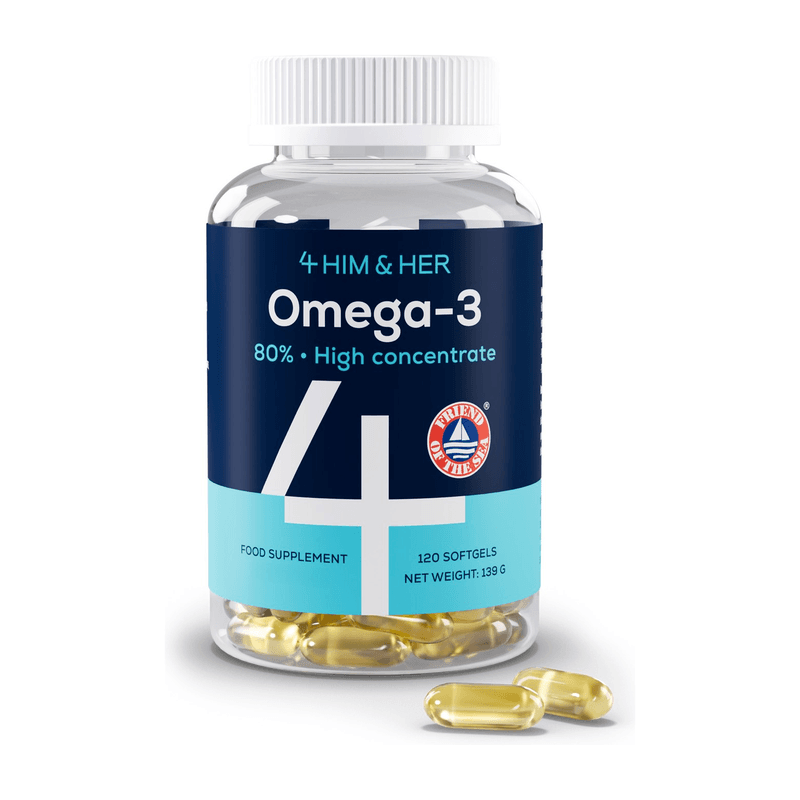
Our Omega-3 Fish Oil is a fish oil, not cod liver oil, and contains no added vitamin A or D. It is an 80% concentrate in triglyceride form: two softgels provide 1668 mg of fish oil, with 668 mg of EPA and 500 mg of DHA. The softgel is made from bovine gelatin and the oil from fish, so it is not suitable for vegetarians or vegans. Not suitable for under-18s.
Frequently asked questions
Is fish oil better than cod liver oil?
Neither is better in itself; they are different products. Fish oil usually gives more EPA and DHA per capsule and no vitamin A, while cod liver oil adds vitamins A and D. Choose by the EPA and DHA content and whether you want – or need to avoid – the extra vitamins.
Is krill oil better than fish oil?
There is no good evidence that krill oil works better. Its omega-3 is bound to phospholipids rather than triglycerides, but typical krill capsules contain much less EPA and DHA per dose, so you may need several to reach the same amount.
Is cod liver oil safe for older people?
In moderation. The NHS advises women past the menopause and older men to have no more than 1.5 mg of vitamin A a day from food and supplements, including fish liver oil, and not to take it at all if they eat liver weekly.
Sources
- NHS – Vitamin A
- NHS – Vitamins, supplements and nutrition in pregnancy
- NHS – Fish and shellfish
- British Dietetic Association – Omega-3: food fact sheet
- NICE NG238 – Cardiovascular disease: risk assessment and reduction, including lipid modification
- NICE NG185 – Acute coronary syndromes
- NHS – Vitamin D
- EFSA – Scientific opinion on the safety of EPA, DHA and DPA (press release)
- GOV.UK – Great Britain nutrition and health claims (NHC) register